













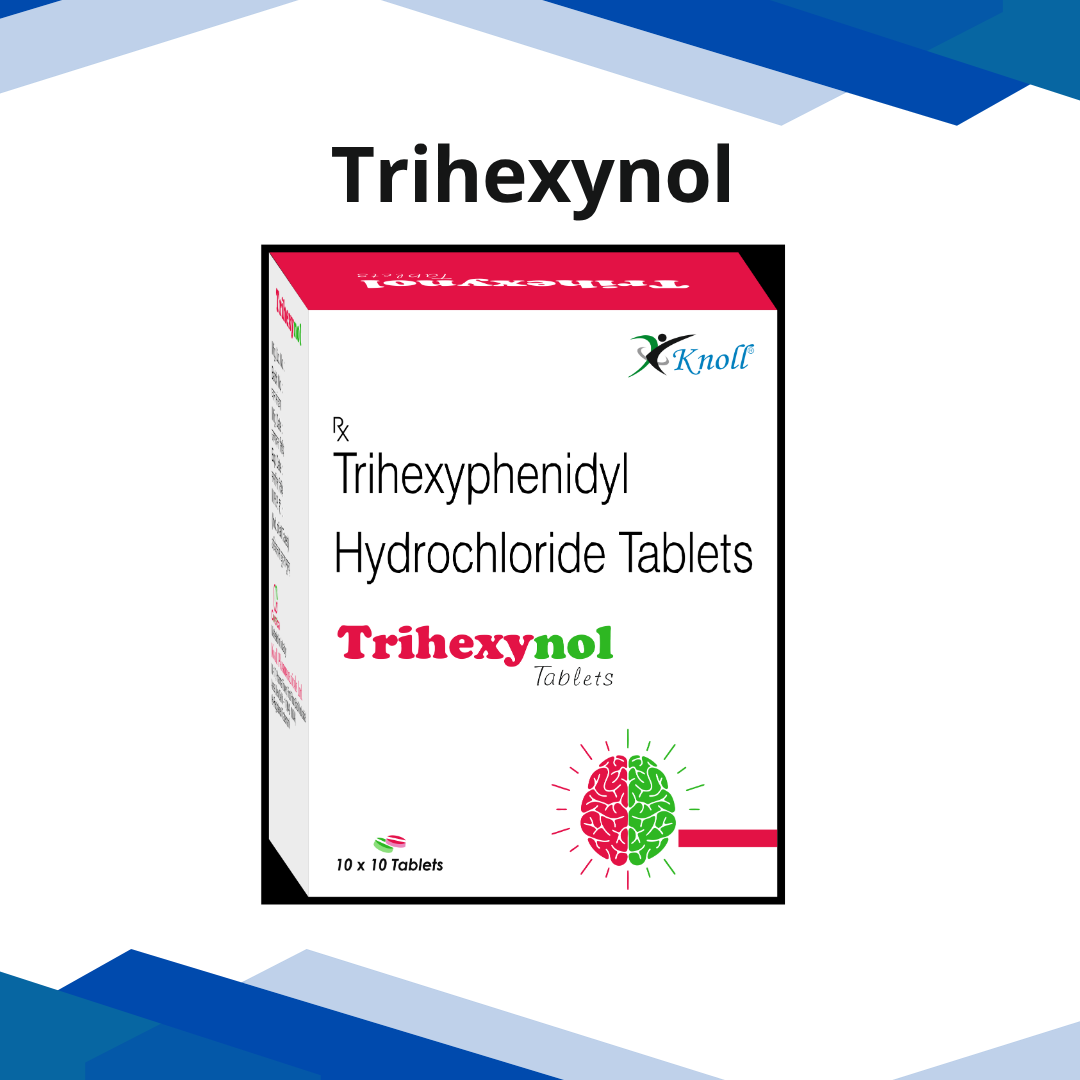
Trihexynol
No Prescription yet? Don’t worry! Click Here to Get Online Consultation
Trihexynol 2mg Tablet helps to treat the symptoms of Parkinson’s Disease. It relaxes the stiff muscles and helps in easy movement without losing balance. Trihexynol 2mg Tablet is also used to treat side effects like abnormal movements caused by antipsychotic drugs. For more details kindly click on Medicine Salts below:
Trihexyphenidyl
TRIHEXYPHENIDYL
Overview:
Trihexyphenidyl is a drug prescribed to ease the movement of a person with Parkinson disease or some other movement disorder. It accomplishes this by suppressing hyperactive brain signals, which minimizes tremors, muscle rigidity, and involuntary movements, and makes everyday tasks easier and doable.
Classification: Anticholinergic
Uses:
Trihexyphenidyl is mainly used to manage symptoms of Parkinson’s disease, such as tremors, muscle stiffness, and slow or uncontrolled movements. It is also used to control movement problems caused by certain medications, like antipsychotics, which can sometimes cause involuntary muscle movements or spasms.
How it works:
Trihexyphenidyl acts by inhibiting the influence of some chemical messages in the brain commonly known as acetylcholine that directs movement of muscles. In Parkinson or drug-induced movement disorders, these signals become hyperactive thus giving rise to tremors, stiffness, and involuntary movement. By suppressing these messages, Trihexyphenidyl restores the balance of the chemicals in the brain to an extent that allows muscles to move in a suitably coordinated manner and also minimizes jerky movements.
Dosage: As prescribed by your doctor.
Side Effects:
- Dry mouth
- Blurred vision
- Constipation
- Dizziness or lightheadedness
- Drowsiness or feeling sleepy
Precautions:
Before taking Trihexyphenidyl, it’s important to tell your doctor if you have any glaucoma, heart problems, liver or kidney issues, or urinary difficulties, as the medicine can worsen these conditions. Avoid activities that require alertness, like driving, until you know how the medicine affects you, because it can cause drowsiness or dizziness. Also, take it exactly as prescribed and report any unusual symptoms, such as fast heartbeat, severe confusion, or allergic reactions, to your doctor immediately.
Disclaimer:This content is for informational purposes only. Always consult a healthcare provider for medical advice and proper dosage.
At Gem Pharmacy, we make every effort to provide accurate, expert-written, and thoroughly reviewed information related to medicines. However, this information should not be considered a substitute for professional medical advice, diagnosis, or treatment from a qualified doctor.
The purpose of this information is to educate users and improve communication between patients and healthcare professionals. It should not be used to diagnose or treat any condition.
Always consult a certified healthcare professional before taking any medication.


Related products