


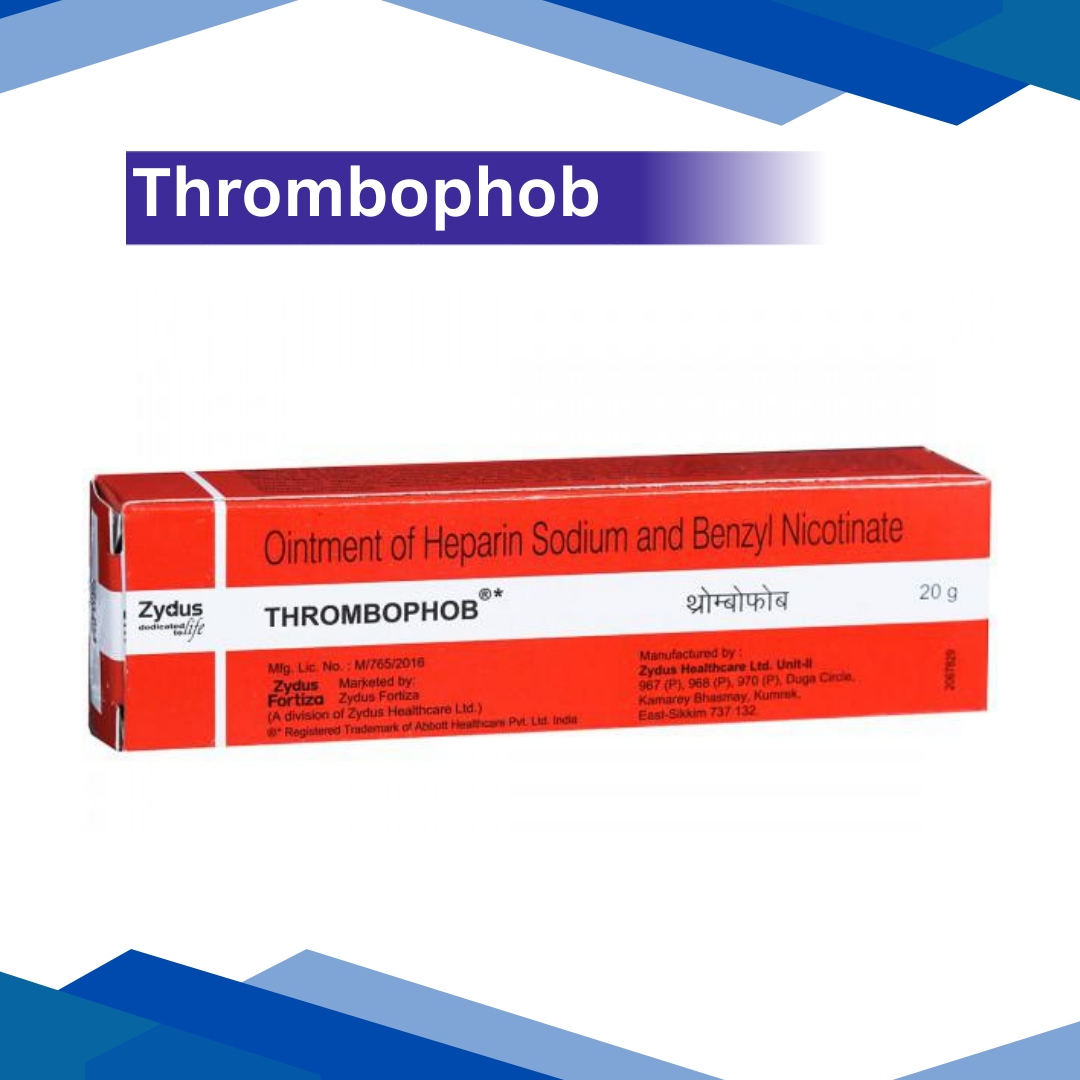
Thrombophob Ointment
No Prescription yet? Don’t worry! Click Here to Get Online Consultation
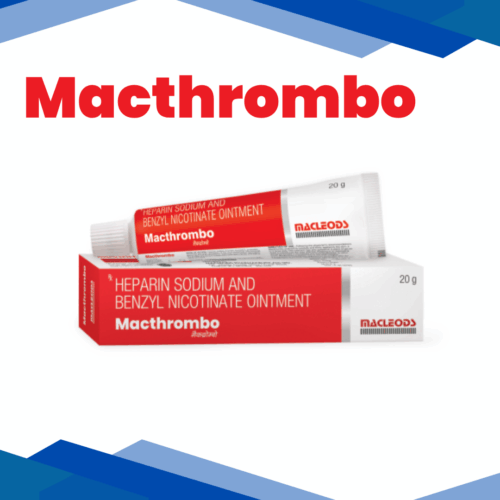
Thrombophob Ointment is a combination of two medicines used to treat superficial thrombophlebitis (inflammation or swelling of a vein due to a blood clot). It helps to relieve pain and inflammation by speeding up the healing process.
Benzyl Nicotinate
BENZYL NICOTINATE
Overview:
Benzyl Nicotinate is an application vasodilator that is widely used in creams, gels and ointments to facilitate blood flow in the skin. It can be described as a method that enlarges the small blood vessels, thereby causing more blood to flow to the part that you are putting it in. The effect of this action is to warm or redden the skin. It is commonly found in pain-relief rubs, muscle relaxants and occasionally in cosmetic products to promote absorption.
Classification: Vasodilator
Uses:
- Improves local blood circulation when applied to the skin
- Provides relief from muscle and joint pain
- Reduces stiffness and relaxes sore or tired muscles
- Produces a mild warming effect for soothing comfort
- Frequently present in pain-soothing balms, massage lotions, and athletic gels.
- Sometimes included in skincare products to improve absorption of other ingredients
How it works:
Benzyl Nicotinate works by releasing nicotinic acid (niacin) after being applied to the skin. Nicotinic acid causes the small blood vessels (capillaries) under the skin to widen, a process known as vasodilation. This increases blood flow in the area, leading to a warm or reddened feeling on the skin.Improved blood flow provides relief from muscular and articular discomfort and may also facilitate the effectiveness of other topical ingredients.
Dosage:As prescribed by your doctor.
Side Effects:
- Redness or flushing of the skin
- Warm or tingling sensation
- Mild itching or irritation
- Slight burning feeling
- Rarely, mild rash or allergic reaction
Precautions:
Do not apply Benzyl Nicotinate on sores, irritated or sensitive skin. Nicotinic acid or other products of such a type have a known allergy, so you should not use it. Also, be careful not to get it into your eyes, mouth, or other sensitive places and wash immediately in case it does. Use the suggested volume and frequency- if the suggested dose doesn’t work, increase will not work either. When your skin turns very red, swollen, or rashy, then stop using it and see your doctor. It is a good idea to consult with your healthcare provider before taking this product when you are pregnant or when you are breastfeeding.
Disclaimer:This content is for informational purposes only. Always consult a healthcare provider for medical advice and proper dosage.
Heparin Sodium
Heparin Sodium Injection (5000 IU/ml)
Salt Composition: Heparin Sodium (5000 IU)
Storage: Store in a cool, dry place, protected from direct sunlight. Do not freeze.
Heparin Sodium is a widely used anticoagulant (commonly called a “blood thinner”). It is used for the prevention and treatment of blood clots in the veins, arteries, and lungs.
It is commonly administered during hospital stays, after major surgeries, and in patients undergoing dialysis, to ensure smooth blood flow and reduce the risk of life-threatening clot formation.
Therapeutic Uses & Key Benefits
Prevents Heart Attacks: Helps prevent clot formation in coronary arteries, reducing the risk of heart attacks.
Manages Deep Vein Thrombosis (DVT): Effectively treats and prevents clots in the legs.
Pulmonary Embolism (PE): Plays a critical role in managing blood clots that travel to the lungs.
Surgical Support: Used during open-heart surgery and kidney dialysis to prevent clotting in medical equipment.
IV Line Maintenance: Lower doses are used to maintain patency of IV catheters (heparin locks).
How Heparin Sodium Works
Heparin belongs to the class of anticoagulants. It works by enhancing the activity of antithrombin III, a natural clotting inhibitor in the body.
This action inhibits key clotting factors, such as Thrombin and Factor Xa, thereby preventing the formation and growth of blood clots.
It is important to note that Heparin does not dissolve existing clots, but it prevents them from enlarging and stops new clots from forming.
Safety Advice & Expert Tips
Risk of Bleeding: As an anticoagulant, it can increase the risk of bleeding. Use a soft toothbrush and avoid sharp objects (like blades) to reduce injury risk.
Allergy Warning: Inform your doctor if you have a known allergy to pork products, as most Heparin is derived from porcine sources.
Avoid Alcohol: Alcohol may increase the risk of stomach bleeding and should be avoided during treatment.
Monitoring Required: Regular tests such as activated partial thromboplastin time (APTT) and other clotting parameters are performed to ensure safe and effective dosing.
Common Side Effects
Some patients may experience:
Swelling or redness in limbs
Easy bruising
Minor bleeding (e.g., gums or nose)
Thrombocytopenia (low platelet count)
Report any unusual or severe symptoms to your healthcare provider immediately.
Frequently Asked Questions (FAQs)
Q: Is Heparin the same as a “clot buster”?
A: No. Clot busters (thrombolytics) dissolve existing clots, whereas Heparin prevents new clots from forming and existing ones from growing.
Q: Can Heparin be used during pregnancy?
A: Yes, Heparin is often the preferred anticoagulant during pregnancy, as it does not cross the placenta. Always consult your OB-GYN before use.
Q: What should I do if I see blood in urine or stool?
A: This may indicate internal bleeding. Seek immediate medical attention or contact your healthcare provider urgently.
Q: Why are my platelet levels being monitored?
A: In rare cases, Heparin can cause thrombocytopenia. Regular monitoring helps detect and manage this early.
Q: Can I take NSAIDs like Ibuprofen or Aspirin while on Heparin?
A: Avoid NSAIDs unless prescribed, as they can significantly increase the risk of bleeding.
At Gem Pharmacy, we make every effort to provide accurate, expert-written, and thoroughly reviewed information related to medicines. However, this information should not be considered a substitute for professional medical advice, diagnosis, or treatment from a qualified doctor.
The purpose of this information is to educate users and improve communication between patients and healthcare professionals. It should not be used to diagnose or treat any condition.
Always consult a certified healthcare professional before taking any medication.


Related products