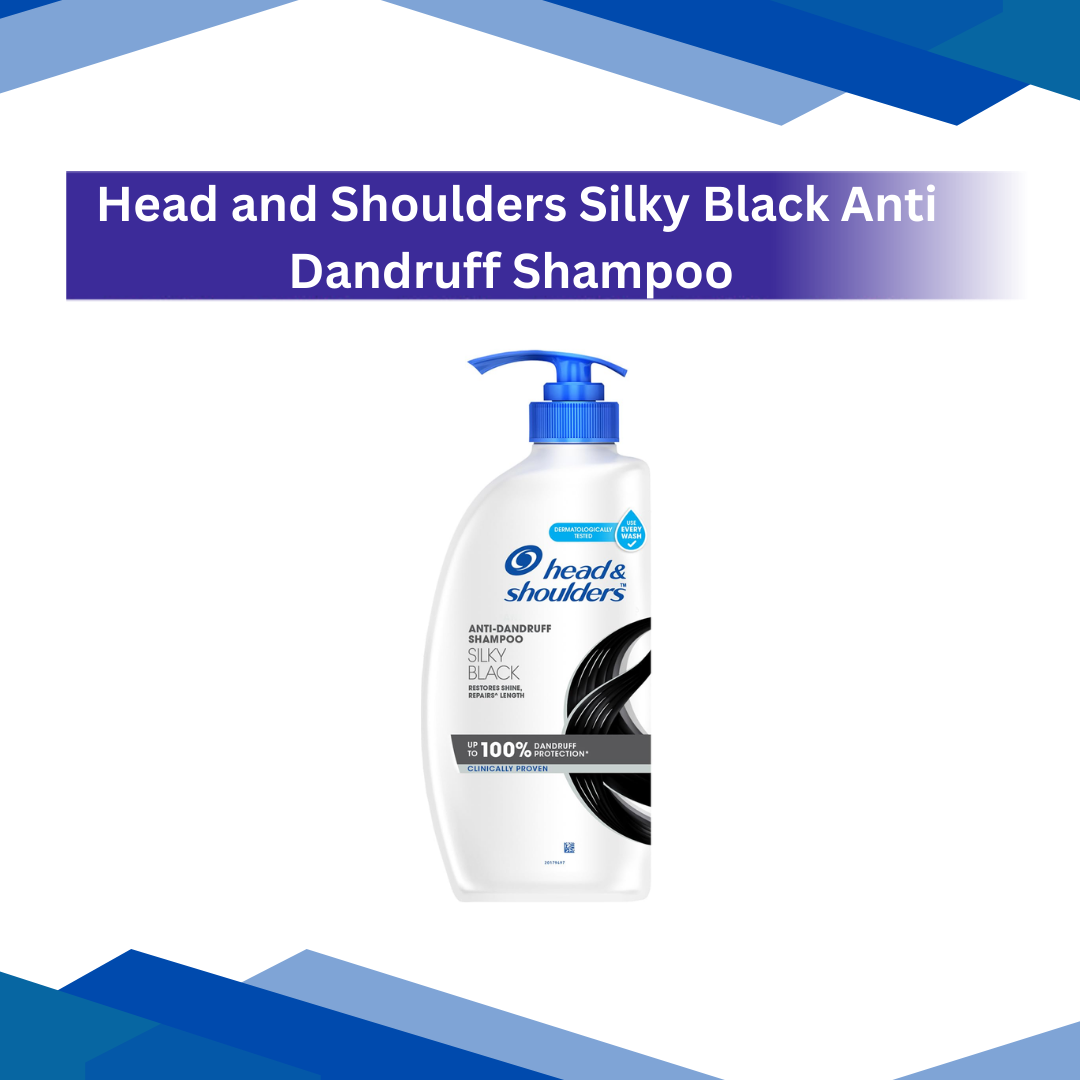
Head and Shoulder Silky Black Anti Dandruff Shampoo
Head & Shoulders Silky Black Anti-Dandruff Shampoo is specially formulated to combat dandruff while enhancing the natural shine and smoothness of black hair. Enriched with Zinc Pyrithione, Dimethicone, and gentle surfactants like Cocamidopropyl Betaine, it helps reduce flaking and itching, nourishes the scalp, and leaves hair soft, silky, and manageable. For more details kindly click on Medicine Salts below:
Cocamidopropyl Betaine
Cocamidopropyl Betaine: The Gentle Surfactant for Sensitive Care
Cocamidopropyl Betaine (CAPB) is an organic derived coconut-oil-based material, serving as a high-performance amphoteric surfactant in the world of pharmaceutical-grade skincare and personal care. The bacteriological activities of Cocamidopropyl Betaine are wonderful enough to make an efficient foamy lather that sweeps and drifts all impurities without scratching or tearing the barrier of the skin into bits. CAPB is employed in medicated shampoos, hypoallergenic face washes, and intimate hygiene products to accelerate the lathering effect without undue stripping of natural moisture.
This component serves for various reasons in the formulation:
- Sustainable lather: Improves the thickness of the product, providing better lather.
- Allows for soft, moisturized skin after the wash.
- Viscosifier: Increases the viscosity thus assists viscosity formation in liquid soap or shampoo.
- Secondary Cleanser: Reduces irritation of surfactant blendings.
Basic Description of Product
Attributes
Chemical Class
Amphoteric Surfactant (Betaine derivative)
Origin
Naturally-derived (from Coconut Oil/Di-methyl-amino-propylamine)
Appearance
A clear to yellow to brownish liquid
Usefulness
Cleansing, Conditioning, and Emulsifying
Safety and Dermatology Insights
While Cocamidopropyl Betaine is mild to the skin, salt quality should be considered. The purity of CAPB for clinical-grade use is crucial in minimizing impurities (such as amidoamines) that could bring about irritation.
Recommended for:
Sensitive or dry skin types.
Eczema or psoriasis patients for whom a gentle cleansing agent is required.
Used in baby care as CAPB is known for its low ocular irritation.
Precaution:
For a few, contact allergy to CAPB might occur. Therefore, anyone who notices prolonged redness, itching, or pin pricks after using a new practice should immediately stop what they are using and seek advice from a competent dermatologist.
Frequently Asked Questions (FAQs)
1. Is Cocamidopropyl Betaine a sulfate?
No. Very apparent from Sodium Lauryl Sulfate (SLS) or Sodium Laureth Sulfate (SLES), Cocamidopropyl Betaine is a betaine type of surfactant. Being milder, it is often used in "sulfate-free" formulations to spare an irritation-free cleansing experience.
2. Can it be utilized in baby formulations?
Yes, many "no-tear" baby shampoos display CAPB prominently. It has both molecular size and charge so that it is less liable to get through the skin or to irritate the eye mucous membranes.
3. Can CAPB be utilized with acne sufferers?
Of course. It is in fact recommended by many dermatologists in the form of a cleanser with capacities of overnight control of acne. Cleansing pores effectively makes it possible to manage acne without causing reverse oily environ which comes from the skins being overdried with skin treatments.
4. Why is CAPB included in my medicated shampoo?
In medicated shampoos (those with 2% Ketoconazole for dandruff, for example), CAPB aids in the even distribution of the active ingredient on the scalp while preventing significant conditioning and manageability on the hair fibers.
5. Does CAPB lead to hair loss?
No! There is no scientific proof that Cocamidopropyl Betaine causes hair loss. In fact, it is said to provide proper hair care through promoting a balance between the scalp and through prevention of excessive dryness caused due to harsh commercial cleansing agents.
Dimethicone
Dimethicone: The Versatile Barrier for Skin Care and Digestive Relief Dimethicone (polydimethylsiloxane) is a silicone-based polymer that is prized in the field for its barrier-building ability yet breathable in action. Its purpose varies from locking in moisture for good skin on the outside to easing abdominal gas from the inside, thus being an indispensable thing to both dermatological and gastrointestinal health.
Primary Therapeutic Uses
I. Advanced Skin Protection
Sacred lock Skin surface: The emollient theological property accelerates the imperceptible gap filling between skin cells, hence depriving dehydration and smoothing the skin surface.
Protective Barrier: Skin is shielded from irritants, weather, etc., and some types of friction.
Skin Conditions Management: Extremely effective for treating skin with xerosis, pruritus, or scaliness and for minor irritations, e.g., diaper rash & burn wounds from radiation.
II. Gastrolyceal Media
Stable grating: Dimethicone was put into antiflatulent oral use and it went with the antacids
Moonlight: A defoamer on the gastrointestinal tract, Dimethicone decreases the tension of bubbles, thus enabling elimination of the bloating feelings and letting the gas and air be expelled to lower enemy internal pressures.
Dimethicone Mode of Action
One central characteristic should be here: Impermeable Dimethicone does not pass into the bloodstream, but rather lies on the surface being treated as follows:
On the skin: it forms a non-greasy water-resistant film that reduces trans-epidermal water loss (TEWL).
In the gut: It does a mechanical impact on the joining of small gas bubbles thereby making them let out with ease in witness is from differing motility.
Experiments Done & Application Tips
If Skin is Dry: Apply a cream or lotion after a bath while it is still slightly damp to seal moisture in.
Using a Diaper Rash: Clean the affected area well and let it dry. Apply a thick layer of Dimethicone ointment.
For Oral Use: Most likely given in liquid drops or chewable tablets to comfort gas; take the dose shortly after mealtimes and/or at bedtime.
Shake Well-Hard: After closing the container, shake it well so that the active ingredient is evenly spread around if you're using a lotion or liquid suspension.
Dimethicone: FAQs
Q: Is Dimethicone safe on sensitive and acne-prone skin?
A: Yes. Dimethicone is non-stinging not liable to clog pores. It is highly recommended for sensitive skin and anesthetic qualities without an oily weight, which has been an excellent alternative to traditional products.
Q: Can I use Dimethicone on my hair?
A: Many hair serums and conditioners have dimethicone included to improve cuts, shine, and provide heat-styling. However, it is supposed to be removed regularly to avoid the buildup of any product.
Q: Does Dimethicone help with scars?
A: Mostly not in erasing a "scar," Dimethicone is a prime basic product in almost all professional scar-management gels. By gelling and keeping scar tissue moist and away from the regular air, healing is thus prompted and the ugly mark can be flattened as time goes on.
Q: Should I be aware of any potential harmful side effects if I have some oral medication for gas?
A: Oral dimethicone(dimethylsiloxane) is well tolerated as it is not absorbed through the mucous membrane. It might cause some slight nausea or very mild constipation in some cases, but this is infrequently observed.
Q: Can I use Dimethicone on an open wound?
A: No. It is fully advisable never to apply a Dimethicone cream over open sores, deep wounds, or animal bites or severe burns without getting professional advice, and it is best used on intact-but-irritated or dry skin visible.
Safety & Precaution
Feature
Details
Allergy Risk
Greatly minimal with adverse reactions; in extreme cases, one may experience facial swelling, severe itch, or a rash.
Pregnancy/Nursing
Use as innately as other topical drugs; The oral form should be a consultational choice.
Drug Interactions
None.
Driver's Specification
Keep Dimethicone or its vehicle between 15°C and 30°C, free from direct sunlight, in a room.
Zinc Pyrithione
Zinc Pyrithione: An Advanced Scalp and Skin Care Agent
A robust antifungal and antibacterial compound, Zinc Pyrithione (ZPT) has been considered the boon of dermatology for several decades. Known mainly for combating dandruff, it also finds widespread utility in various inflammatory skin conditions such as seborrheic dermatitis and specific fungal infections of the skin. Unlike conventional soaps, Zinc Pyrithione works from inside the fungal and yeast cell by affecting the cellular transport of the latter, principally the Malassezia species, which primarily stimulates scalp flaking and itching.
HOW IT WORKS: THE "CELLULAR BLOCKADE"
Antifungal Action: Zinc Pyrithione penetrates the fungal cells and impairs their energy production. Namely, it blocks the "proton pump" of the fungi, ensuring they are not able to continue living on the surface of the skin.
Cytostatic Effect: It reduces the rate at which skin forms (seen as visible flakes) without harshly affecting the supporting tissue.
Sebum Regulation: Keeping the oil (sebum) on the scalp in balance, Zinc Pyrithione takes away from the "food source" of the yeast while preserving the skin's natural moisture barrier.
Quick Insights to the Product
Feature Details
Drug Class Antifungal / Antiseborrheic
Common Forms Shampoo, Soap, Lotion, Cream
Available Strengths 1% (Over-the-counter), 2% (Prescription strength)
Primary Use-Case Scalp flaking, itching, and Seborrheic Dermatitis
Storage Keep at room temperature, protected from sunlight
Major Medical Benefits
Dandruff Control: Fast reduction in visible white flakes and their recurrence.
Seborrheic Dermatitis: Controls severe scalp condition redness, "greasy" scales, and itching.
Pityriasis Versicolor: A bar/wash used to treat tinea fungal patches appearing on chest, back, and shoulders.
Scalp Hygiene: Cleanses the hair follicles effectively, removing debris and excess oil, and thus creates a better environment for hair growth.
Popular Indian Brands
Zinc Pyrithione is commonly seen in India as a single active agent or combined with Ketoconazole, in a "two-pronged" approach:
Scalpe Plus by Glenmark Pharmaceuticals – Generally contains ZPT with Ketoconazole.
Zocon Z (FDC Ltd)
8X Shampoo (Cipla)
Danfree
ZPT-based specialized soaps (Various Dermatological Labs)
Usage & Application Guidelines
The “3-Minute Rule”: Zinc Pyrithione is effective only when it penetrates the skin; while using this shampoo or soap, do not wash it immediately after lathering. Instead, keep it on for 3 to 5 minutes before rinsing. This allows ZPT to reach deeper layers where the yeast exists.
Few Important Points: Year-Round Use of ZPT Shampoos
Frequency: 2–3 times weekly for active conditions; once a week is usually enough for maintenance.
Eye Protection: ZPT can be highly irritating to the eyes. If contact occurs, rinse immediately with plenty of cool water.
Rinse Thoroughly: Ensure no residue remains, as particles may lead to mild dryness if not properly washed away.
Safety & Precautions
Damaged Skin: Avoid using ZPT on skin that is severely cracked, bleeding, or has open wounds.
Pregnancy/Nursing: Although absorption is minimal, consult a dermatologist before use during pregnancy or breastfeeding.
Hair Texture Changes: Rarely, some users may notice dullness in hair shine. Using a deep conditioner post-treatment can help maintain hair health.
Possible Side Effects
Zinc Pyrithione is generally very safe. However, some users may experience:
- A mild burning or stinging sensation at the application site
- Increased dryness of hair and scalp
- Occasional peeling of the skin (mainly with misuse)
Frequently Asked Questions (FAQs)
1. Is Zinc Pyrithione the same as Ketoconazole?
No. Ketoconazole is a potent azole antifungal, while Zinc Pyrithione is an antiseborrheic with antifungal properties. They are often combined for better results.
2. Can I use my regular shampoo after using a ZPT shampoo?
Yes. After using ZPT, you can follow with a cosmetic shampoo or conditioner for better texture and fragrance.
3. How long does it take to show improvement?
Most users notice reduced itching after the first wash and visible reduction in flakes within 7–10 days of consistent use.
4. Can I use Zinc Pyrithione soap on my face for acne?
Only under dermatologist guidance. It may help in fungal acne, but can be drying for facial skin.
5. Why does dandruff return after stopping?
Dandruff is a chronic condition. The yeast (Malassezia) is part of normal flora, and stopping treatment may allow it to grow again. Maintenance use is recommended.
Medical Disclaimer:
This content is for informational purposes only and does not replace professional medical advice. Always consult a licensed dermatologist before starting any new treatment for scalp or skin conditions.
At Gem Pharmacy, we make every effort to provide accurate, expert-written, and thoroughly reviewed information related to medicines. However, this information should not be considered a substitute for professional medical advice, diagnosis, or treatment from a qualified doctor.
The purpose of this information is to educate users and improve communication between patients and healthcare professionals. It should not be used to diagnose or treat any condition.
Always consult a certified healthcare professional before taking any medication.


Related products