

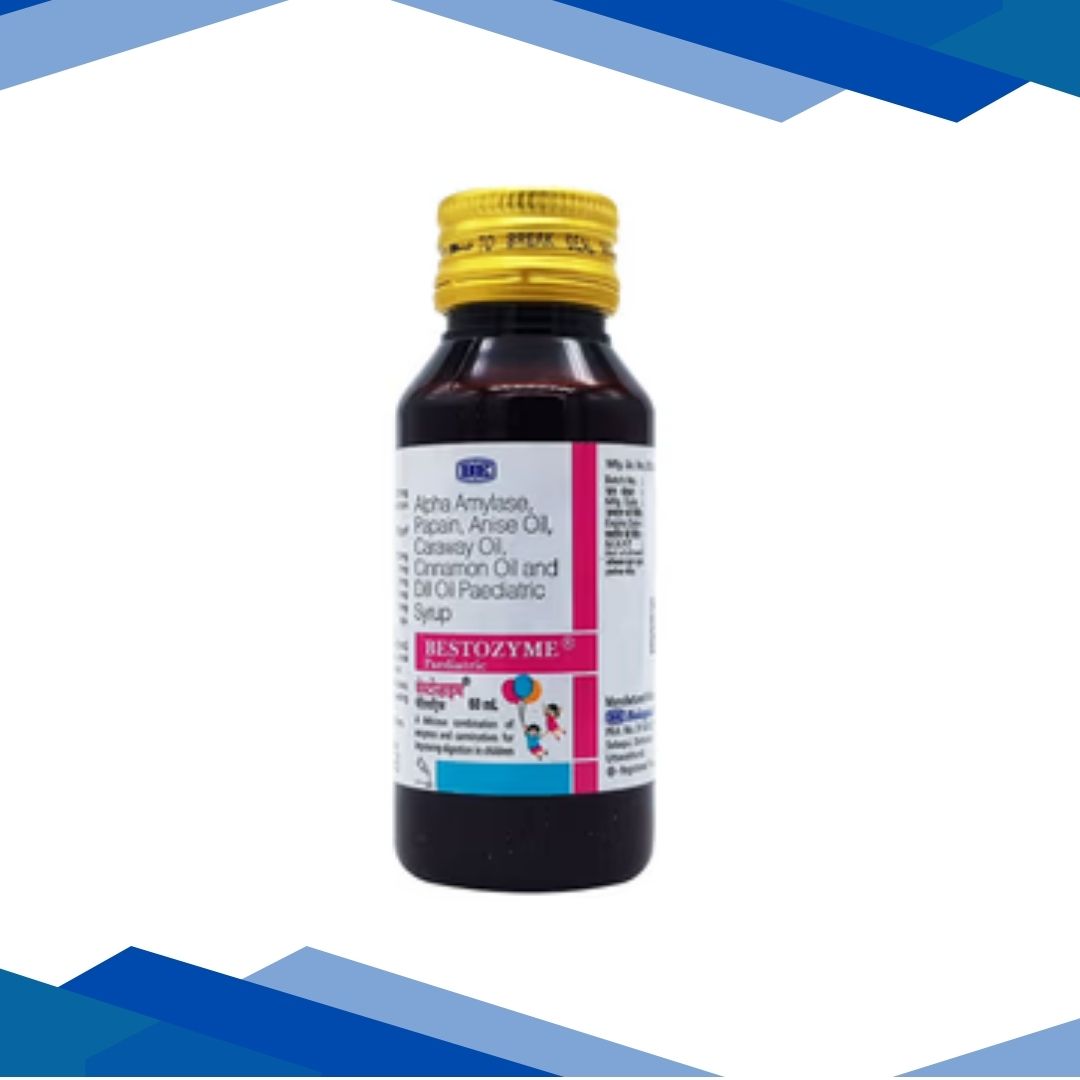
Bestozyme Paediatric Syrup 60ml
No Prescription yet? Don’t worry! Click Here to Get Online Consultation
Bestozyme Paediatric Syrup 60 ml is a digestive enzyme and carminative syrup formulated to support children’s digestion and relieve bloating. For more details kindly click on Medicine Salts below:
Alpha Amylase
Alpha Amylase
Alpha amylase is a very strong digestive enzyme that is naturally synthesized by the salivary glands and the pancreas, with a general role in the initial stages of digestion, primarily by converting the very large carbohydrates (starch) into smaller carbohydrates like maltose and glucose that are easily absorbed by the body. Inadequate production of this enzyme diminishes the body from digesting bulkyness; the gas and bloating usually indicate that the body is not producing enough of the particular enzyme. These enzymes aren't only used to improve digestion, but are also used to create the necessary nutrients essential for bloating.
A-few Examples of When Alpha Amylase May Be Given:
Relief from dyspepsia: Minimizes bloatedness in belly and helps facilitate heavier digestion for Parneta Carbohydrates
Pancreatic health: Commonly used as adjunct therapy for chronic pancreatitis
Allergic Inflammation: Alpha-amylase is used in some enzyme mixtures to relieve inflammation and swelling of the throat and respiratory tract
Energizer: More glucose would be available for the body to burn by enhancing starch breakdown.
Snapshot of Product
Features
Category
Hydrolase/Digestive Enzyme
Available Form
Tablets, Syrup, Digestive Capsules
Common Uses
Bloating, Indigestion, Starch Malabsorption
More Common Synergists
Papain, Fungal Diastase, Pepsin
Dosage for Alpha Amylase
Timing: It is useful to take it after a meal or as directed by a physician for the right digestive Enhancer
Dosage: Measure it thoroughly as instructed on the label, and do not take more than allowed in a day.
Syrup: Follow a measuring spoon instead of a general kitchen spoon in case you get syrup liquids.
Important Safety Information
Warnings:
Diabetic Monitor: Sugar in the form of starch would be broken down into sugar levels; diabetics may need to have sugar levels monitored closely, particularly if they take Alpha Amylase.
Allergy Check: Verify the source of the enzyme, if it is derived from fungi or bacteria, as there may be some known sensitivity.
Pregnancy: Pregnancy, planning to get pregnant, or breast feeding: Consult your doctor.
Potential side effect:
Mild stomach cramps.
Excessive gas.
Mucusy or watery lots of stool.
6. What would be some of the ways in which Alpha Amylase improves the well-being of the individual?
Alpha Amylase cannot cause an effect upon body weight alone, but it aids digestion; therefore, it indirectly helps by improving the functioning of the gut and reducing bloating.
7. What is the difference between Salivary Amylase and Pancreatic Amylase?
Salivary amylase initially starts the ingestion of starch once the food is being chewed in the mouth while pancreatic amylase is secreted into the small intestine for the total starch breakdown; supplements will have a concentrated composition for support through both phases.
8. Does Alpha Amylase interact with other medications?
No major concerns about interactions with the compound have been established, and if the individual is taking blood thinners or gastrointestinal aids such as antacids, doctors should be informed so that the action of the enzyme is not hampered.
9. Why is Alpha Amylase sometimes included in sore throat medications?
In practice, Alpha Amylase has been shown to break down inflammation-causing proteins, thereby leading to reduced swelling in the throat and moist membranes.
10. How do I store these medications?
It should be stored in a cool and dry place and kept out of direct sunlight. These enzymes are pretty sensitive to heat, and once left at unsuitable temperatures the activities of enzymes can get affected.
Anise oil
Anise Oil (Pimpinella anisum) – Aromatherapeutic Grade
The Anise Oil is a very strong essential oil obtained from the seeds of the Pimpinella anisum by distillation with steam. It is popular with its aroma of licorice; it is widely feathered in traditional and modern pharmaceuticals due to its strong carminative, expectorant, and antispasmodic actions. The oil is considered as precious for its many uses in the relief of gastrointestinal complaints and pathologic forms of respiratory congestion.
Quick Facts
Exclusive Features
Detailed Clinical Product
Quick Facts
Botanical Source-Family: Pimpinella anisum (Linn); Passifloraceae.
Active Compound: Trans-Anethole (usually more than 80%).
Therapeutic Class: Carminative / Expectorant / Antispasmodic.
Primary Uses: Dyspepsia, cough, flatulence, menstrual cramps.
Constitution: 100% Pure, Cold-pressed, or Steam-distilled oil.
Pharmacological Actions: How does Anise Oil work?
The pharmacological benefits of Anise Oil are assigned mainly to Anethole gas.
Gastrointestinal Care: By relieving spasm of digestive tract muscles, curvature to the passage of gas, and relaxations of intestine spasm and cramps.
As a Mucolytic: Helps to fluidize phlegm in respiratory tract for easy expectoration by appropriate productive coughing.
Due to the chemical structure of anethole, it is able to mildly mimic estrogenic action and therefore has been used historically to increase lactation and ease menstrual discomfort.
Principle Benefits
Alleviating of Gastrointestinal Conditions: Quick to eradicate bloating, dyspepsia, and that heavy feeling in the stomach post-meal.
Relieving Respiratory Conditions: Alleviates the symptoms of bronchitis and bronchia asthma as it calms the trachea and clears congestion.
Infection Controlling: Anise Oil shows significant inhibitory effect on specific types of bacteria and fungi, therefore promoting overall beneficial probiotic balance.
Topical Pain Relief: It helps improve the local circulation when applied to the skin by dilution against muscular aches, arthritis pains, and similar conditions.
Recommended Dosage
Dilution in water or tea: Heat up by mixing 1–2 drops in a glass of warm water, or drink into tea.
Aromatic Manipulation: Inhale by adding in steaming water 3–5 drops to aid in nasal clearance for inhalation and sinusitis relief.
Topical Application: Prior to application to skin, it has to be diluted with a carrier oil (e.g. Coconut or Almond oil) at a 1:10 ratio.
Precations and Safety Information
Pediatric Warning: The application of anise oil on dejectedly diluted or undiluted babies could lead to serious toxicological symptoms; thus, its cautionary application would be under strict monitor. Although being a traditional remedy for colic, higher doses usually cause neurotoxicity in very small children, so it should be discussed by your pediatrician.
Allergy Check: Cross-labelling allergy may occur if hypersensitivity to plants from the Apiacea family (like fennel, celery, or cumin) is observed.
Hormone Sensitivity: As Anise Oil could predispose to estrogen-related health conditions, those with any hormonally sensitive health condition (especially breast cancer and endometriosis) should also avoid extended use of this oil, except on doctor Darshan.
Pure Form: Never apply undiluted (neat) oil directly to mucous membranes or sensitive skin areas.
Frequently Asked Questions
Q: Are Anise Oil and Star Anise Oil one of the same?
A: Absolutely not! Though they have an anethole scent, Anise comes from Pimpinella anisum, and Star Anise comes from Illicium verum. True Anise Oil has a more subtle aroma perfect for cooking and a refined therapeutic design for internal applications.
Q: Can I give Anise Oil by mouth for baby's colic?
A: While Anise is used in Gripe Water, we highly advise that you should not use pure essential oil to babies. The constituents are far too concentrated for immature bodies. Please do use a pediatric-approved formula.
Q: Does the oil help with breastfeeding?
A: In the past, it was used to promote milk production; however, due to a perceived potential risk for passing active compounds back into breast-milk, only minute amounts should be used, and only after seeking medical advice.
Q: Why is my a solid in the bottle?
A: Your product is of good quality! Pure Anise Oil has a high freezing point and will become "crystallized" at temperatures below $15^\circ\text{C}$ ($59^\circ\text{F}$). Just slightly agitate it using the warmth of your hands.v
Caraway oil
Caraway Oil (Pure Cold-Pressed)
Caraway Oil is a concentrated essential oil extracted from the dried ripened seeds of the Carum Carvi plant implemented for its potent carminative (gas-relieving) and antispasmodic properties, designed to support good digestion and intestines for generations. It denotes the presence of active agents classified as Carvone and Limonene that act in synergy to relax the smooth muscles of the GI tract concerning the natural expulsion of gas.
Key Health Benefits
Relieves Bloating & Flatulence: It breaks down gas bubbles in the stomach and intestines for quick relief from bloating.
Supports Digestion: Induces the secretion of digestive enzymes for the efficient breakdown of complex foods.
Antispasmodic: Eases stomach cramps and intestinal spasms often associated with irritable bowel syndrome.
Appetite Stimulant: Traditionally used for improving appetite in people recovering from illness.
Antimicrobials of Nature: Practically strive to inhibit the growth of harmful bacteria, maintaining the balance of gut flora.
Product Information
Botanical Name: Carum carvi
Active Components: Carvone (50–60%), Limonene, and Germacrene.
Purity: 100% Pure, Steam-Distilled/Cold-Pressed.
Form: Liquid Oil (Available in dropper bottles or enteric-coated capsules).
Usage
For Digestive Comfort: Dilute 1–2 drops of Caraway Oil in a glass of warm water or mix with a teaspoon of honey. Take after meals.
Topical Massage: Mix 2 drops with a carrier oil (like Coconut or Almond oil) and gently massage onto the abdomen in a clockwise motion to relieve cramps.
Aromatherapy: Add a few drops to a diffuser to help ease nausea or mental fatigue.
Safety Precautions and Warnings
Dilution is Key: Never consume or apply undiluted Caraway Oil directly, as it is highly concentrated and may cause irritation.
Pregnancy & breastfeeding: Not recommended for the pregnant if woman because it may stimulate uterine contractions. Consult your gynecologist before using it.
Skin sensitivity: Always do a patch test on your forearm before applying over a larger area of skin.
Diabetes: Caraway can reduce blood sugar. If you are a diabetic patient on blood-sugar-lowering therapy, monitor your blood sugar levels regularly.
Frequently Asked Questions (FAQs)
Q: Are Caraway Oil and Cumin Oil the same?
No, though they belong to the same botanical family, Caraway (Carum carvi) has its own distinct sweet-spicy aroma. Carvone has differing medicinal properties, and Cumin (Cuminum cyminum) does not contain any.
Q: Can I use Caraway Oil for my baby's colic?
Caraway is traditionally used to treat colic, but an infant should never be given the concentrated form of essential oils. Instead, buy commercial "Gripe Water" prepared from a safe commercial formulation of a diluted caraway water that is safe for babies. Talk to your pediatrician regarding it.
Q: How does it help in IBS?
Caraway oil is a good choice for relaxing these muscles that line the digestive tract. Gastroenterologists seem to recommend it a lot in combination with enterically coated Peppermint oil capsules as treatment against the pain and bloating in Irritable Bowel Syndrome.
Q. For weight loss, is it useful?
While not a weight-loss agent, Caraway oil is well suited to reducing "water weight" and bloating. It might contribute to reducing appetite issues, some researchers suggest, when used in this capacity as part of a wellness system.
Q: Does Caraway Oil expire?
A: Essential oils mostly have a shelf life of two years to three years at most. If the oil changes in appearance and consistency or loses its characteristic smell and aroma, it will most likely be having undergone oxidation and should then be discarded at once.
Expert tip
By Hedge: Caraway oil works well when utilized consistently for chronic gastrointestinal problems. Consulting a medical professional pathway is advisable before solely relying on medicinal herbs, especially if consistent pain in your abdomen persists, sudden weight loss, or changes in bowel habits.
Caution: Information provided should be evaluated as educational, and should in no way be considered a replacement for medical information. Read the label on any essential oil quite carefully.
Cinnamon oil
Cinnamon Oil: Fresh & Potent Extract of Natural Cinnamon
Cinnamon oil is a highly concentrated extract from the bark or leaves of the cinnamom tree. Apart from its spicy warm aroma and strong healing attributes, it is a popular aid for air sanitization and circulatory effects. It is a regular feature in aromatherapy and topical care for its antimicrobial and circulatory stimulation properties.
Nature’s Warmth for Total Wellness
Cinnamon oil is rich in cinnamaldehyde, a natural compound responsible for most of its therapeutic effects. This makes it helpful for tired muscles, while also creating a warm and comforting environment when used in aromatherapy.
Key Benefits & Uses
Aromatherapy: Enhances mood, concentration, and warmth. Its fragrance creates a comforting atmosphere.
Muscle Soother: When properly mixed with a carrier oil, it may help stimulate blood flow and relieve stiff muscles and joint discomfort.
Natural Antimicrobial: Supports environmental cleansing and skin health (when used carefully) due to its antibacterial and antifungal properties.
Respiratory Support: Often blended with eucalyptus oil to help clear the nasal passages during inhalation therapy.
Oral Hygiene Support: Sometimes added in small amounts to natural mouthwash mixtures to help reduce bad breath and bacterial growth.
Safety & Usability Precautions
Classes
Information
Skin Sensitivity
Very high risk (hot oil). Cinnamon oil can cause topical burns if not properly diluted. Usually, 1 drop of cinnamon oil should be mixed with about 10 drops of carrier oil for safe topical use.
Pregnancy
Avoid during pregnancy because it may have emmenagogue effects (stimulates blood flow to the pelvic region).
Patch Test
Always perform a patch test and wait 24 hours before applying it widely on the skin.
How to Use in Real Life
Diffuser: Add 2–3 drops to a diffuser with water to spread a pleasant aroma and create a relaxing atmosphere.
Massage: Mix 1 drop with 2 tablespoons of carrier oil for a soothing body massage.
Potpourri: Add one or two drops on dry flowers or pinecones to naturally freshen the room air.
Frequently Asked Questions (FAQs)
1. Can I apply the oil directly on my skin?
No. Pure cinnamon oil can cause severe irritation, redness, or blisters. Always dilute it with a carrier oil such as jojoba oil, coconut oil, or olive oil.
2. Is Cinnamon Oil safe for children and pets?
It is generally best to avoid using cinnamon oil around children and pets. Its strong compounds may irritate their skin, lungs, or trigger respiratory problems.
3. Does Cinnamon Oil stimulate hair growth?
In some cases, it may support hair growth by improving blood circulation in the scalp. However, it should be used very diluted and kept away from eyes and sensitive skin.
4. What is the difference between Bark Oil and Leaf Oil?
Cinnamon Bark Oil is stronger, more intense, and often used for its antifungal properties.
Cinnamon Leaf Oil is usually milder and contains more eugenol, making it more suitable for regular aromatic use.
5. Can this oil help in controlling blood sugar?
While cinnamon spice is sometimes linked with blood sugar management, cinnamon essential oil is not a medical treatment. It should never be consumed or used for metabolic conditions without medical supervision.
Dill oil
Product Overview
Furthermore, Egyptian medicine tapped the healing value of Dill Oil for thousands of years. As an integral part of many ancient gripe water formulations, it is famous for its carminative action. It functions as a gas dispersant, enabling the bubbles of gas to pass out of the belly, offering instant comfort from flatulence and bloating. Besides digestion, its soothing antispasmodic effect is so effective in relaxing an infant when experiencing colic while improving overall gastrointestinal health.
Benefits and Medicinal Uses
Soothing Relief from Infant Colic: Freeing the baby from muscle spasms and gas build-up causing their distress and crying.
Natural Carminative: Eases gas expulsion, ending bloating and indigestion after meals.
Stomachic: Promotes the secretion of digestive enzymes, easing food digestion.
Antispasmodic: Consoling the smooth muscles of the digestive tract by relieving stomach cramps.
Antimicrobial: Dill has always been used as a potentiator to the prevention of certain intestinal pathogens.
Uses from an Expert
For Babies (Dill Water Style): Never apply pure Dill Oil directly. Always use the recommended dilution for your baby from a pharmacist-recommended product.
For Adults: 1–2 drops of oil may be mixed with 1 tablespoon of a carrier oil (coconut or almond oil) and be massaged gently onto the abdomen in a clockwise direction.
Inhalation: 1–2 drops in a burner help to soothe the mind; this indirectly helps in reducing stress-related indigestion.
Safety & Cautions
Advisory / Recommendation
Usage: Do not take internally. Always consult a professional medical practitioner.
Skin Sensitivity: Be sure to test for your own sensitivity; photosensitive reactions are possible under some circumstances, but these are usually quite mild.
Pregnancy, Breastfeeding: Consult your medical practitioner, taking care to avoid long-term use or very high levels.
Storage: Keep in the dark and cool. Essential oils will degrade quickly once exposed to too much sunlight.
Frequently Asked Questions (FAQs)
1. Is Dill Oil safe for newborns?
Although Dill Oil has been a remedy for colic cases, it is not a good idea to give your newborn an essential oil. Only use pure products labeled for pediatrics (aka approved gripe waters), and consult your pediatrician for guidance on how much to give and for how long.
2. How does Dill Oil "dispel" gas exactly?
The method might be described as carminative; it decreases the surface tension of gas bubbles in the stomach, allowing some smaller bubbles to coalesce into, and thus merge with, a larger bubble that can be more easily expelled by the mouth or anus and so forth.
3. Can I use Dill Oil for skin care?
Yes, it is sometimes used for its antimicrobial properties, but it must be diluted significantly with a carrier oil. Using it “neat” (undiluted) can lead to skin irritation or redness.
4. Does it react with any medical drugs?
No noted significant drug interactions occur when applied topically or used in aroma therapy. Nevertheless, if you are on diabetes medication or lithium, you may need to confer with the healthcare provider as dill theoretically may manipulate blood glucose levels or lithium excretion.
5. What is the difference between Seed Oil and Weed Oil?
Seed Oil has more carvone and becomes a more powerful remedy for digestive issues, while Weed Oil (from the leaves) is milder and is more commonly used for seasoning.
Papain
Papain is a proteolytic enzyme extracted from the fruit of the papaya plant (Carica papaya). It is widely used as a digestive aid, helping break down complex proteins into simpler peptides and amino acids. Clinically, it is also recognized for its role in wound healing and as a potent anti-inflammatory agent.
Benefits to Primary Health
Optimizes the Digestion: Helps reduce bloating by breaking down high-protein meals efficiently.
Prevents Bloating and Gas: Limits fermentation in the stomach, thereby reducing gas formation.
Anti-Inflammatory: Helps reduce swelling and pain, especially after dental procedures or minor injuries.
Immune Support: Acts as a potent antioxidant, combating oxidative stress.
Sore Throat Relief: Lozenges may help reduce redness and swelling of the throat and pharynx.
Usage of Papain
For Digestion: Most effective when taken during or immediately after meals.
Dosage: Typically available in 100 to 500 mg capsules or chewable tablets. Always follow package instructions or your nutritionist’s advice.
Administration: Chewable tablets should be fully chewed or dissolved before swallowing for maximum enzyme activity in the mouth and throat.
Safety Precautions & Warnings
Allergy Alert: Individuals allergic to latex may experience cross-reactivity with papain (also linked with kiwi or figs). Discontinue use if rash or itching occurs.
Pregnancy & Breastfeeding: Generally not recommended during pregnancy, as enzymes from unripe papaya may trigger uterine contractions.
Surgical Precaution: Stop use at least 2 weeks before surgery or dental procedures due to its mild blood-thinning effect.
Drug Interaction: Consult a doctor before combining with blood thinners like Warfarin, as it may increase bruising risk.
Potential Side Effects
Papain is generally well-tolerated, but some users may experience:
- Mild stomach cramps
- Temporary diarrhea (especially at high doses)
- Throat irritation (with strong lozenges)
Frequently Asked Questions (FAQs)
Q: Can I mix the labels for Papain and Bromelain?
A: Both are proteolytic enzymes, but differ in source and function. Papain (from papaya) is more focused on protein digestion, while Bromelain (from pineapple) is often used for joint inflammation.
Q: Will taking Papain with water make me thin?
A: Papain is not a fat burner, but it may improve digestion and reduce bloating, which can contribute to a flatter abdomen.
Q: So will Morphin affect Papain in some way?
A: Some proteolytic enzymes may enhance the absorption of certain medications. It’s best to space doses or consult your healthcare provider.
Q: Can I get enough Papain from merely having the ripe papaya fruit?
A: Ripe papaya is beneficial, but higher concentrations of papain are found in unripe (green) papaya latex. Supplements provide a more standardized dose.
Q: Is it safe for daily use?
A: Generally safe for healthy adults when used as directed. For chronic conditions, cyclic use under professional guidance is recommended.
At Gem Pharmacy, we make every effort to provide accurate, expert-written, and thoroughly reviewed information related to medicines. However, this information should not be considered a substitute for professional medical advice, diagnosis, or treatment from a qualified doctor.
The purpose of this information is to educate users and improve communication between patients and healthcare professionals. It should not be used to diagnose or treat any condition.
Always consult a certified healthcare professional before taking any medication.


Related products
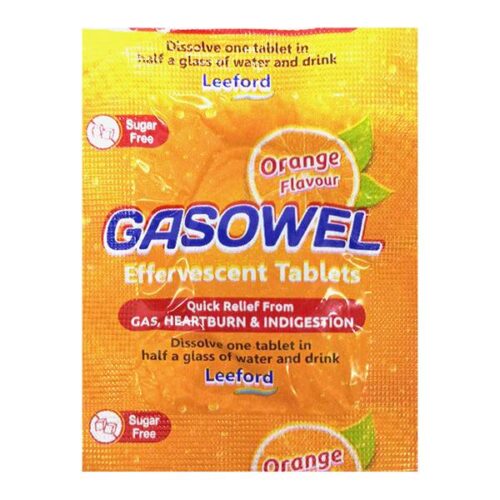
GASOWEL SUGAR FREE ORANGE FLAVOUR Effervescent Tablet 2’s