

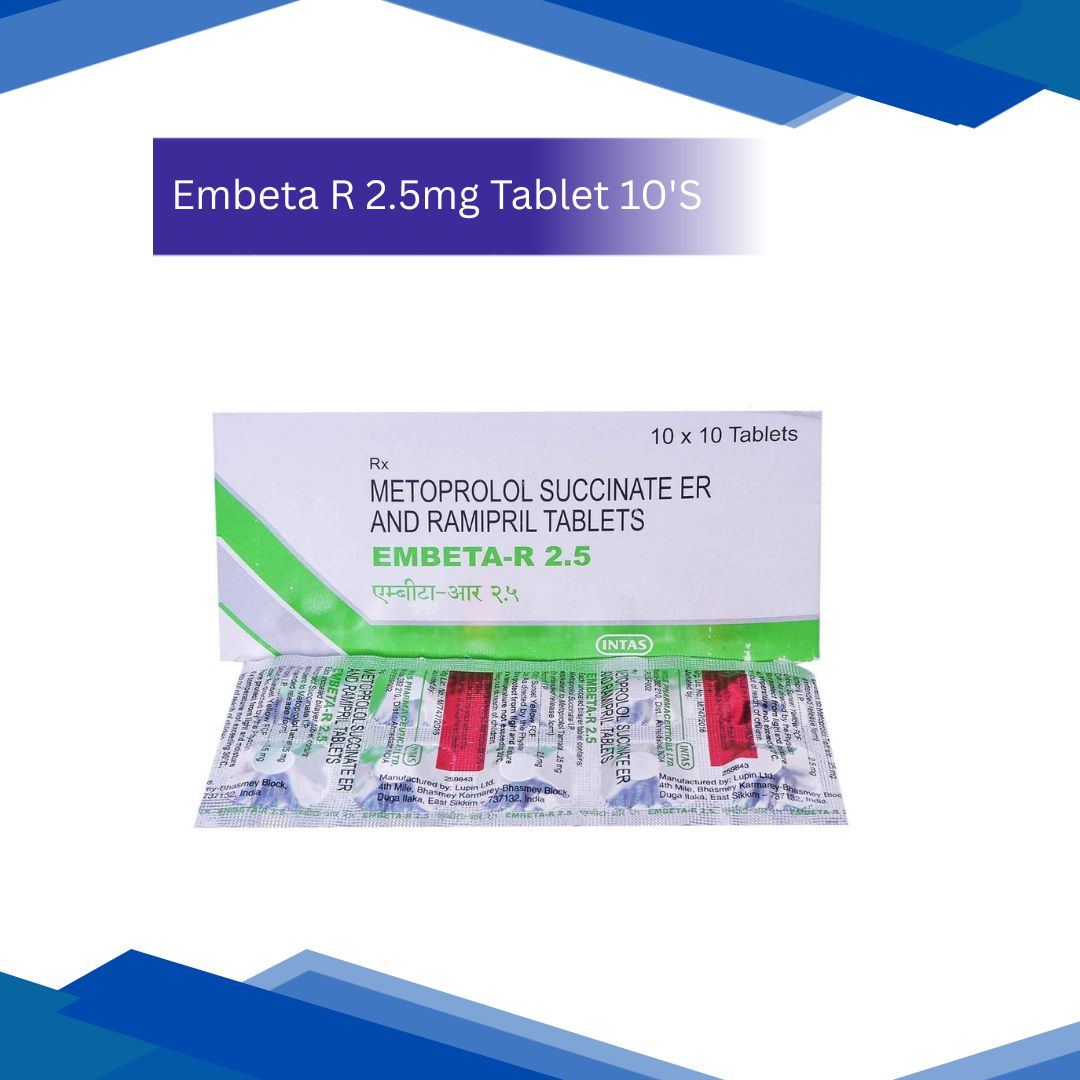
Embeta R 2.5mg Tablet 10’S
No Prescription yet? Don’t worry! Click Here to Get Online Consultation
EMBETA R 2.5MG TABLET is a combination of Metoprolol and Ramipril which belongs to the group of medicines called Antihypertensive agents. It is used to manage hypertension (high blood pressure) and angina (chest pain). It can also be used to manage heart failure and reduces the chances of hospitalization among the heart patients.
For more details kindly click on medicine Salts Below:
Metoprolol Succinate
Metoprolol (metoprolol succinate extended-release tablet)
Metoprolol succinate is a long-acting beta-blocker specifically formulated for once-daily use. It works by targeting beta-1 receptors in the heart, leading to a slower heart rate and reduced force of each heartbeat. The advantage of this extended-release formulation is that it maintains a steady blood level for 24 hours, making it an important therapy for hypertension and chronic heart conditions.
Therapeutic Uses
Hypertension (High Blood Pressure): Lowers blood pressure to help prevent stroke, heart attack, and kidney damage.
Angina Pectoris: Reduces chest pain frequency and severity by decreasing the heart’s oxygen demand.
Heart Failure: Improves clinical stability and reduces hospitalization risk in heart failure patients.
Migraine Prophylaxis: Helps reduce the frequency of migraine attacks.
How to Use Metoprolol Succinate
Do Not Stop Suddenly: Abrupt discontinuation may lead to serious cardiovascular complications. Any dose reduction should be done gradually under medical supervision over 1–2 weeks.
Diabetic Patients: May mask symptoms of hypoglycemia (e.g., rapid heartbeat). Regular blood sugar monitoring is essential.
Asthma/COPD: Inform your doctor if you have respiratory disease, as beta-blockers may cause wheezing or bronchospasm.
Alcohol: Avoid or limit alcohol, as it may increase the risk of low blood pressure and dizziness.
Side Effects
Usually mild and temporary:
Tiredness or fatigue
Dizziness or lightheadedness (especially on standing quickly)
Slow heart rate (bradycardia)
Cold hands or feet
Mild gastrointestinal upset or diarrhea
⚠️ Seek medical attention if you experience shortness of breath, sudden weight gain, or swelling of ankles/legs.
Frequently Asked Questions (FAQs)
Q: What is the difference between Metoprolol Succinate and Metoprolol Tartrate?
A: The two forms differ mainly in release mechanism and dosing frequency. Succinate is extended-release once daily, while Tartrate is immediate-release and taken multiple times daily.
Q: Why is metoprolol selective for β1 receptors?
A: β1-selectivity helps primarily target the heart while reducing effects on β2 receptors, which are involved in lung function, thereby lowering the risk of bronchoconstriction.
Q: Compare Metoprolol Sandoz and Metoprolol Mylan.
A: Both are generic brands of metoprolol with similar therapeutic effects; differences mainly lie in manufacturing and formulation excipients.
Q: Does Triamterene/Hydrochlorothiazide increase blood sugar levels in diabetics?
A: This question is unrelated to metoprolol; however, some users may experience mild metabolic changes with certain diuretics, and medical supervision is advised.
Q: How long does it take for blood pressure to reduce?
A: Heart rate reduction may occur within hours, but full blood pressure control typically takes 1–2 weeks of regular use.
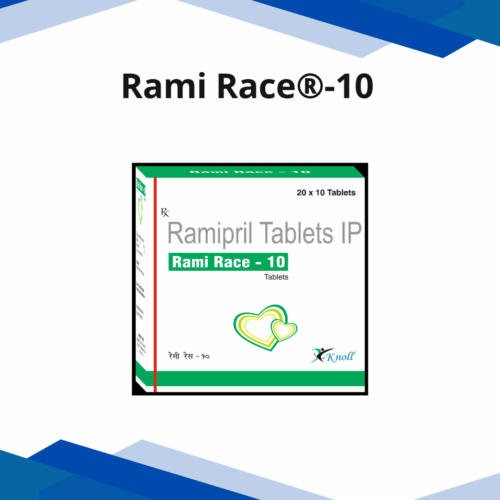
Ramipril
Ramipril is an ACE (Angiotensin-Converting Enzyme) inhibitor that causes reduced blood pressure and long-term cardiovascular benefits. By making blood vessels relaxed and widened, Ramipril dilatates blood vessels, which thereby makes it easier for blood to flow and reduces the workload of the heart. Ramipril essentially helps to save lives following a heart attack by significantly diminishing mortality rates and retarding the progression of nephropathy in diabetic patients.
Therapeutic Uses Hypertension Management: Zestril effectively lowers hypertension to lower risks for stroke and heart failure.
Post-Heart Attack Care: Helps more heart-attack patients with an increased survival rate, provided it is initiated immediately upon having a heart attack.
Cardiovascular Prevention: In patients aged 55 years' RISK of its application, such prevention lessens heart attack and stroke risk.
Protecting Kidneys: Secondarily, decreased process rate of kidney damage (nephropathy) in either diabetic patients or patients with already kidney conditions.
How It Works Ramipril is a prodrug that is activated in the liver to its active form, ramiprilat. One of the main roles of ACE is to create a substance that narrows the blood vessels. By blocking this enzyme:
Vessels Relax: Blood vessels dilate and reduce peripherally, allowing the blood-flow resistance.
Fluid Balance: It depletes the secretion of aldosterone, effectively helping the body to manage salt and water levels correctly.
Administration & Dosage
When to Take: Generally once or twice a day, depending on your treatment. Since the first dose may cause severe dizziness, your health care provider may advise you to take it at bedtime.
Food: Taken with or without food; must be swallowed whole, with plenty of water.
Routine: Must be regularly administered at the same time every day. This enables the maintenance of steady drug levels at your body for maximum efficacy.
Common Side Effects Nearly all patients are able to tolerate Ramipril, but there are a few that might feel:
Dry, Tickly Cough: This is a common side effect in ACE inhibitor therapy. If it stays THEQUIRE medical focus.
Dizziness or Lightheadedness: Especially when quickly rising head.
Headache or Fatigue.
Mild Digestive Disturbances, e.g nausea, or diarrhea.
Furthermore, if getting more frequent this happens, you must seek care:
Angioedema: Warning signs of immediate life-threatening conditions due to lung and airway obstruction with swelling and life-threatening throat problems.
Safety & Precautions
Pregnancy Warning: Absolutely contraindicated. The whole of Ramipril can pose a potential risk of severe and even fatal injury to a developing fetus. It is important to stop taking this medication from your doctor after discovering your pregnancy.
The Running of Kidneys: Normal potassium levels and kidney function are routinely monitored in blood testing throughout the treatment phase.
Alcohol: Keep it away from the drug or keep it to a minimum. Alcohol can increase the effects of sudden fall in blood pressure, causing mild to extreme dizziness.
Drug Interactions: With regards to your health status, document your current use of whatsoever medicines, almost particularly potassium supplements, diuretics, or NSAIDs such as Ibuprofen.
Questions And Answers
Q: When will stress tension get better on Ramipril?
Ramipril works in the first few hours after administration. On the other hand, the maximum that ought to have been considered and trial use over at least two to three weeks is desirable for the diabetes and congestive heart failure.
Q: Why am I coughing so much since I have been on Ramipril?
The ACE-inhibitor-induced dry cough. ACE inhibitors, including Ramipril, induce the build-up of bradykinin in the lungs. Switching to an ARB (Angiotensin II Receptor Blocker), if feasible.
Q: Would you recommend me halting the use of Ramipril once my blood pressure returns to normal?
No. Hypertension is a "silent" condition. Once the blood pressure is normalized, stopping the Ramipril has no healing effect. On the other hand, its instantaneous interruption causes a fear of a sharp spike in blood pressure, the latter raising the risks associated with heart attack or stroke.
Q: Now that I am taking this drug, do I have to stop eating any special foods?
Take note of the "poor substitutes" (a salt-based edible item containing potassium). Ramipril may increase your blood potassium levels, and food or supplement-based potassium with the pill might lead to hyperkalemia.
Q: What do I do when a tablet is missed?
Take it as soon as you remember. Skipping is encouraged if your next dose is due. Do not take an additional dose to make up for the missed one.
At Gem Pharmacy, we make every effort to provide accurate, expert-written, and thoroughly reviewed information related to medicines. However, this information should not be considered a substitute for professional medical advice, diagnosis, or treatment from a qualified doctor.
The purpose of this information is to educate users and improve communication between patients and healthcare professionals. It should not be used to diagnose or treat any condition.
Always consult a certified healthcare professional before taking any medication.


Related products