

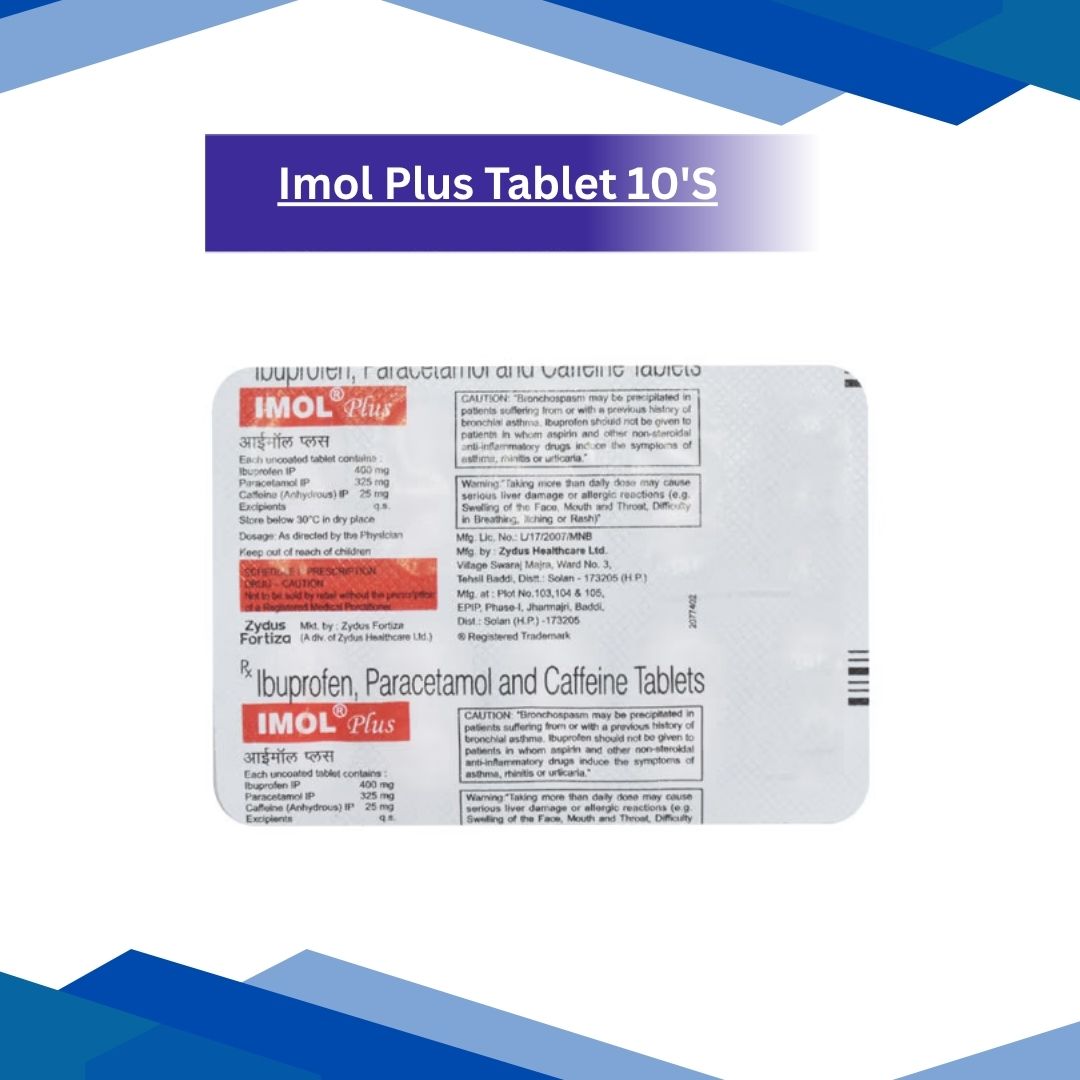
Imol Plus Tablet 10’S
No Prescription yet? Don’t worry! Click Here to Get Online Consultation
Imol Plus Tablet is a pain-relieving medicine. It is used to reduce pain and inflammation in conditions like rheumatoid arthritis, ankylosing spondylitis, and osteoarthritis. It may also be used to relieve muscle pain, back pain, toothache, or pain in the ear and throat.
For more details kindly click on medicine Salts Below:
Caffeine
Caffeine 100/200 mg Tablet
Caffeine is a potent Central Nervous System (CNS) stimulant belonging to the class of methylxanthines. When fatigued or drowsy, most users will turn to this compound for a successful return to mental alertness or wakefulness. Instead of merely using Caffeine in the treatment of patient's energy levels, the drug is very useful in aiding the treatment of pain medications giving great recourse to enhance analgesics along with Paracetamol or Aspirin and then in selected treatment conditions where respiratory symptoms are overt.
Indications
Mental Alertness: Serves as a quick aid to improved concentration and focus with a rapid cognitive processing speed.
Relief of Pain: Assists in the relief of migraines and tension headaches as an adjuvant.
Physical Performance: Reduces perception of effort and fatigue during high-intensity exercise.
Respiratory support: In a neonatal unit, under close medical supervision, Caffeine is used to manage apnea of prematurity.
Mechanism of Action
Caffeine works primarily as an adenosine receptor antagonist in the brain. Adenosine is a naturally occurring neurotransmitter that promotes relaxation and sleep; thus, by inhibiting its receptor binding, caffeine suppresses the onset of fatigue/lassitude. Additionally, it causes an excess release in the brain of the neurotransmitters dopamine and norepinephrine, which improve mood and make one more perceptive.
Usage/Dosage Instruction
For Adults: 100 to 200 mg every 3 to 4 hours as needed.
Maximum Doses: Not to exceed 400 mg in a 24-hour period.
How to Use: Swallow the tablet with water; it can be taken without food or with some light snack to reduce stomach acidity.
Safety Information and Warnings
Pregnancy and Breastfeeding: Limit intake. At high doses, they are linked with low birth weight. Consult your OB-GYN.
Cardiovascular diseases: Use with extreme caution if you have hypertension (high blood pressure) or even heart diseases, as these may cause increased heart rate.
Anxiety Disorders: Stress, tremors, and panic attacks can exacerbate symptoms in people with sensitivity.
Sleep Hygiene: Consumption of tablets past six hours before bedtime may cause sleep obstruction.
Possible Side Effects
Generally well-tolerated at recommended doses, yet some users may occur:
Nervousness or "jitters"
Increased heart rate (palpitations)
Urination: more frequent (diuretic effect)
Digestive Troubles or Heartburn
Headaches (Often associated with the withdrawal of caffeine)
Frequently Asked Questions
Q: Can I take Caffeine tablets instead of sleeping?
A: No. Caffeine tablets are a stimulant and not a sleep substitute. Caffeine has the ability to mask sleep with tiredness, and not to play a healing biological role in sleep.
Q: Can I combine these tablets with coffee or energy drink?
Limit other caffeine sources while taking these tablets, or else you could easily take a dose of 400mg or more throughout the day, which would easily exacerbate caffeine toxicity symptoms like severe anxiety or a racing heartbeat.
Q: Why is caffeine included in pain relievers?
Caffeine constricts blood vessels in the brain which helps the body absorb pain-relief medication like Ibuprofen 40 percent faster, thus enabling better relief from a migraine.
Q: Can caffeine cause dehydration?
Caffeine tends to encourage increased urination; the substances do not lead to dehydration in those who habitually consume enough fluids throughout the day.
Q: Can Children Take No-Doz Caffeine Tablets?
No-Doz tablets should be avoided in children under 12 years of age; adolescent consumption should be exercised only under parental or medical guidance.
Expert Opinion
Pro Tip: For beginners of caffeine, a dose of 100 mg or below will work in order for the beginning while assessing tolerance. Keep the "crash" under control by keeping yourself hydrated and getting the necessary amount of sleep without relying on stimulants for exhaustion you might get due to chronic lack of sleep.
Disclaimer: Information presented here is for educational purposes only, not in the place of professional medical advice. Consult your physician before starting the regimen mentioned herein.
Ibuprofen
Ibuprofen 400mg Tablet
Ibuprofen is a widespread Non-Steroidal Anti-Inflammatory Drug (NSAID) from the propionic acid derivative family. It is very effective in relieving mild to moderate pain, inflammation, and fever. It does so by blocking the production of prostaglandins that are released by cyclooxygenase (COX) enzymes in the body—natural chemicals that signal pain and provoke swelling.
Therapeutic Uses
Pain Management: For headaches, dental, dysmenorrhea (menses), muscular aches;
Inflammatory Conditions: Joint pain and stiffness together with osteoarthritis and rheumatoid arthritis;
Fever Reduction: While Ibuprofen helps to reduce the high associated fever due to common flu.
Post-Operative Recovery: The drug finds use in the initial stage of recovery from minor swelling and discomfort, effect post-surgical or dental procedures.
How It Works
Ibuprofen targets the site of the injury or inflammation. By inhibiting the conversion of arachidonic acid into prostaglandins, it significantly lowers the level of prostaglandins relative to the threshold for pain perception and lessens the physical symptoms of inflammation, such as redness, heat, and swelling.
Usage Directions and Administration
Standard Dosage: Adults can take 400 mg every 4 to 6 hours as needed. However, do not exceed 1200 mg in 24 hours unless advised by a physician.
Administration: Consume the tablet with meals, milk, or antacids for a low risk of stomach upset.
Duration: Take a low dose for the shortest period possible to improve symptoms.
Safety Advice Do's and Dont's
Warning Alcohol: Do not mix alcohol with Ibuprofen as both contribute to stomach bleeding and irritation. Alcohol should be completely avoided.
Pregnancy: It is better not to take it during pregnancy, especially in the third trimester (risk of heart/kidney issues in the fetus).
Liver/Kidney: Use with caution, as Ibuprofen affects renal blood flow in the long run.
Driving: Usually safe, but avoid taking if you experience dizziness or blurred vision.
Side Effects
It is typically well tolerated, but in a few instances, patients might suffer:
Heartburn, indigestion, or nausea
Dizziness or a mild headache
Skin rash (rare)
Increased blood pressure due to long-term use
Warning: Seek help immediately if you see black/tarry stools, severe abdominal pain, swelling of the face or throat, as these could indicate a potentially life-threatening allergic reaction or internal bleeding.
Frequently Asked Questions (FAQs)
Q: Can I take Ibuprofen on an empty stomach?
One must try to have Ibuprofen with food or a glass of milk and not on an empty stomach. This helps avoid gastritis and possible ulcers with chronic use.
Q: How does Ibuprofen differ from Paracetamol (Acetaminophen)?
Both reduce pain and fever, but Ibuprofen also acts as an anti-inflammatory agent. It is more effective for pain due to swelling, such as sports injuries or arthritis.
Q: Can one give Ibuprofen to a child?
Pediatric versions (suspensions) are available, but dosing must be based on weight and age. Children under 12 should not be given adult-strength tablets without medical advice.
Q: Does Ibuprofen interact with blood pressure medications?
Yes, it can reduce the effectiveness of ACE inhibitors and diuretics and may slightly raise blood pressure with long-term use.
Q: How long does it take to start working?
Relief usually begins within 20 to 30 minutes, with peak effect in 1 to 2 hours.
Storage
Keep in a cool, dry place below 30 °C/86 °F. Protect from direct moisture and sunlight. Keep out of reach of children.
Disclaimer: This content is for informational purposes and is not a substitute for professional medical advice, diagnosis, or treatment.
Paracetamol
Paracetamol 500mg Tablet
Paracetamol is probably the most prescribed and widely used medicine in the world. It is commonly administered to relieve mild-to-moderate pain and to reduce fever. It is well known for its dual action as an analgesic and antipyretic. It is considered a first-line treatment for common ailments such as headaches and fever, and is generally regarded as safe when used within recommended limits.
Key Therapeutic Uses
Fever: Helps in the rapid reduction of high body temperature during viral infections or common flu.
Headache & Migraine: Effective for dull, throbbing pain associated with tension-type headaches.
Muscle & Joint Pains: Relieves minor backache, period cramps, and toothache.
Post-Vaccination Recovery: Used to manage mild soreness or low-grade fever after vaccination.
Usage Guidelines
Standard Adult Dose: Typically 500mg to 1000mg every 4 to 6 hours as needed.
Maximum Limit: Do not exceed 4000mg (4 grams) in a 24-hour period, as this may cause serious liver damage.
Administration: Swallow the tablet whole with water; it can be taken with or without food.
Children: Dosage must be weight-based. Use pediatric formulations like syrups or drops as advised.
Safety & Precautions
Combination Medicines Warning: Many cold and flu products contain paracetamol (acetaminophen). Avoid double dosing.
Alcohol: Limit alcohol intake, as combining with paracetamol increases the risk of liver toxicity.
Liver & Kidney Health: Consult a doctor if you have liver or kidney disorders.
Allergic Reactions: Rarely may cause rash, swelling, dizziness, or breathing difficulty. Seek immediate medical attention if these occur.
Adverse Effects
Paracetamol is usually well tolerated, but rarely may cause:
- Mild nausea
- Skin rash or itching
- Very rare blood disorders (leukopenia, thrombocytopenia)
⚠️ Warning: Yellowing of eyes or extreme fatigue may indicate serious liver issues—seek urgent care.
Frequently Asked Questions (FAQs)
Q: How long does Paracetamol take to work?
A: Relief usually begins within 30 minutes to 1 hour. Fever reduction may take slightly longer.
Q: Can I take paracetamol during pregnancy?
A: It is generally considered safe when used at the lowest effective dose, but always consult your OB-GYN before use.
Q: Is paracetamol better than ibuprofen?
A: It depends on the condition. Paracetamol is ideal for pain and fever, while ibuprofen may be better for inflammation.
Q: Can I take Paracetamol on an empty stomach?
A: Yes, it is gentle on the stomach and can be taken without food.
Q: What happens if I miss a dose?
A: If taken as needed, take it when remembered, ensuring at least a 4-hour gap and not exceeding the daily maximum dose.
At Gem Pharmacy, we make every effort to provide accurate, expert-written, and thoroughly reviewed information related to medicines. However, this information should not be considered a substitute for professional medical advice, diagnosis, or treatment from a qualified doctor.
The purpose of this information is to educate users and improve communication between patients and healthcare professionals. It should not be used to diagnose or treat any condition.
Always consult a certified healthcare professional before taking any medication.


Related products