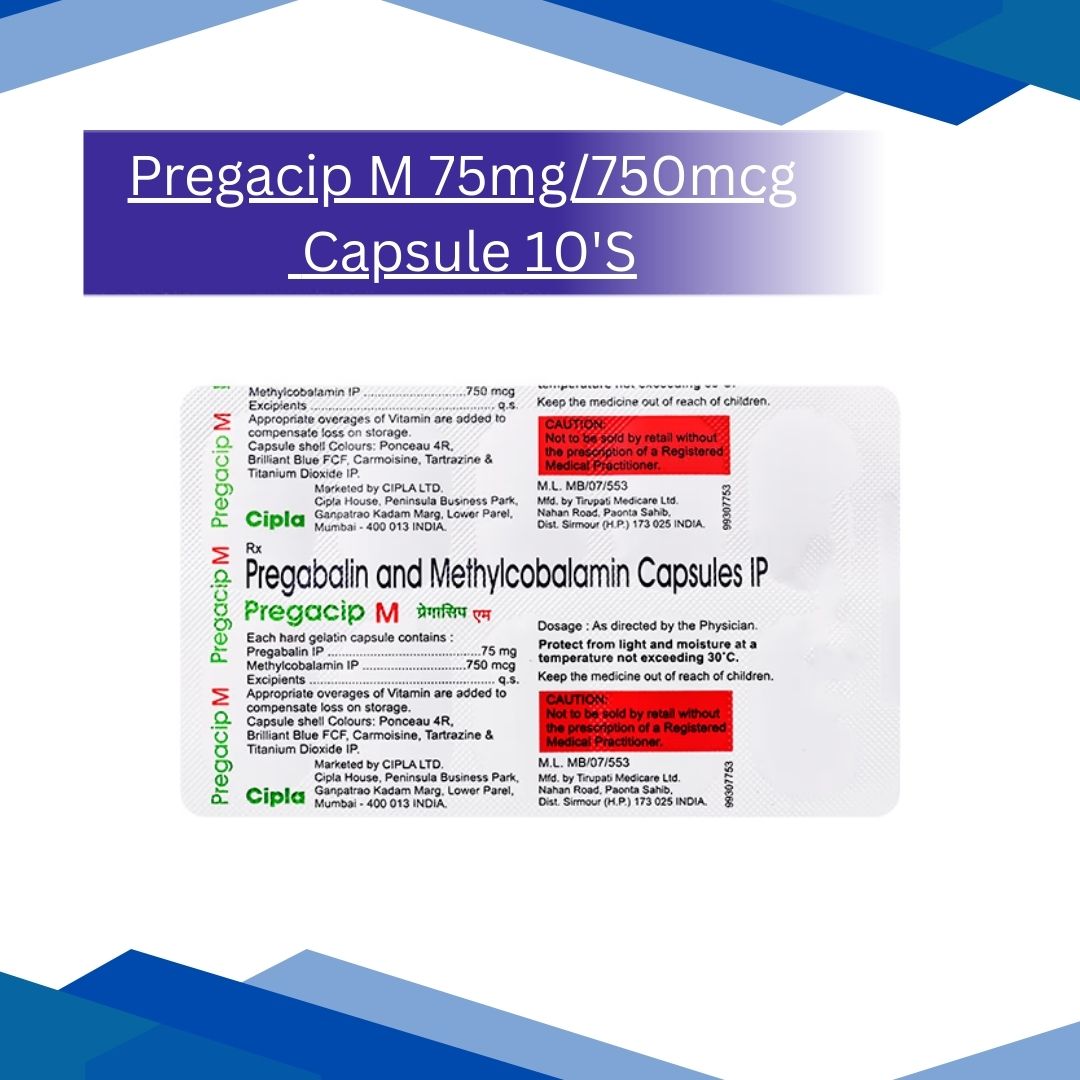
Pregacip M 75mg/750mcg Capsule 10’S
❌ Due to high demand, this product is currently out of stock. New stock will be available shortly.
👉 Click here to Buy Same Salt medicine
No Prescription yet? Don’t worry! Click Here to Get Online Consultation
PREGACIP M 75MG/750MCG CAPSULE is used for the management of neuropathic pain. It is a combination of Pregabalin and Methylcobalamin which belongs to the group of medicines called Anticonvulsants and Vitamin-B complex respectively. It consists of Methylcobalamin and Pregabalin where Methylcobalamin acts by rejuvenating the damaged neurons by improving the production of myelin and pregabalin acts by interfering with various pain signals travelling through the damaged nerves and the brain, thus leading to a significant pain relief in various neuropathic pain states.
Methylcobalamin
Vitamin B12 Methylcobalamin 1500 mcg Caps/Tab
Methylcobalamin is the most bioactive and powerful form of Vitamin B12, especially suitable for vegetarians. Compared to synthetic forms like cyanocobalamin, it is already in a body-ready state and acts more efficiently without requiring conversion in the liver. It is primarily essential for nerve health, brain function, and red blood cell formation.
Major Likely Health Benefits
Support the Nerves: Often recommended for neuropathy (especially in diabetes) and peripheral nerve pain. It helps regenerate nerve sheaths and improves nerve signal transmission.
Boost Energy: Supports DNA synthesis and red blood cell production, helping reduce fatigue and brain fog.
Support Cognitive Functions: Aids in memory, sleep regulation, and mental clarity.
Homocysteine Regulation: Helps lower homocysteine levels, supporting cardiovascular health.
For Usage Guide
Dosage: The usual dose is 25–75 mg per day. Higher doses may be gradually increased (in 25–50 mg increments) up to 300 mg per day over several months, depending on individual response and medical advice.
Adverse Effects and Interactions
Toxicity: Methylcobalamin has low toxicity. Excess amounts are usually excreted in urine due to its water-soluble nature.
Alcohol Interaction: Alcohol consumption may reduce absorption and effectiveness; avoid excessive intake.
Severe Adverse Effects
Although rare, monitor for:
Lightheadedness
Unusual neurological symptoms
Withdrawal Symptoms
Withdrawal symptoms may vary depending on associated medications and typically appear within hours to days, resolving over weeks.
Pregnancy and Lactation
Pregnancy: Use only under medical supervision.
Lactation: Small amounts may pass into breast milk, but generally considered safe under guidance.
Dosage Instructions for Special Populations
Newborns, Infants, and Lactating Mothers: Use only under strict medical advice.
Possible Side Effects
Methylcobalamin is generally well-tolerated, but some individuals may experience:
Mild nausea or stomach upset
Temporary dizziness
Headache
Occasional skin itching or rash
Frequently Asked Questions (FAQs)
Q: Why should I choose Methylcobalamin over Cyanocobalamin?
A: Methylcobalamin is the natural, active form of Vitamin B12. It stays longer in the body and works directly at the nervous system level without requiring conversion, making it more efficient and effective.
Q: Can I take it for general tiredness?
A: Yes, especially if fatigue is due to Vitamin B12 deficiency. Vegetarians and elderly individuals often benefit from supplementation.
Q: How long does it take to improve nerve pain?
A: Energy levels may improve within 1–2 weeks, while nerve repair (numbness/tingling) may take 4–8 weeks of consistent use.
Q: Will overdosing on Vitamin B12 pose a risk?
A: Generally no. Being water-soluble, excess Vitamin B12 is excreted. However, stick to recommended doses such as 1500 mcg daily unless advised otherwise.
Q: Are there any foods I should avoid while taking it?
A: No major restrictions. However, excess alcohol may interfere with absorption, so moderation is advised.
Pregabalin
The 75 mg capsule of pregabalin
Pregabalin is a potent medication that belongs to the group of gabapentinoids and which is increasingly used for epilepsy and neuropathic pain management. You will find its administration in the treatment of chronic neurogenous pain syndromes such as diabetic neuropathic pain, post-herpetic neuralgia (pain related to shingles), and fibromyalgia. This drug is also served as an add-on therapy in adult patients with certain types of seizures or to manage Generalized Anxiety Disorder (GAD).
Therapeutical Use
Neuropathic Pain: Cures long-term nerve pain from diabetic neuropathy, shingles, or spinal-cord injury. Nuromusculoskel-
Fibromylagia: Straightens out widespread muscle pain, tenderness, and joint pain from this chronic condition.
Epilepsy: Works by modifying other drugs and controlling one part of the partially partial seizures by balancing the firing of brain cells.
Anxiety: Alleviates obsessions, restlessness, and tension in Generalized Anxiety Disorder.
Mode of Action
Pregabalin works by modulating the calcium channels within the central nervous system. By joining the specific subunits of these channels, pregabalin serves to diminish excitation of several neurotransmitters (for example glutamate and substance P). In a sense, it helps in "calming" overactive or damaged nerves, which in turn slows the transmission of the pain signal to the brain and prevents the occurrence of unnecessary abnormal electric discharges which cause seizures.
Brief Specification
Active Ingredient: Pregabalin (USP/IP)
Drug Classification: Anticonvulsant / Gabapentinoid
Common Strengths: 25mg, 50mg, 75mg, 150mg, 300mg
Prescription Category: Schedule H (Prescription-Required)
Administration and Dosages
Method: Preferably swallow the capsule whole with water. Do not open, chew, or crush a capsule.
Food: pregabalin may be taken with or without food. If it tends to cause stomach upset, one may take medication with or after a meal.
Consistency: So as to get the best results, take your dose at the same time(s) each day so that a consistent concentration of medicine can be maintained in your bloodstream.
Side Effects
Most side effects caused by Pregabalin are mild and should gradually wane as your body gets used to them. These may include:
Dizziness and sleepiness
Dry mouth
Blurred vision
Weight gain (increased appetite)
Swelling in hands or feet (edema)
Inability to concentrate and memory lapses
If you have a serious mood change (depression), thoughts of suicide, or an allergic reaction suddenly becomes severe (face/tongue swelling), call for emergency medical help (call) immediately.
Precautions
Alcohol: Avoiding alcohol is suggested while taking Pregabalin because it can be particularly dangerous as it increases drowsiness and interferes with coordination.
Driving: You do not drive or operate heavy machinery until you know will not make you dizzy or drowsy.
Kidney Health: Dose adjustments should be made for patients who have renal impairment, and your doctor should be well- informed about your kidney status.
Discontinue: Pregabalin should never be stopped suddenly. If the patient abruptly stops pregabalin, symptoms of withdrawal, such as insomnia, nausea, and an increase in seizure numbers, can occur. The dose will be tapered down by the doctor gradually over at least one week.
Mental Health: Monitor for development of any unusual changes in mood or behavior, particularly at the outset of treatment.
Frequently Asked Questions (FAQs)
Q: How long does it take for Pregabalin to start to work?
Some patients may start feeling pain reduction within the first week. It may, however, take 2-4 weeks of reasonably regular usage to obtain the full benefits from taking pregabalin.
Q: Is Pregabalin for normal back pain?
It is quite specific for nerve pain and not your everyday muscular strain or typical headaches treatment; therefore, Pregabalin applies to chronic back pain only with the nerve's involvement confirmed by a doctor.(for example, sciatica)
Q: Is Pregabalin addictive?
Pregabalin has a potential for misuse and habituation if taken in higher amounts or for longer than prescribed. Always follow your doctor’s instructions explicitly and never share this medicine with anyone else.
Q: If I miss a dose, what should I do?
Administer the missed dose as soon as you remember. If, in case, it is very near to the scheduled dose, just skip that accidentally missed dose. Do not ever take a double dose for extra benefit.
Q: Will this drug affect fertility?
Data on Pregabalin and human fertility are scarce. If pregnant or breastfeeding or planning to be pregnant, you should seek guidance from your healthcare provider given the potential for risk to the fetus outweighing benefits.
At Gem Pharmacy, we make every effort to provide accurate, expert-written, and thoroughly reviewed information related to medicines. However, this information should not be considered a substitute for professional medical advice, diagnosis, or treatment from a qualified doctor.
The purpose of this information is to educate users and improve communication between patients and healthcare professionals. It should not be used to diagnose or treat any condition.
Always consult a certified healthcare professional before taking any medication.


Related products

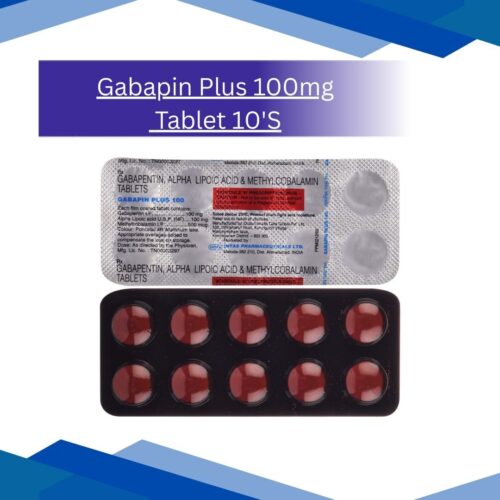
Gabapin Plus 100mg Tablet 10’S