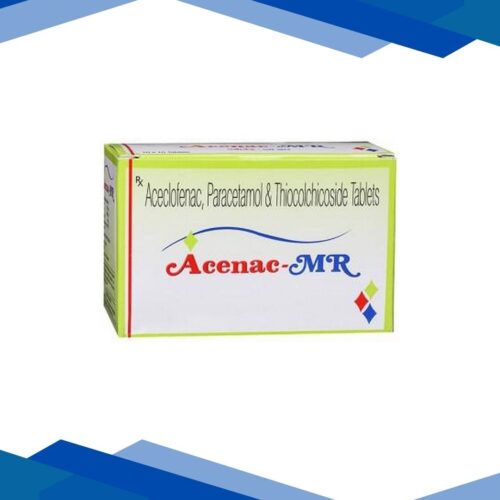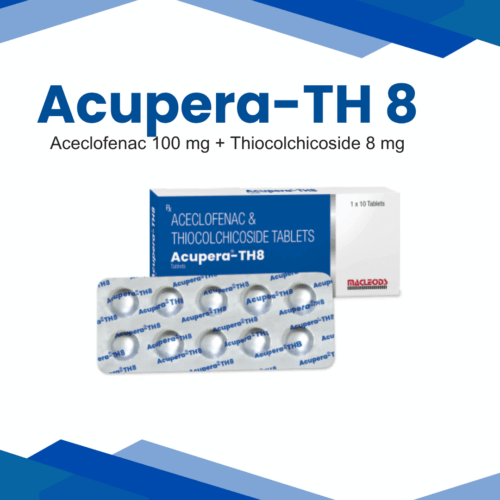
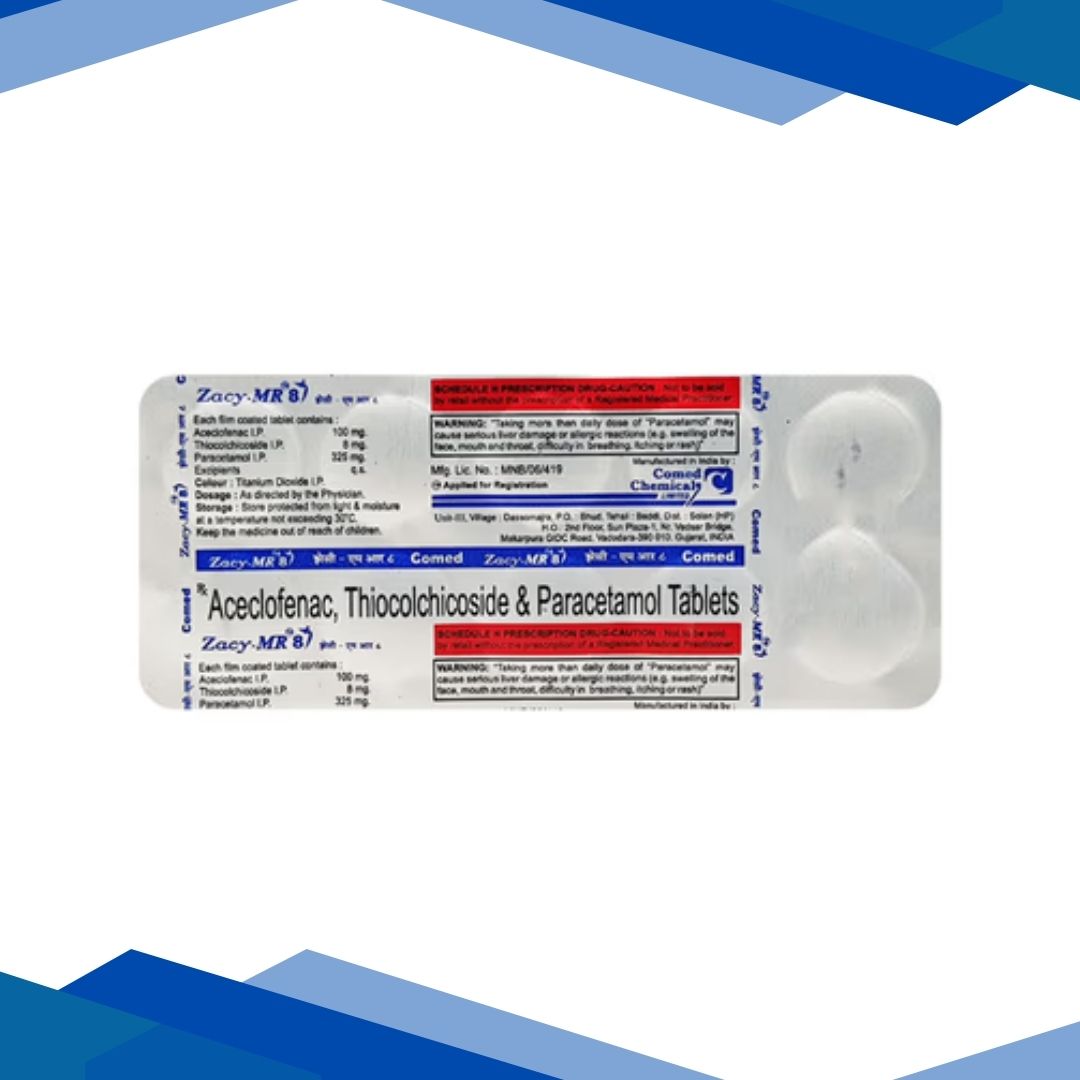
Zacy MR 8mg Tablet 10’S
No Prescription yet? Don’t worry! Click Here to Get Online Consultation
Zacy MR 8mg Tablet is a prescription combination medicine used to relieve pain, inflammation, and muscle spasms associated with musculoskeletal conditions such as back pain, joint pain, sprains, and other acute muscle-related disorders. It works by reducing inflammation, relieving pain, and relaxing muscles to improve mobility and comfort. For more details kindly click on Medicine Salts below:
Aceclofenac
Aceclofenac 100 mg Tablet
Aceclofenac 100 mg is an effective non-steroidal anti-inflammatory drug (NSAID), and it brings strong analgesic (pain relieving) as well as antipyretic (fever reducing) effects. It is usually prescribed to calm down painful swelling, redness, and stiffness that come with both acute and long-term musculoskeletal problems. By aiming at certain whole body enzymes, it supports improved movement, and it helps many people feel more comfortable with everyday mobility.
Therapeutic Class : Non-Steroidal Anti-Inflammatory Drugs (NSAIDs)
Chemical Category : Phenylacetic Acid Derivative
Habit-Forming : No
Prescription Required : Yes (Rx / Schedule H)
Therapeutic Indications & Core Benefits
1. Management of Chronic Joint Wear
Aceclofenac is commonly used to reduce joint ache, tenderness, and localized warmth linked to osteoarthritis, a degenerative condition where protective articular cartilage steadily breaks down.
2. Suppression of Autoimmune Inflammation
It is used in rheumatoid arthritis to manage long lasting systemic inflammation, reduce visible swelling, and help prevent persistent morning stiffness.
3. Relief from Spinal Stiffness
This medicine is considered a key option for ankylosing spondylitis, a chronic spinal arthritis that can affect posture and reduce back movement over time.
4. General Musculoskeletal Injuries
It also supports comfort for soft tissue strains, athletic sprains, dental pain, and painful recovery after surgical tissue work.
Mechanism of Action: How It Works
Aceclofenac works mainly by inhibiting cyclooxygenase (COX) enzymes, with a clinical leaning toward COX-2. Those enzymes normally help convert arachidonic acid into prostaglandins, which are the biochemical messengers that drive intense pain, high fevers, and tissue inflammation after injury.
After the drug is metabolized, part of Aceclofenac becomes active metabolites that can enter and act within the joint fluid, also called synovial fluid. This more local influence helps reduce inflammation signals right at the site where joint friction happens.
Proper Dosage & Administration
How to take:
Swallow the tablet whole with a full glass of water. Do not crush, powder, break or chew it.
Timing:
Take this medicine strictly with food, or immediately after eating, or with a glass of milk. This helps protect your stomach lining and reduces the chance of gastric irritation.
Standard Adult Dose:
A typical medical recommendation is 100 mg twice daily (one tablet in the morning and one at night), or exactly as your clinician has prescribed.
Potential Side Effects
Even though Aceclofenac is made to be gentler on the stomach than older pain treatments, side effects can still happen.
Common Side Effects:
- Nausea, brief vomiting, or indigestion (dyspepsia)
- Mild abdominal discomfort or diarrhea
- Slight dizziness or headache
- Mild increase in liver enzyme values on routine blood tests
Serious Reactions (Stop usage and contact your doctor immediately):
- Severe gastrointestinal distress, including intense stomach pain, vomiting blood, or dark tar like stools
- Anaphylaxis, with facial swelling, hives, or extreme trouble breathing
- Signs of kidney strain, such as suddenly lower urine output or blood in the urine
- Severe skin blistering with fever, or skin peeling
Safety Controls & Precautions
| Risk Area | Health Status | Medical Directive & Warning |
|---|---|---|
| Alcohol | ❌ Unsafe | Avoid alcohol completely while taking this drug. Combining them increases the likelihood of stomach ulcers and internal gastrointestinal bleeding. |
| Pregnancy | ❌ Avoid | Contraindicated, especially during the final trimester. It can contribute to early closure of key fetal heart pathways, and may also interfere with fertility when trying to conceive. |
| Breastfeeding | ⚠️ Caution | Limited information is available. Talk to your doctor before use, and it should be used only if the benefit to the mother clearly outweighs possible exposure to the infant. |
| Heart Disease | ❌ Avoid | Not recommended if you have advanced heart failure, uncontrolled high blood pressure, or prior stroke history, because NSAIDs can slightly raise cardiovascular risk. |
| Asthma | ❌ Contraindicated | Do not use if you have severe asthma, or if aspirin or other NSAIDs trigger asthma symptoms or skin rashes. |
Frequently Asked Questions (FAQs)
Q. Is Aceclofenac considered a strong painkiller?
Aceclofenac is considered a moderately strong anti-inflammatory pain reliever. It often works better for structural bone, joint, and muscle pain than common over the counter paracetamol, because it reduces localized tissue swelling and the inflammatory enzymes that sustain pain.
Q. Can I take Aceclofenac 100 mg on an empty stomach?
No, you should not take it on an empty stomach. As an NSAID, it can irritate the stomach lining when taken without food, leading to heartburn, acidity, or even gastric ulcers. Always take it with or right after a proper meal.
Q. How long does it take for Aceclofenac to start relieving pain?
Many people notice a meaningful improvement in pain and stiffness within 30 to 60 minutes after the tablet. Effects typically last around 12 hours, which is why a twice daily schedule is used.
Q. What should I do if I forget to take my scheduled dose?
If you miss a dose, take it when you remember, as long as you are near food or with food. If your next dose is only a few hours away, skip the missed tablet and continue as planned. Never take two tablets at once to compensate.
Q. Why do doctors avoid prescribing Aceclofenac for long-term use?
Ongoing, unmonitored NSAID use for months can strain the kidneys, raise blood pressure, and increase the risk of silent stomach ulcers. Doctors often recommend the shortest possible period needed to manage acute pain flare ups. If long term use is truly necessary for chronic arthritis, your physician may add an antacid capsule for stomach protection.
Paracetamol
Paracetamol 500mg Tablet
Paracetamol is probably the most prescribed and widely used medicine in the world. It is commonly administered to relieve mild-to-moderate pain and to reduce fever. It is well known for its dual action as an analgesic and antipyretic. It is considered a first-line treatment for common ailments such as headaches and fever, and is generally regarded as safe when used within recommended limits.
Key Therapeutic Uses
Fever: Helps in the rapid reduction of high body temperature during viral infections or common flu.
Headache & Migraine: Effective for dull, throbbing pain associated with tension-type headaches.
Muscle & Joint Pains: Relieves minor backache, period cramps, and toothache.
Post-Vaccination Recovery: Used to manage mild soreness or low-grade fever after vaccination.
Usage Guidelines
Standard Adult Dose: Typically 500mg to 1000mg every 4 to 6 hours as needed.
Maximum Limit: Do not exceed 4000mg (4 grams) in a 24-hour period, as this may cause serious liver damage.
Administration: Swallow the tablet whole with water; it can be taken with or without food.
Children: Dosage must be weight-based. Use pediatric formulations like syrups or drops as advised.
Safety & Precautions
Combination Medicines Warning: Many cold and flu products contain paracetamol (acetaminophen). Avoid double dosing.
Alcohol: Limit alcohol intake, as combining with paracetamol increases the risk of liver toxicity.
Liver & Kidney Health: Consult a doctor if you have liver or kidney disorders.
Allergic Reactions: Rarely may cause rash, swelling, dizziness, or breathing difficulty. Seek immediate medical attention if these occur.
Adverse Effects
Paracetamol is usually well tolerated, but rarely may cause:
- Mild nausea
- Skin rash or itching
- Very rare blood disorders (leukopenia, thrombocytopenia)
⚠️ Warning: Yellowing of eyes or extreme fatigue may indicate serious liver issues—seek urgent care.
Frequently Asked Questions (FAQs)
Q: How long does Paracetamol take to work?
A: Relief usually begins within 30 minutes to 1 hour. Fever reduction may take slightly longer.
Q: Can I take paracetamol during pregnancy?
A: It is generally considered safe when used at the lowest effective dose, but always consult your OB-GYN before use.
Q: Is paracetamol better than ibuprofen?
A: It depends on the condition. Paracetamol is ideal for pain and fever, while ibuprofen may be better for inflammation.
Q: Can I take Paracetamol on an empty stomach?
A: Yes, it is gentle on the stomach and can be taken without food.
Q: What happens if I miss a dose?
A: If taken as needed, take it when remembered, ensuring at least a 4-hour gap and not exceeding the daily maximum dose.
Thiocolchicoside
Thiocolchicoside: A Balancing Act in the Treatment of Acute Muscle Spasms
Thiocolchicoside is potent as a muscle relaxant and is derived, from natural sources, to relieve painful muscle tightness and spasticity. When compared to many of the muscle relaxants already in use, which are highly sedative, thiocolchicoside does not affect the human mind as quickly if being used for stiffness and physical recovery. Thus, in terms of the physical recovery in acute cases, this is promising.
Thiocolchicoside: Key Therapeutic Uses
Acute Lumbago: This does show fast action when used in cases of lumbago, sciatica, and just other lower back pains-general sort.
Musculoskeletal Spasms: An effective spasm button against the sprains of the neck muscles and torticollis.
Neurological Spasticity: Is given as an adjunct for the control of muscle stiffness in some neurological diseases with involuntary muscle movements.
Post-Traumatic Recovery: Helps in reducing muscle tension once begun.
Topic Articles
The precise mechanism of actions of these drugs at the pathophysiological level is poorly understood. It appears like thhe chemicolicoid cholicermotropicottery that essentially inhibits the central nervous system from follicling with the receptors in the spinal cord and helps in setting various spastic complexes in contrast. Thus, it antagonizes overactivity of mediators and neurotransmitters due to injury and inflammation that usually result from muscle overexertion and muscle strain.اءWithin minutes, virtually, it guarantees dynamism within a particular protocol governed by an abnormal contractile impulse. Thiocolchicoside resets the body back to its normal muscle activity within minutes.
Usual Dosage & Timing
Thiocolchicoside should best be taken after meals. If taken before, the patient is likely to suffer gastric discomfort.
Duration: Period of medication should not exceed a week without a significant reason. It could serve as a longer-term treatment if necessary.
Forms of Prep
Solicar®, Muscadol®: capsules, tablets, and topical formulations
Available Formulations
Thiocolchicoside: Frequently Asked Questions
Q: Is Thiocolchicoside a painkiller?
A: Not entirely. It combats pain by curing the muscle that has contracted and is causing pain. The combination hence should be wise, usually with some mild anti-inflammatory, like paracetamol, Aceclofenac, or Diclofenac, for comprehensive relief.
Q: When can the medication start to show effects?
A: Most patients notice a decrease in the degree of muscle stiffness in 1 to 2 hours after the oral administration. This entire effect usually further sets in after consistent administration within 3-5 days.
Q: Whether the drug is advisable to take during pregnancy?
A: NO. Absolutely prohibited; it's not allowed to be taken even during breast-feeding.. It can, although it has never been proven, affect fetal cell development. It would also be a good idea to inform your doctor if you are trying to conceive or plan on doing so.
Q: Does it make a patient sleepy?
A: Not as sedating as start receiving muscle relaxants do. However, Thiocolchicoside may render this side effect in some individuals who might find it to be just a bit more woozy. Visuospatial abilities are disturbed. Do not rush to drive, operate machinery, or walk until you know how you react.
Q: What to do if faced with diarrhea?
A: Some will have diarrhea, upset stomach, and acne as mild side effects. Knock it off in the event it worsens or becomes persistent or affects you badly and witness your doctor for further doses.
Side-Effects and Safety in a Nutshell
Adverse ReactionFrequencyAetiopathogenesisRecommendation
Gastric Pain/NauseaNever liverGiven with milk or food
DrowsinessOnceMinutes of takingAvoid alcohol; avoid high-alert jobs. Ihad cases of DDS.
Skin Rash/ItchingEvery 2000.000Discontinue and see the specialist. Prostate cancer is the most common drug-induced dermatological problem.
PhototoxicityRareBeware of direct light during treatment.
Q: Can epilepsy patients use this medication?
A: Provoked with extreme care, with good precautions, they may use this in their treatment.
Q: Are there any age restrictions?
A: Best to avoid in cases when children are under 16 years of age.
At Gem Pharmacy, we make every effort to provide accurate, expert-written, and thoroughly reviewed information related to medicines. However, this information should not be considered a substitute for professional medical advice, diagnosis, or treatment from a qualified doctor.
The purpose of this information is to educate users and improve communication between patients and healthcare professionals. It should not be used to diagnose or treat any condition.
Always consult a certified healthcare professional before taking any medication.


Related products

Zerodol TH 4mg Tablet 10’S