
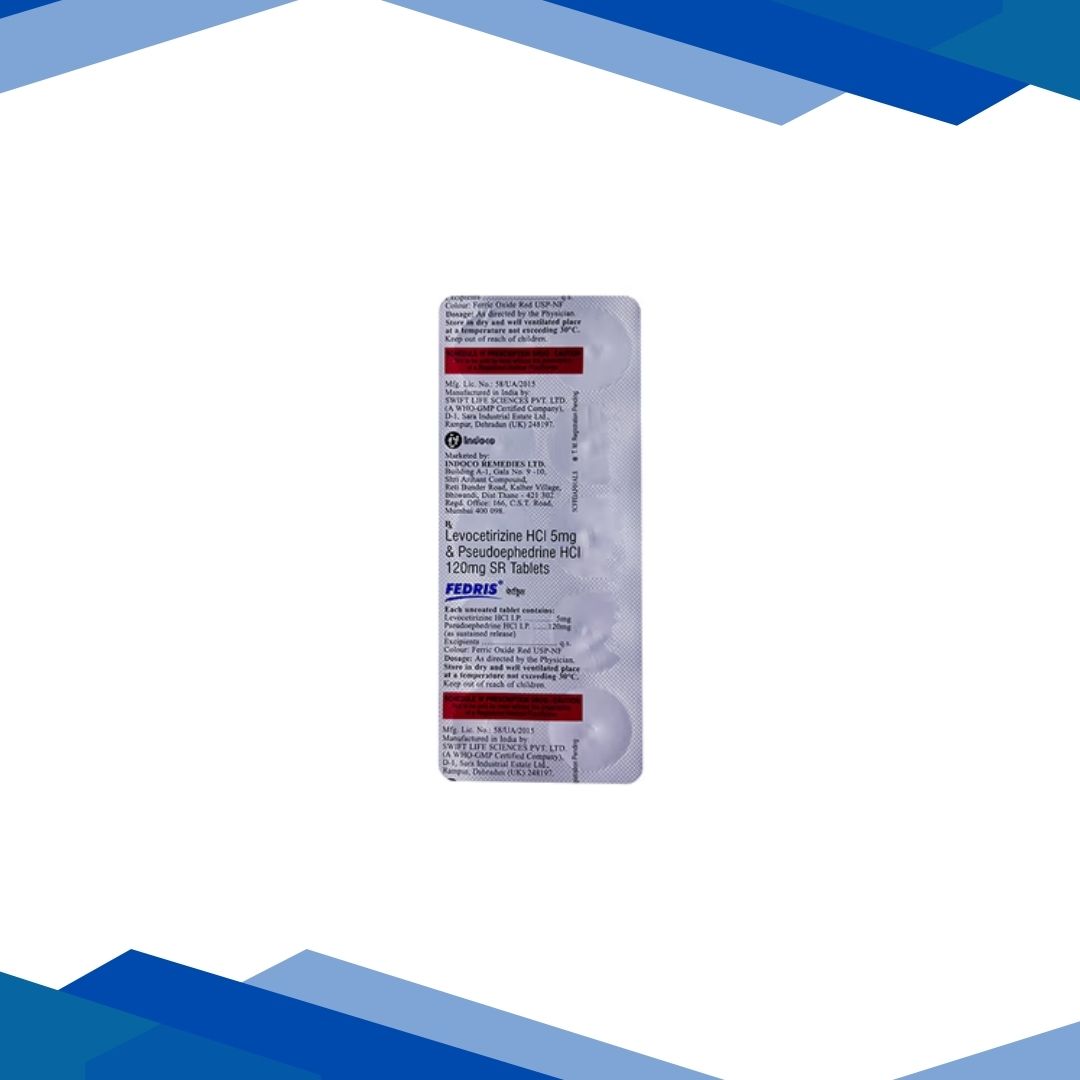
FEDRIS Tablet 10’s
No Prescription yet? Don’t worry! Click Here to Get Online Consultation
Fedris Tablet 10’s is a prescription combination tablet used to relieve symptoms of allergic rhinitis and common cold such as sneezing runny or itchy nose nasal congestion and watery eyes by blocking histamine action and reducing nasal swelling. For more details click on the Medicine Salts below:
Levocetirizine
Levocetirizine: Treatment for Seasonal & Year-Round Allergies Levocetirizine is a potent, non-sedating third-generation antihistamine in a big way. It is really a big boon for physicians to manage the full spectrum of allergies hence there is a fine product. Levocetirizine addresses the problem squarely instead of attempting to counter the symptoms, preventing allergic symptoms by blocking specific receptors. In this way, Levocetirizine provides benefits alongside the pollens, dustmites, and pet danders that are the typical mainstream allergic triggers. Primary Usage Allergic Rhinitis: It exerts control on sneezing, runny nose, and nasal congestions associated with both seasonal (hay fever) and perennial (year-round) allergy attacks. Ocular Symptoms: Relief from red, itchy, and watery eyes caused by allergy. Chronic Urticaria: Levocetirizine directly treats simple skin manifestations of chronic idiopathic urticaria (hives), thereby reducing local itch and swelling. Rash-Allergy Association: Helps to lessen rashes and irritation due to various allergic triggers. The Science behind Levocetirizine Levocetirizine goes into combat with itself, or rather with the histamine that crops up naturally, preventing the chemical from binding on to its receptor on the surface of cells. The onset of an allergy condition is mediated by histamine and blocking its action puts an end to a nasty inflammatory process before it starts causing itching of the eyes, frequent sneezes, and skin flare-ups. Expert Advice on Use & Dosage Instructions Optimal Use: Ordinarily, Levo should be given at bedtime. If you are afflicted with some effect of drowsiness, taking your medication in the evening should enable you to remain alert all through the day. Timely Use: Time to take the tablet is the same with every day, either with or without food, maintains a consistent concentration in the system. Kid's Dose: Levocetirizine pediatric dose is 2.5 mg once for children aged 6 – 11. Be sure to use appropriate measuring device, e.g., a measuring spoon; do not use a regular kitchen spoon. Kidney Concerns: Patients with any history of kidney problems may have to use a different dose adjustment. You must seek proper advice from your physician regarding this issue. An Introduction to Safety & Side Effects Probably no one would ask his or her doctor for Levocetirizine if it was hard to use, but caution is necessary when taking any medical treatment. Nonetheless, the drug is quite safe, though all mild reactions from medication need to be kept in mind until they cease. WARNING Possible Side Effect Frequency Recommended Course of Ceasing Drowsiness / Fatigue Intermittent It is not safe to drive or do anything else that needs alertness until you can determine its effect on you. Dry Mouth Often frequent small sips of liquid. Nasopharyngitis Occurs Use saline nasal sprays in case the nose becomes dry. Headache Rare Usually goes within a few days with continued use. Urinary Retention Very rare If you can't pee, see a doctor. Levocetirizine: Frequently Asked Questions (FAQs) Q1: Is Levocetirizine different from Cetirizine? A1: Yes. Levocetirizine is the active R-enantiomer of Cetirizine. It is often considered more potent at lower doses and typically has a lower incidence of sedation in many patients compared to older antihistamines. Q2: How fast does Levo work? A2: Most people experience relief within 1 hr of taking their first dose, with peak plasma levels being achieved within 2 to 3 hours and a full 24-hour coverage for most of strength allergic symptoms or reactions that manifest. Q3: Can I drink alcohol and take them at the same time? A3: It is advisable to avoid alcohol. While Levocetirizine is non-sedating for most, alcohol has the ability to enhance the sedative effects, increasing impaired coordination and sleepiness. Q4: What do I do if I forgot to take Levo? A4: Take it as soon as you remember. If it is almost time for your next dose, skip it and go back to your regular dosing schedule. Under no circumstances should you take 2 doses at the same time, as this may lead to a highly sedated condition. Q5: Can I take Levo if pregnant? A5: In general, Levo is considered safe, but like every other medicine, it should be used only if clearly needed. Make sure you consult your OB-GYN before taking any new medications during pregnancy or while breastfeeding. A Precautionary Checklist Participant Medical History: Share your kidney illness history and any urinary retention history. Allergy Testing: Levocetirizine may interfere with the results of skin allergy testing. Avoid taking Levocetirizine at least three days before testing. Drug Interference: Inform your doctor if you are currently using other medications, particularly those affecting the central nervous system (CNS) or additional antiallergy drugs, in order to avoid drowsiness.
Pseudoephedrine
Pseudoephedrine Hydrochlorid Tablets Pseudoephedrine is a potent systemic decongestant useful in the provision of temporary relief of nasal and sinus congestion caused by the common cold, hay fever, or other upper respiratory allergies. Unlike the topical nasal sprays, Pseudoephedrine acts internally through the bloodstream to bring about constriction of the swollen blood vessels present within the nasal passage-turbinates and alleviate from respiration block and expeditious sinus drainage. Therapeutic indications Nasal congestion: It imparts relief of that stuffy feeling in viral infections. Sinus pressure: It takes off the painful pressure normally present in the frontal and maxillary sinuses. Eustachian tube congestion: It seems so helpful in the cases of ear fullness or "plugged ears" ascribed to allergic reactions or colds. Vasomotor rhinitis: The drug helps manage chronic nonallergic nasal inflammation. How it works Pseudoephedrine is a sympathomimetic agent that acts directly on the alpha-adrenergic receptors present within the mucosa of the respiratory tract. This action leads to vasoconstriction-contraction of blood vessels, which subsequently results in lessened swelling of tissues and nasal congestion and hence opens up the airways. Dosage & Administration A regular adult dose is usually 60mg every 4 to 6 hours or 120mg (extended-release) every 12 hours. Maximum allowed: Do not exceed 240mg in 24 hours. One must swallow the entire tablet with water and not crush or chew the extended-release (ER/SR) formulations that may lead to quick release of the drug into the system. May be taken with or without food. Avoid taking close to bedtime as potential restlessness might be caused. Common Side Effects Most side effects are manageable and decrease as the medicine is metabolized: Increased heart rate or palpitations Nervousness, restlessness, or tremors Insomnia (difficulty falling asleep) Dry mouth or throat Mild dizziness or headache Safety Precautions & Contraindications Hypertension: Individuals with high blood pressure should consult a doctor before use, as Pseudoephedrine can further increase blood pressure. MAO Inhibitors: Do not use if you are currently taking or have taken a Monoamine Oxidase Inhibitor (MAOI) in the last 14 days. Pre-existing Conditions: Inform your physician if you have hyperthyroidism, glaucoma, diabetes, or prostate enlargement. Pregnancy/Lactation: Consult a healthcare professional before use. It may reduce breast milk production in some individuals. Frequently Asked Questions (FAQs) Q: Is Pseudoephedrine the same as Phenylephrine? No. While both are decongestants, clinical studies often suggest that oral Pseudoephedrine is more effective at reaching deep sinus tissues compared to Phenylephrine. However, Pseudoephedrine is subject to stricter purchase regulations in many countries. Q: Why do I feel "jittery" after taking this medication? Pseudoephedrine is a stimulant. It mimics the effects of adrenaline in the body, which can lead to increased alertness, a faster heartbeat, or a feeling of nervousness. If these symptoms become severe, discontinue use. Q: Can I take Pseudoephedrine with alcohol? It is not recommended. Alcohol can increase the risk of dizziness and may interact with the stimulant effects of the drug, leading to unpredictable heart rate changes. Q: How long does it take to start working? Oral tablets typically begin to provide relief within 30 to 60 minutes, with peak effects occurring around 2 hours after ingestion. Q: Is Pseudoephedrine habit-forming? When used as directed for short-term cold symptoms (usually not more than 7 days), it is not considered addictive. However, it should never be used for prolonged periods without medical supervision. Storage Store in a cool, dry place ($20\text{°C}$ to $25\text{°C}$) away from moisture and direct sunlight. Keep the medication in its original blister pack until use to prevent degradation. Disclaimer: This content is for informational purposes only and does not constitute medical advice. Pseudoephedrine is a regulated substance; always follow local laws and consult a registered medical practitioner before use.
At Gem Pharmacy, we make every effort to provide accurate, expert-written, and thoroughly reviewed information related to medicines. However, this information should not be considered a substitute for professional medical advice, diagnosis, or treatment from a qualified doctor.
The purpose of this information is to educate users and improve communication between patients and healthcare professionals. It should not be used to diagnose or treat any condition.
Always consult a certified healthcare professional before taking any medication.


Related products