

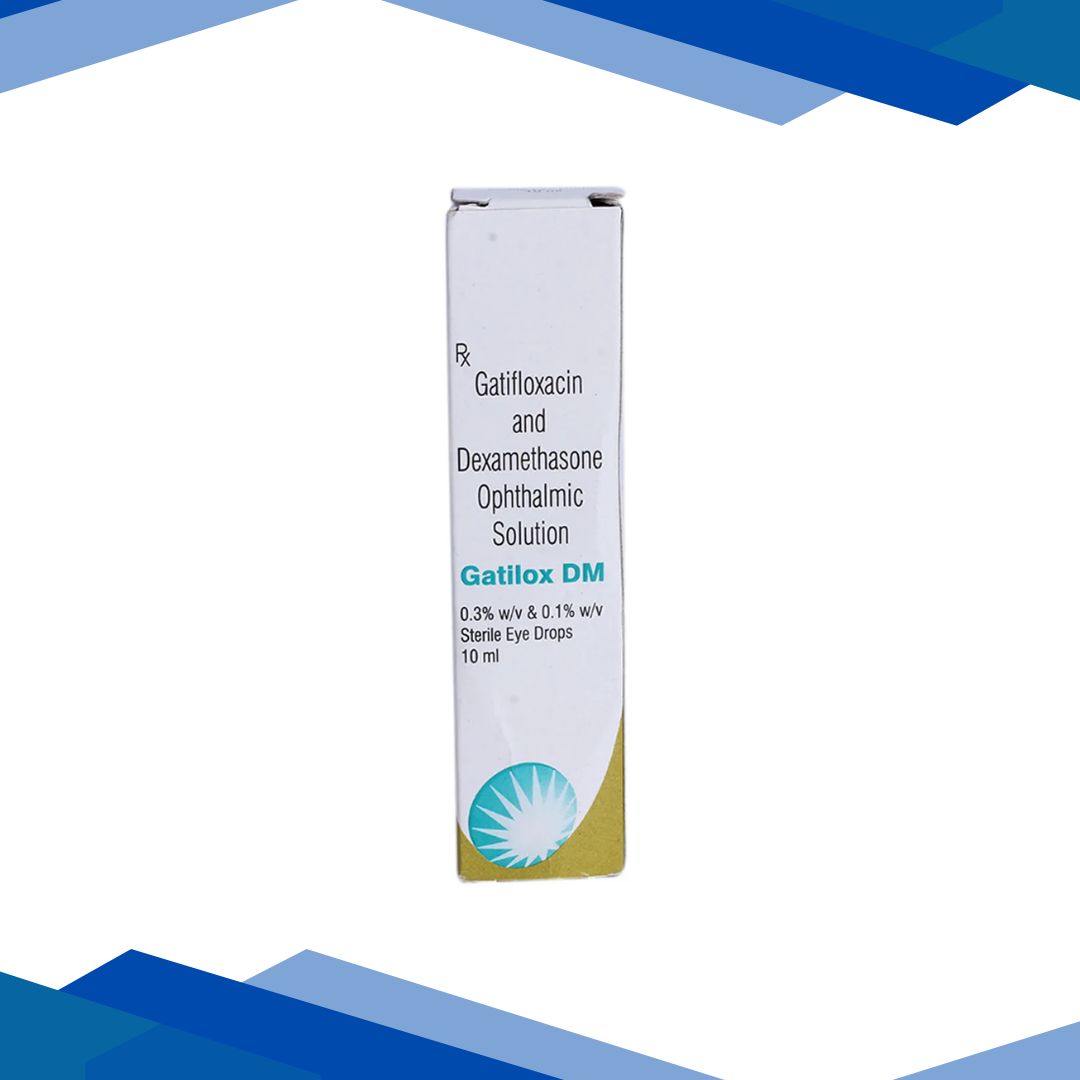
Gatilox DM Eye Drops 10ml
No Prescription yet? Don’t worry! Click Here to Get Online Consultation
GATILOX DM EYE DROPS is a combination of Dexamethasone and Gatifloxacin which belongs to the group of medicines called Corticosteroids and Antibiotics respectively. It is used to manage eye inflammation and infection.
Dexamethasone
Dexamethasone Tablet (Corticosteroid)
Dexamethasone is a potent glucocorticoid steroid that mimics hormones produced by the adrenal cortex. It is widely used to treat conditions involving inflammation and immune system overactivity. By suppressing immune responses and reducing inflammatory mediators, it helps relieve swelling, redness, and pain.
Uses
Inflammatory conditions: Effective in arthritis, lupus, and psoriasis.
Allergy related: Helps manage allergic reactions, asthma, and drug-induced inflammation.
Immune disorders: Used when the immune system attacks body tissues.
Hormonal disorders: Acts as replacement therapy in adrenal insufficiency.
Specialized care: Used in oncology for tumor swelling and chemotherapy-induced nausea.
How Dexamethasone Works
Dexamethasone is a corticosteroid that inhibits production of prostaglandins and leukotrienes, which trigger inflammation. It also stabilizes cell membranes and suppresses immune overactivity.
How to Use
Administration: Swallow the tablet whole with water, preferably in the morning.
Timing: Usually taken once daily, with or without food.
Consistency: Take at the same time each day.
Important: Do not stop suddenly—gradual tapering is required to avoid withdrawal symptoms like fatigue and body pain.
Precautions & Safety
Infection Risk: May mask infections and increase susceptibility—avoid exposure to measles or chickenpox.
Diabetes: Can raise blood sugar levels—monitor regularly.
Bone Health: Long-term use may cause osteoporosis—ensure adequate calcium and Vitamin D.
Common Side Effects
Increased appetite and weight gain
Insomnia
Mood changes or irritability
Swelling (edema)
Skin thinning
Seek medical help if you experience blurred vision, black stools, or severe pain.
Frequently Asked Questions (FAQ)
Q: Is it an anabolic steroid?
No. It is a corticosteroid used for medical conditions, not muscle building.
Q: Can I take vaccines while on it?
Avoid live vaccines during high-dose therapy—consult your doctor.
Q: Does it cause “moon face”?
Yes, long-term use may lead to Cushingoid appearance, which is reversible after tapering.
Q: Can I drink alcohol?
Limit or avoid alcohol due to increased risk of stomach irritation and bleeding.
Q: How fast does it work?
For acute conditions, effects may appear within 1–2 hours; chronic conditions may take a few days.
Gatifloxacin
Gatifloxacin
Gatifloxacin is a potent antibiotic that belongs to a group of medicines recognized as fluoroquinolones. It is used for treating bacterial infection. It inhibits the enzyme that bacteria need for making genetic-coded DNA. It was available previously in oral and injectable forms but is mainly employed now in the form of eye drops to treat external eye infections, such as bacterial conjunctivitis.
Key Takeaway Points
Target: A diverse range of both Gram-positive and Gram-negative bacteria.
Major Uses: Bacterial conjunctivitis and corneal ulcers.
Mechanism of Action: Quick termination of bacterial DNA synthesis aiding the removal of infection.
Dosage
In order to get more out of treatments and avoid harmful side effects, continue through the following preparation guidelines in the usage of Gatifloxacin eye drops:
- Before touching the eye dropper, the hands should be washed properly.
- The patient should tilt their head backward and gaze up while holding open the lower eyelid to form a little bag.
- While holding the dropper directly over the eye, do not touch the tip to the eye or any other surface to prevent contamination.
- Instill one drop into the conjunctival sac and keep it closed for 1–2 minutes with light pressure on the inner corner (toward the nose) to prevent the medication from being extruded.
- It is advised that one should wait 5 minutes before instilling any other eye medication.
Side Effects
Common side effects are temporary and rapidly go away. In case they remain, discuss the effects with a healthcare provider.
- Blurry vision that goes away after a few hours is not uncommon.
- Stinging, tingling, redness, or burning are common symptoms.
- A general increase in sensitivity to sunlight has been observed.
- Unusual taste in the mouth.
- Allergy signs include face and/or throat swelling, severe dizziness, or breathing distress.
Frequently Asked Questions (FAQs)
1. Can I use Gatifloxacin for a condition of a viral eye infection?
Gatifloxacin is not recommended, given the requirement for caution in most literature. Hydroxylamines such as moxifloxacin, though ideally avoided, would be marginally preferable.
5. Can I use Gatifloxacin if I am breastfeeding?
The drug reaches bloodstreams in significant amounts through intravitreal injection, but it is virtually nil through the eye, which was not highlighted by systemic monitoring.
6. What can you not mix with alcohol while taking Gatifloxacin?
Everything said strongly echoes the monograph, except I'd add even one explanation: The feel of an organism that has the hard-to-identify ill effects of drug.
7. Can one use Gatifloxacin while breastfeeding?
No, she cannot.
Talk about gatifloxacin ophthalmic use in pregnant women only if pregnancy is clinically refused by the mother.
5. What if I miss a dose?
Take the missed dose as soon as you remember but not preferably near your next scheduled dose. Skip the missed one if the next dose is within reach and continue with your regular dosage schedule. Do not attempt a double dose to make up for the missed one.
At Gem Pharmacy, we make every effort to provide accurate, expert-written, and thoroughly reviewed information related to medicines. However, this information should not be considered a substitute for professional medical advice, diagnosis, or treatment from a qualified doctor.
The purpose of this information is to educate users and improve communication between patients and healthcare professionals. It should not be used to diagnose or treat any condition.
Always consult a certified healthcare professional before taking any medication.


Related products