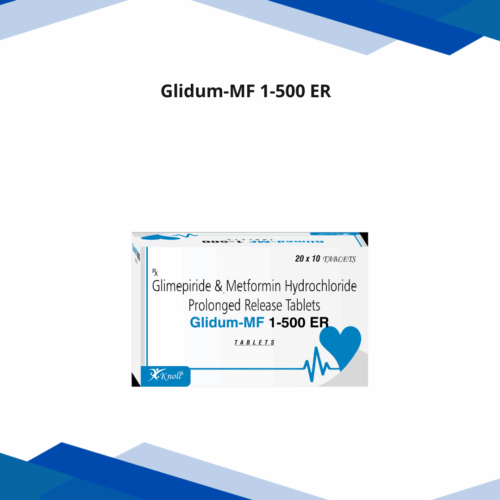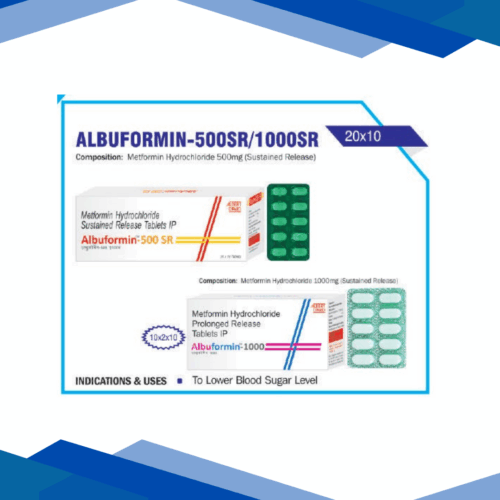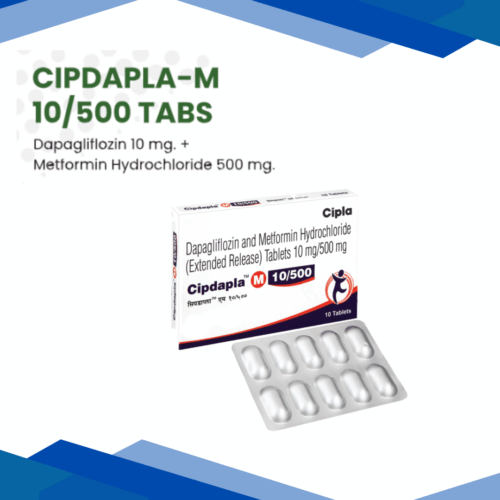





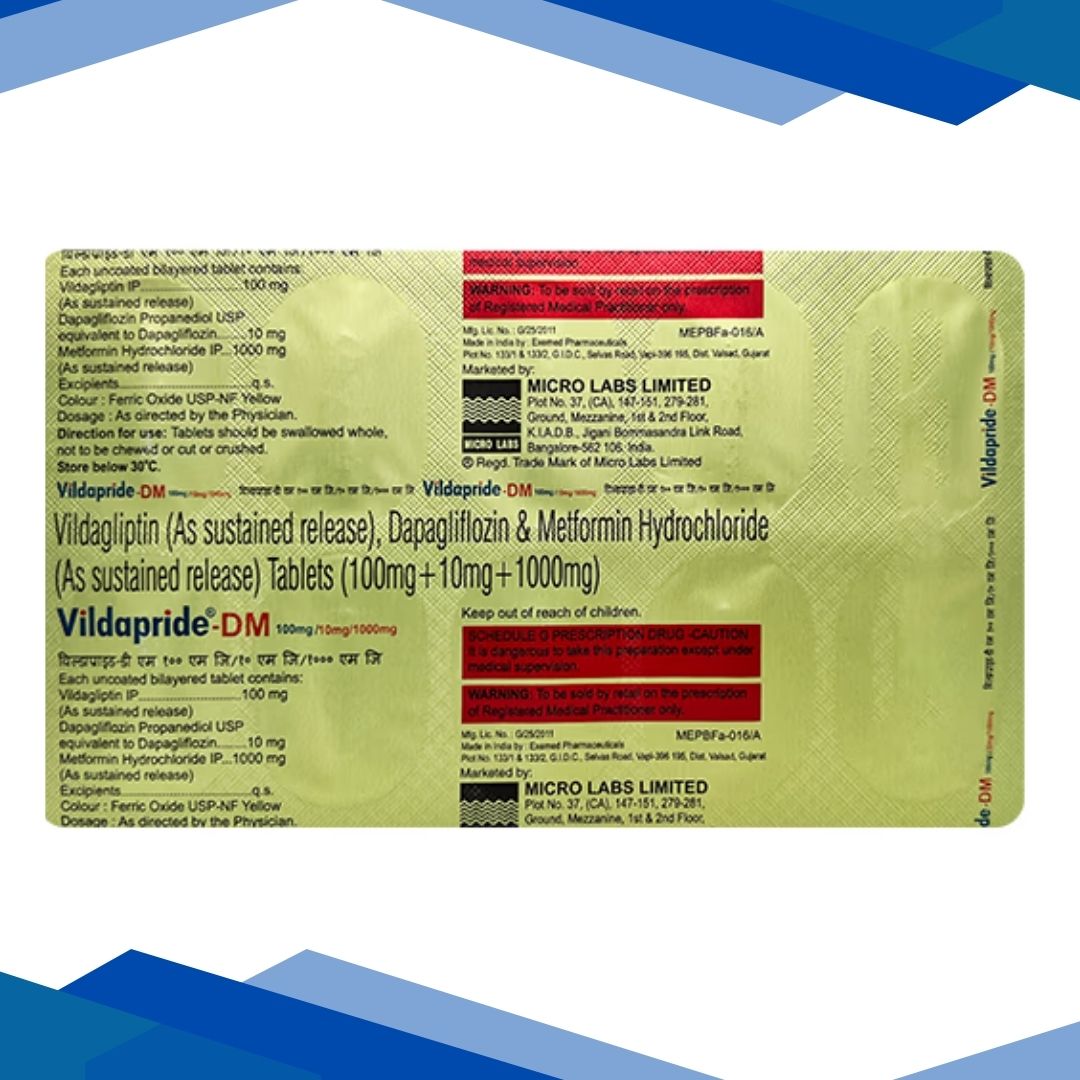
VILDAPRIDE DM 100/10/1000 Tablet 10’s
No Prescription yet? Don’t worry! Click Here to Get Online Consultation
VILDApride DM 10mg/1000mg/100mg Tablet SR is a combination medicine that helps control blood sugar levels. This medicine is used together with diet and exercise to improve blood sugar control in adults with type 2 diabetes mellitus. It helps in the proper utilization of insulin, thereby lowering the blood sugar level.
Dapagliflozin
Dapagliflozin: An Advanced Option for the Help of Diabetes, Heart, and Kidneys
The breakthrough orally administered medication has been predominantly found to exert its remedial actions for the diseases in type 2 diabetes and more, leading it to become a cornerstone therapy for the safeguarding of heart and kidney functions. As opposed to many of the drug classes for type 2 diabetes, Dapagliflozin works independent of insulin, and in view of the whole field of metabolic medicine, it basically could be quite a versatile agent.
Let us focus on the best objectives Gained:
- Blood Glucose Control: It reduces the amount of HbA1c in the bloodstream with the removal of an improved quantity of sugar through urine.
- Heart-Failure Management: It improves survival and reduces the event of hospitalization among chronic heart failure patients with or without diabetes.
- Kidney Protection: For those committed to the prevention of chronic kidney disease, Dapagliflozin may well be a boon due to its ability to prevent and halt its progression.
- Weight and BP Management: Often, Dapagliflozin might bring about some weight loss and some lowering of your blood pressure, all due to its calorie-elimination and diuretic effects.
Documentation of Dapagliflozin activities
The therapies for diabetes mostly provide assistance in assisting the body in making or utilizing insulin. Dapagliflozin has a completely different approach. It acts on the kidneys, and it stops the protein (SGLT2) that recycles glucose orally back into the bloodstream. Quite remarkably, the sugar in your system gets dumped in with your pee.
Q: How should Dapagliflozin be taken?
A: The drug is taken on (po) on an empty stomach in the mornings and it should be swallowed with plain water.
- Hydrate: Drink a lot of water to avoid dehydration.
- Common: Keep the rhythm by dosing up normally with a glass per day.
Expert Medical Advice: Your Quick Guideline
- Feet health: If you have diabetes, do take time to check your feet regularly. Rarely, any new sores or infection signals should be reported without delay to your physician.
- Monitor Your Program: Should an operation be coming up or if you will ever need to go on a fast, discuss with your doctor what food habits you should imbibe. You might have to discontinue the drug momentarily to ward off a rare condition known as ketoacidosis.
- Genital Hygiene: As sugar is being removed into the urine, the risk of a yeast infection is slightly elevated. Hygiene, hygiene, and some more hygiene are the best prevention.
What is Dapagliflozin: Some Common FAQs
Q: Does Dapagliflozin cause low blood sugar (hypoglycemia)?
A: No, seldom by itself because the mechanism of its action does not coerce the body to manufacture insulin. However, when taken with Insulin or Sulfonylurea (like Glimepiride), the lows are elevated. Always consult with your physician on other medication adjustments.
Q: Is it safe to take Dapagliflozin if I am a Type 1 Diabetic?
A: No. It is a specific indication for Type 2 Diabetes, and no Type 1 subjects should take it. It is also not recommended for diabetic ketoacidosis.
Q: Why do I urinate so much?
A: Directly, because this medication, by flushing sugar through your urine, will grab a bit extra water as well. This will normalize with body adjustment to the medication.
Q: How long does it take to see results?
A: Decrease in blood sugar might be seen in the first week; nevertheless, those for heart and kidney protection, which will require several months of consistent use to achieve maximum benefit.
Q: Should changes in diet be implemented?
A: Any hernous issue does not bring out the class of the drug, but a diet of low-sodium and carbohydrates throughout the whole development process would boost its activity. Beer abstains from excessive use, as it may initiate ketoacidosis.
Safety & Side Effect Summary
Common Side Effects
- Increased urination — Common → Drink more water for more energetic fluid balance.
Occasional Side Effects
- Genital yeast infection — Occasions → Good hygiene should be maintained at all times.
Rare Side Effects
- Dizziness — Rare → Rise up gradually; it could be mild dehydration.
- Nausea/Vomiting — Rare → Seek immediate help if accompanied by stomach pain (signs of DKA).
Medical Alert
Dapagliflozin is a prescription medication. Never undertake or discontinue treatment without the explicit advice of a registered medical practitioner.
Metformin
Metformin: The First Pulseblood Sugar ControlMedicine
Metformin (Metformin Hydrochloride), especially useful for Type 2 Diabetes, is the most frequently prescribed oral agent. The drug belongs to the "Biguanide" group of anti-diabetics, which is known more for its effectiveness, safety, and its unique trait of bringing blood sugar down without adding bulk or having the low-low lows that are the danger from hypoglycemia when the same is used alone.
Therapeutic Uses in Metformin
Type 2 Diabetes Mellitus: Keeping blood sugar levels in the normal arithmetical range in adults and children above 10.
Polycystic Ovary Syndrome (PCOS): Practised more off-label for regulating cycle and enhancing fertility in the fight against insulin resistance.
Prediabetes Management: Stalling the onset of Type 2 diabetes in the case of particularly susceptible people.
Key Benefits of Metformin
Sensitizes Cells to Insulin Action: It kind of helps in response to how pancreatic insulin factors-in.
Reduces the Liver’s Production of Glucose
Interacts with glucose in 3 ways:
- The Liver: Signals the liver to stop manufacturing those excess sugars to keep the blood sugar at a nice medium level.
- The Gut: Metformin slows down sugar absorption from whatever stuff that you happen to be eating.
- The Muscles: Brings more sugar into the muscles and makes it easier for the body to utilize that sugar.
Using Metformin and Safety Steps
How to Take Metformin
With Food: The very much known primary side effect of Metformin is a little stomach upset. To minimize that, always take it with or shortly after eating.
Do Not Crush: If your two versions of XR or SR have you take the extended-release tablet, that whole tablet is to be directly swallowed whole without splitting it. Splitting it increases its exposure and modifies its behavior.
Hydration; happening from morning through night, drinking ample water to support kidney functioning.
Quick Safety Reference
Category
Safety Status
Recommendation
Alcohol ⚠️ Avoid
Excessive alcohol increases the risk of Lactic Acidosis.
Pregnancy ✅ Consult
Generally considered safe, but your doctor may switch you to insulin.
Kidney Health 🛑 Precaution
Dose adjustments are required for patients with impaired kidney functions.
Driving ✅ Safe
Does not typically cause dizziness or sleepiness.
Frequently Asked Questions of Metformin Faqs
Q: Why would my doctor put me on a very low dose of Metformin?
A: This is a standard "start low, go slow" approach. By starting with a small dose and gradually increasing it, your digestive system has time to adjust, which significantly reduces the chances of nausea or diarrhea.
Q: Does Metformin cause weight loss?
A: While not a primary weight-loss drug, many patients find they lose a very moderate amount of weight. This is usually due to improved insulin sensitivity and a minor decrease in appetite.
Q: Lactic Acidosis—something to worry about?
A: Very uncommon, Lactic Acidosis is a severe side effect that results, for the most part, in patients with serious kidney or liver problems remaining on the drug. Please notify your physician if you have/had any kidney issues.
Q: What should you do if you miss a dose?
A: Take it as soon as you remember with food. If it is almost time for your next dose, skip the missed one. Never "double up" on doses to catch up.
Q: Will I have to take Metformin for the rest of my life?
A: Diabetes is a chronic condition but many people can decrease their dosage or even stop taking the your doctor consider making do try to have these medical improvements by doing diet, weight loss, and exercise.osals first. Always consult your physician before making changes.
Messaging and Counseling
Common Side Effects
Digestive: Nausea, vomiting, diarrhea, or a metallic taste in the mouth (usually temporary).
Vitamin B12: Increased urinary vitamin B12 loss may occur where depletion is a possibility in the long-term use of Metformin. Your healthcare provider may recommend a vitamin B12 supplement.
Vildagliptin
At Gem Pharmacy, we make every effort to provide accurate, expert-written, and thoroughly reviewed information related to medicines. However, this information should not be considered a substitute for professional medical advice, diagnosis, or treatment from a qualified doctor.
The purpose of this information is to educate users and improve communication between patients and healthcare professionals. It should not be used to diagnose or treat any condition.
Always consult a certified healthcare professional before taking any medication.


Related products