




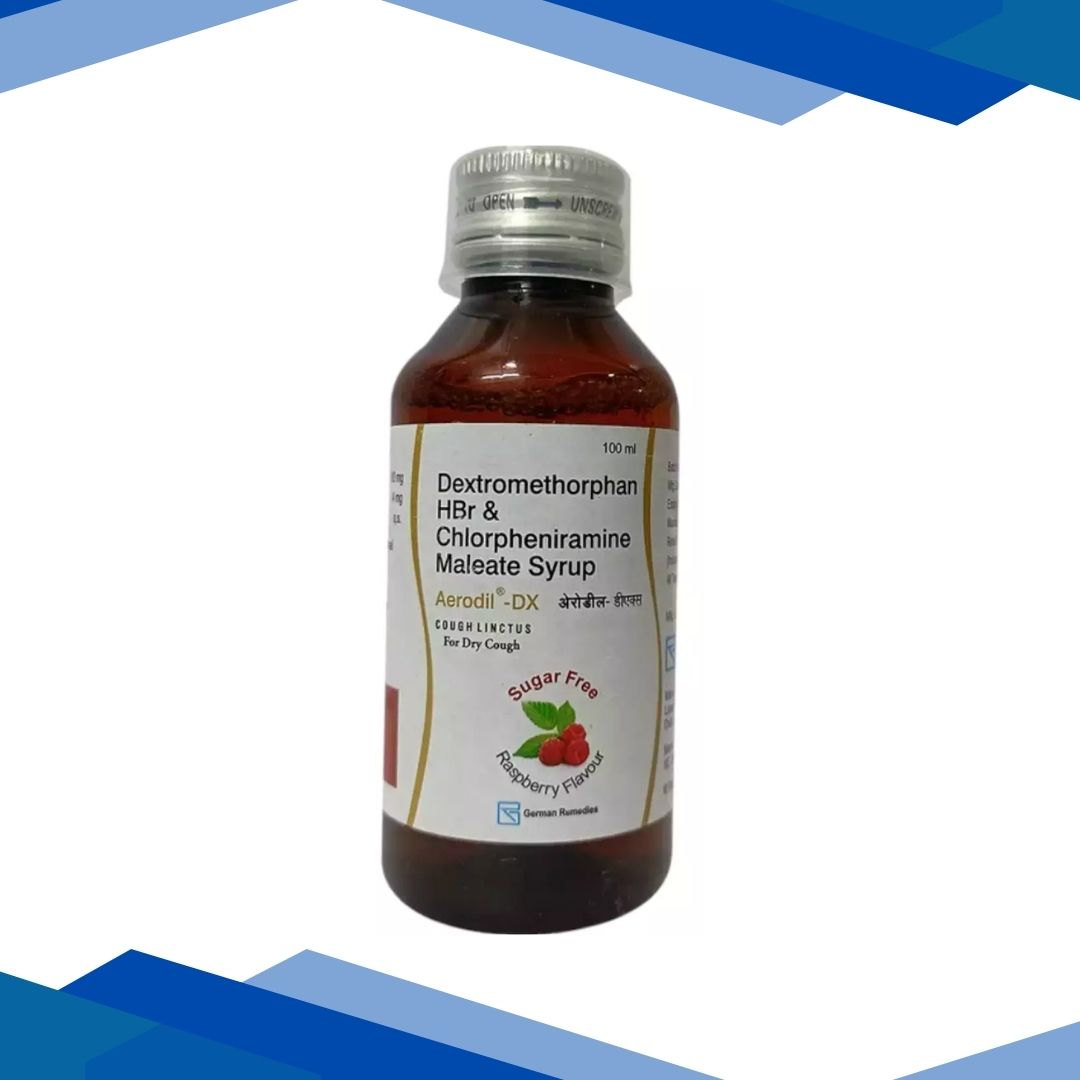
Aerodil DX Sugar Free Raspberry Flavour Dry Cough Syrup 100ml
No Prescription yet? Don’t worry! Click Here to Get Online Consultation
AERODIL DX SYRUP is used to relieve cough due to throat or bronchial irritation, sneezing and running nose caused by cold, dry cough, allergic cough, post-operative cough, smokers cough, and night-time cough. It is also used to manage hay fever or upper respiratory allergies such as sneezing, runny nose, itchy, watery eyes, and itching of the nose and throat. Contact your doctor before taking.
Chlorpheniramine Maleate
CHLORPHENIRAMINE MALEATE 4MG TABLET
Chlorpheniramine Maleate is a first-generation antihistamine from the alkylamine class, extensively used in symptomatic relief of allergic conditions affecting the upper respiratory tract and skin. By blocking the action of histamine, a natural body chemical that causes allergies, sneezing, watery eyes, and itching is controlled effectively.
Therapeutic Use
Hypersensitivity disorders: Relief of symptoms of hay fever, including a runny nose and sneezing
Hives: Management of the skin rash, large round or irregular patches, hives, or itching
Common cold: Generally, treatment is combined for reduction of watery discharge from the eyes and nose
Mosquito bites: Relief of localized allergic swelling and redness
Allergic conjunctivitis: Relief from redness and irritation of the eyes due to allergens such as pollen or dust
Mechanism of Action
Chlorpheniramine acts competitively as an H1 receptor antagonist. Histamine is released by the body during allergic reactions and binds to H1 receptors, causing dilatation of blood vessels and swelling in the tissues. They basically block histamine binding at cellular levels, thereby preventing the allergic response.
Main points to consider
Onset of Action: Usually within 30-60 minutes post oral ingestion, these symptoms start to ease.
Versatile in relief: Effective against any respiratory and dermatological (skin) allergy attacks.
Safety: Very safe, having a proven record of usage in adult and pediatric patients (under careful medical supervision).
Dosage Units
Standard adult dose: 4mg usually every 4-6 hours not to exceed 24mg in 24 hours.
Administration: Swallow tablet whole with water. It can be taken on an empty stomach if required.
Missed Dose: Drench whatever dose gets missed. But let alone their dosage if it is almost your time before next dosage dose. Do not poison by means of a double dose.
Side Effects and Safety
. The most common adverse effect of first-generation antihistamines is drowsiness.
. Other potential side effects may include:
Dry mouth, nose, or throat.
Blurring of vision
Dizziness or lightheadedness
Mild constipation
Urinary hesitation (more common in elderly patients)
Precautions & Warnings
. Blocked throat: There must be no driving, operating heavy machinery, or any type of critical work after taking the medication since it will impair specific neurological functions and, consequently, one's reactions, decision-making, reaction time, and even balance.
. Long evenings of fun: Clearly, patients should avoid drinking altogether. It often doesn't ever fit in terms of its adverse effects on the body after being mixed in with the drug.
. Medical conditions: If you suffer from glaucoma, enlarged prostate, asthma, or high blood pressure, speak with a physician.
Pregnancy/lactation: This drug must be administered under doctor's vision and clearly only when the benefits outweigh the possible risks in case it is really required,
Frequently Asked Questions (FAQs)
Q: Is the chlorpheniramine maleate causing my extreme sleepiness?
Yes, drowsiness is a common side effect to drugs that cross the blood-brain barrier, and so the best practice might be to take it in the evening or at bedtime if daytime drowsiness is too significant.
Q: Can I use this for a chronic cough?
Allergic postnasal drip coughs could receive significant relief from chlorpheniramine. It would not be an appropriate option for treating a productive cough (cough with mucus) or chronic coughs due to smoking or emphysema.
Q: Is it safe for children?
It does get used in children's practice, but the dose must be supervised by a pediatrician after calculating the age and weight of the child. It is prudent not to give any OTC antihistamines to children under 4 years old without an approval from a qualified medical practitioner.
Q: How long will the drug dwell in the body?
The maximum effects of 4mg once-daily dosage shall remain in place for 4-6 hours. Ingestion of sustained-release formulations would extend the effect to last for 24 h.
Q: Can I take this with my blood pressure medicine?
For most hypertensive medications, there is no direct contraindication specific to decongestants; but many allergy-cold medications contain decongestants capable of increasing your blood pressure. So, always check the ingredients and if necessary, ask your pharmacist.
Storage
Store this medicine in a cool, dry place (20°C to 25°C), away from moisture and sun. Keep out of reach of children.
Disclaimer: This content is for informational purposes only and does not constitute medical advice. Always consult your doctor or a registered pharmacist before starting any new medication.
Dextromethorphan
Dextromethorphan is like an antitussive. Here an antitussive is a neurotransmitter for a diverse number of indications. It is applied for temporary relief of nonproductive cough, which is not the result of congestion. As compared to many other cough medicines that are opioid, this product is non-narcotic; this is acting directly on the brain center controlling the reflex for cough, thereby increasing the threshold for the cough response. This medicine is essentially good for cases of common colds, influenza, and irritant exposure.
Therapeutic Use
Relief of Dry Cough: Primarily used to suppress cough unproductive of phlegm or other secretions.
Cold and Flu Relief: Generally included in multi-symptom products in order to allow the patient some sleep without having a cough.
Relief of Upper Respiratory Allergies: Controls prolonged throat irritation produced from environmental allergies.
Mechanism of Action for Dextromethorphan
Dextromethorphan is a Sigma-1 receptor agonist and a non-competitive NMDA receptor antagonist. By modulating these signals in the medulla oblongata (the 'cough center' of the brain) it reduces the frequency and intensity of bouts of coughing but does not depress the central nervous system as do more traditional narcotics.
Of Note
Non-Addicting: There is no potential of becoming addicted to it. It possesses no analgesic effects.
Rapid-Onset Of Action: It will begin working in 15-30 minutes post-administration.
Longer Duration Of Effect: Depending on formulation (HBr vs. Polistirex), it has an action that will last from 4-12 hours.
Dosages
The most important part of Dextromethorphan is that all doses must be strictly monopolized with the appropriate measurements as the gauge for administration. In adults, 10-30 mg of dosage must almost be administered with other medication in every 4 to 8 hours.
Measurements
One needs to be very serious with the use of equipment like the dosing cups and syringes; a tablespoon in the kitchen is not a good choice.
Administration
The drug can be taken with or without food. Milk or a light snack might help if stomach upset occurs.
Side Effects
Rashly well-tolerated, the drug may make an individual experience:
Mild dizziness or drowsiness
Nausea or vomiting
Restless-ness or jitteriness
Fatigue
Serious cases might lead to symptoms like hallucinations, blurred vision, or extreme shaking. These symptoms are an indication to stop the medication immediately and seek medical attention.
Safety/Safeguards and Precautions
MAOI: The drug should not be taken if you are currently on a Monoamine Oxidase Inhibitor (MAOI) or if you have had one in the last 14 days. This may cause a drug interaction leading to a life-threatening Serotonin Syndrome.
Chronic Issues: Not recommended for coughs caused by smoking, asthma, emphysema, or chronic bronchitis.
Alcohol: Avoid the consumption of alcohol as it worsens the sedative effects of the medication.
Pediatric Use: Before giving to children under 4 to 6 years of age (depending on local regulations), a pediatric consultation is recommended.
Questions and Answers (FAQs)
Q: Does dextromethorphan (DM) have antihistamines?
No. Antihistamines operate by obstructing the allergic substance as DM works at the root of cough in the brain. However, the two are often mixed in formula "Nighttime" cold drugs.
Q: Can I take this for a chesty cough with mucus?
Usually, I don't think, because it won't be very beneficial for wet coughs. That is your body's way of getting rid of a very nasty mucus from your lungs. Otherwise it would add up more, and that would be more congestion.
Q: Does Dextromethorphan cause a high?
Dextromethorpan does not evoke high experiences when it is taken at therapeutic doses. However, using Dextromethorphan can get you high if you abuse it with extreme doses, which is most dangerous. Remember: Always stick to the recommended dosage!
Q: Can I drive right after consuming this medicine?
This medicine might cause slight drowsiness or dizziness in some individuals. You may have to check how you can cope with these sensations before you decide to drive a car or handle heavy machinery.
Q: Is it safe for pregnant patients?
Dextromethorphan is usually safe in some stages of pregnancy (Category C), but you must consult your OB/GYN before use to make sure it is appropriate for your specific health profile.
At Gem Pharmacy, we make every effort to provide accurate, expert-written, and thoroughly reviewed information related to medicines. However, this information should not be considered a substitute for professional medical advice, diagnosis, or treatment from a qualified doctor.
The purpose of this information is to educate users and improve communication between patients and healthcare professionals. It should not be used to diagnose or treat any condition.
Always consult a certified healthcare professional before taking any medication.


Related products
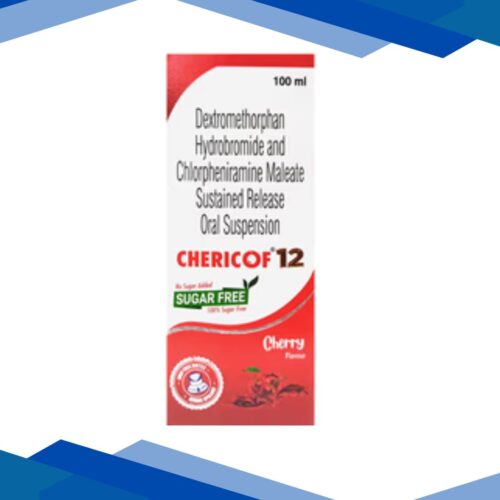
CHERICOF 12 SUGAR FREE CHERRY FLAVOUR Oral Suspension 100ml