
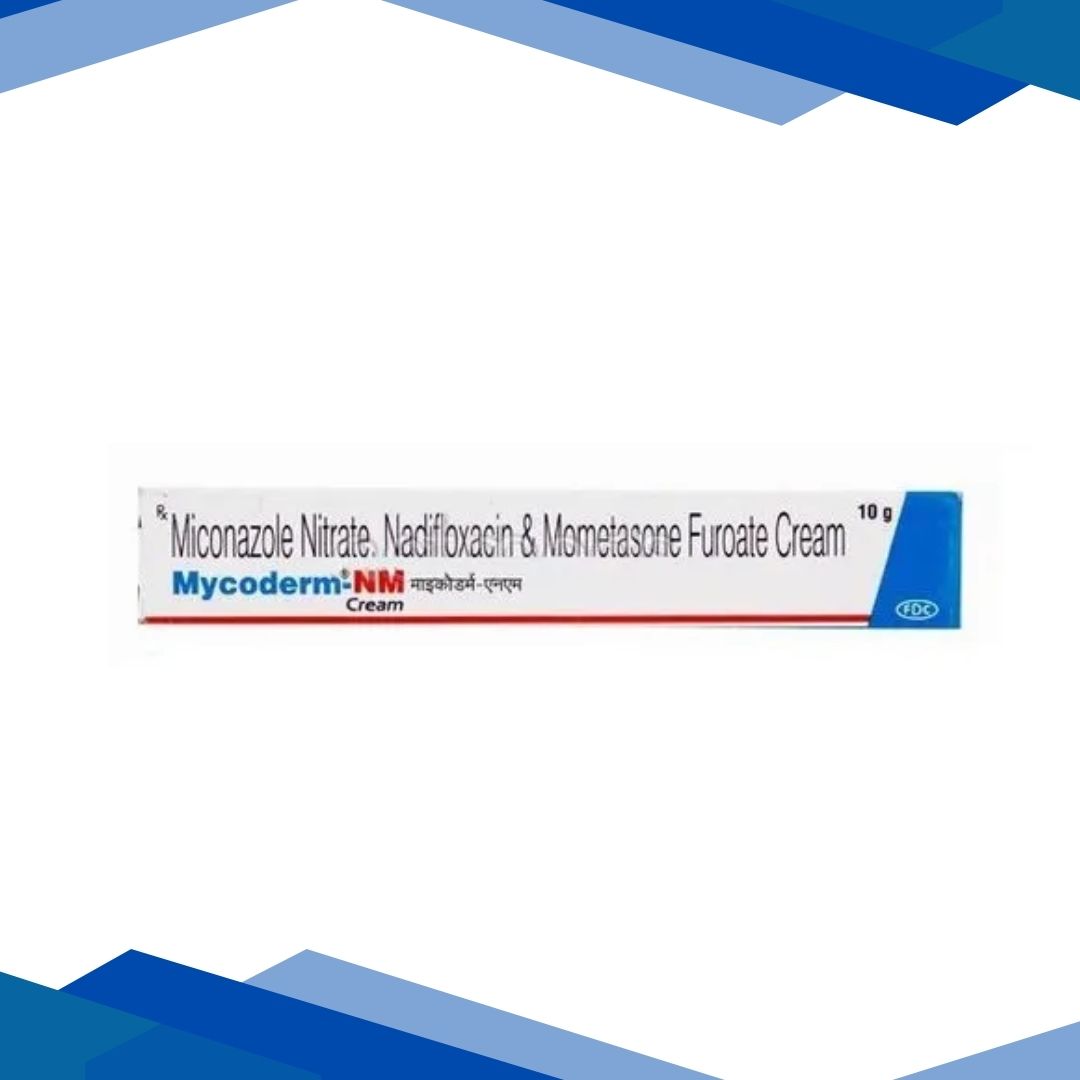
Mycoderm NM Cream 10gm
No Prescription yet? Don’t worry! Click Here to Get Online Consultation
MYCODERM NM CREAM is a combination of Miconazole, Mometasone and Nadifloxacin which belongs to the group of medicines called Antifungals, Corticosteroids and Antibiotic respectively. It is used to manage bacterial and fungal skin infections like atopic and contact dermatitis, erythema multiforme, infective eczema, psoriasis and skin lesions.
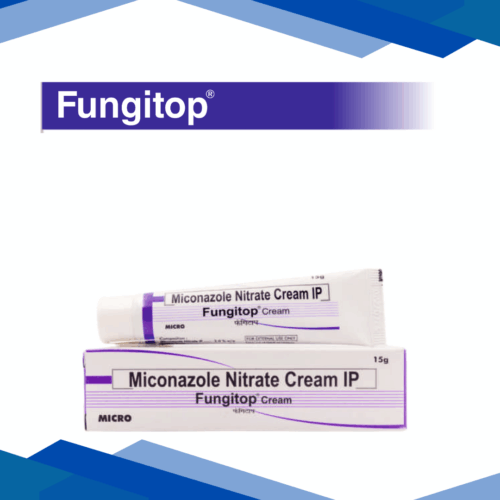
Miconazole Nitrate
Miconazole is an antifungal agent from the azole class. Therefore, miconazole nitrate shows broad activity against many fungal species. The primary use is against dermatophytes, which are epidermal fungal infections. The mechanism of action of miconazole is similar to other azole antifungals. It works by inhibiting ergosterol synthesis in the fungal cell membrane. Ergosterol is an essential lipid component of fungal membranes, and without it, the fungus cannot grow, leading to elimination of the infection.
Major Indications:
Athlete’s Foot (Tinea Pedis): Causes itching and cracking between the toes.
Jock Itch (Tinea Cruris): Causes itching in the groin and underwear-covered areas.
Ringworm (Tinea Corporis): Appears as red, circular, itchy skin lesions.
Cutaneous Candidiasis: Treats yeast infections in skin folds.
Pityriasis Versicolor (Tinea Versicolor): Helps restore normal skin pigmentation affected by fungal infection.
Whenever a patient is advised to use miconazole nitrate or any formulation containing miconazole, it is generally recommended that the patient either use it under a prescription or after consultation with a doctor.
Clean & Dry: Clean the affected area thoroughly with a mild, non-perfumed soap and ensure it is completely dry. Moist environments promote fungal growth, so keeping the area dry is essential.
Cover Up: Apply a small amount of cream on the infected area and surrounding skin. Gently massage until absorbed.
How Often to Use: Usually applied twice daily (morning and night), but follow dermatologist instructions.
Persistence is Good: Even after symptoms improve, continue treatment for the full prescribed duration to prevent recurrence.
Expert Safety Tips
Tip: In athlete’s foot, pay special attention to toes and skin folds. Wear well-ventilated footwear and change socks daily.
External Use Only: Do not apply to eyes, nose, or mouth.
Caution: For vaginal yeast infections, miconazole may weaken latex condoms and diaphragms.
Avoid Band-Aids: Do not cover with plastic or waterproof dressings unless advised by a doctor, as this may worsen irritation.
Side Effects
Miconazole is generally well tolerated, but may cause:
Mild skin irritation or redness
Slight stinging or burning sensation
Itching or hives (rare)
⚠️ If you experience severe blistering, oozing, or swelling, stop using the medicine and seek medical advice immediately.
Frequently Asked Questions (FAQs)
Q: How long does it take for Miconazole to work?
A: Relief from itching and burning usually occurs within 24–48 hours, but complete fungal clearance may take 2–4 weeks depending on severity.
Q: Can I use Miconazole Nitrate on my face?
A: Only use on the face if prescribed by a doctor, as facial skin is sensitive. Avoid contact with eyes and mouth.
Q: Is Miconazole safe for children?
A: Yes, it is generally safe for children over 2 years for topical fungal infections. For infants, consult a pediatrician first.
Q: Can I use make-up or sunscreen over it?
A: Yes, but allow 15–20 minutes for full absorption before applying other products.
Q: What if I forget to apply it?
A: Apply it as soon as remembered. If it is close to the next dose, skip the missed application and continue the regular schedule.
Mometasone furoate
A packaging of Mometasone Furoate, 0.1% w/w, contains 0.1% weight of the active ingredient as Mometasone Furoate.
Mometasone Furoate is a potent mid-range corticosteroid that helps reduce inflammation, itching, and allergic reactions. It works by inhibiting inflammatory chemicals like histamine, which are responsible for redness, swelling, and irritation.
Available Formulations and Primary Uses
Topical (Cream/Ointment/Lotion): Used for eczema, psoriasis, and atopic dermatitis. It helps flatten scaly patches and break the itch-scratch cycle.
Nasal Spray: Indicated for allergic rhinitis (hay fever) and nasal polyps. It reduces nasal swelling, improving breathing and decreasing sneezing.
How to Use Mometasone Safely
For Skin Application:
Fingertip Unit Rule: Apply a thin layer—a small amount on the fingertip is enough to cover an area the size of two hands.
Use once daily. Overuse does not improve healing and may lead to skin thinning.
Do Not Cover: Avoid bandaging or wrapping the treated area, as it can increase drug absorption and risk of side effects.
To Use in Nostrils:
Shake & Prime: Shake well before use. If unused for a week, spray 2 times into the air until a fine mist appears.
Positioning: Keep your head slightly down and direct the spray away from the nasal septum to avoid irritation or nosebleeds.
Crucial Precautions
Avoid Face & Groin: Do not use on face, armpits, or groin for more than 5 days without medical supervision due to thin skin in these areas.
Infection Warning: Do not apply on broken or infected skin (e.g., cold sores, chickenpox, fungal infections), as steroids may worsen or mask infections.
Pediatric Care: Use with caution in children, as higher absorption may occur. Always use the lowest effective dose for the shortest duration.
Common Side Effects
Most effects are local and temporary:
Topical: Stinging, burning, or skin thinning (atrophy)
Nasal: Headache, mild nosebleeds, sore throat
FAQs
Q: Is Mometasone Furoate a strong steroid?
A: Yes, it is a potent (Group 2) corticosteroid, stronger than over-the-counter hydrocortisone. Use only as directed to avoid skin thinning.
Q: Can I use it for diaper rash in children?
A: No. It is not suitable for diaper rash. Increased absorption in the diaper area may lead to systemic side effects.
Q: How long does the nasal spray take to work?
A: Some relief may occur within 12 hours, but full benefit typically develops after 2–3 days of consistent use.
Q: Will symptoms rebound if I stop suddenly?
A: If used for more than 3 weeks, avoid sudden discontinuation. Gradual tapering helps prevent rebound symptoms.
Q: Can it be used for acne or ringworm?
A: No. It may worsen acne and can cause fungal infections like ringworm to spread by suppressing the local immune response.
Nadifloxacin
Nadifloxacin 1% Cream/Gel
Nadifloxacin is a broad-spectrum topical antibiotic belonging to the fluoroquinolone class. It is primarily used for acne vulgaris and also treats bacterial skin infections. By inhibiting DNA gyrase, it prevents bacteria from multiplying, thereby supporting the skin’s natural healing process.
Why It’s Prescribed
Acne vulgaris and inflammation: Effectively treats acne vulgaris, including painful red bumps and pustules.
Bacterial skin infections: Used for conditions like folliculitis (infection of hair follicles) and impetigo.
Secondary Infections: Prescribed for infected wounds or cuts.
Broad Spectrum: Active against both Gram-positive and Gram-negative bacteria, including P. acnes.
How to Apply
Clean First: Wash the affected area with a mild cleanser and pat dry.
Thin Layer: Apply a small amount and gently massage until absorbed.
Frequency: Usually applied twice daily (morning and evening).
Washing Hands: Wash hands after application unless treating the hands themselves.
Safety & Precautions
Expert Advice: Avoid applying on open wounds or severely damaged skin. Keep away from eyes, nose, and mouth. Rinse immediately if accidental contact occurs.
Sun Sensitivity: May increase UV sensitivity; always use sunscreen when outdoors.
Antibiotic Resistance: Complete the full course as prescribed to prevent resistance.
Age Limit: Generally not recommended for children under 14 years, unless advised by a doctor.
Common Side Effects
Most users tolerate it well, but some may experience local reactions:
- Burning or stinging
- Redness
- Itching or irritation
- Dryness or mild flaking
Seek immediate medical help if severe rash, facial swelling, or difficulty breathing occurs.
FAQs
Q: Does Nadifloxacin contain a steroid?
A: No. Nadifloxacin is purely an antibiotic and does not contain a steroid. It reduces redness by eliminating acne-causing bacteria.
Q: How long should I use Nadifloxacin for pimples?
A: Typically 1–4 weeks, depending on severity. If no improvement after 7 days, consult your doctor.
Q: Can I use it while breastfeeding?
A: Use with caution. Avoid applying on the chest area, or clean thoroughly before feeding.
Q: Does it remove acne scars?
A: No. It treats active infections and prevents new acne but does not remove existing scars. Treatments like retinoids or Vitamin C are better for scarring.
Q: Can I apply makeup over it?
A: Yes. Wait 15–20 minutes after application before applying cosmetics or sunscreen.
At Gem Pharmacy, we make every effort to provide accurate, expert-written, and thoroughly reviewed information related to medicines. However, this information should not be considered a substitute for professional medical advice, diagnosis, or treatment from a qualified doctor.
The purpose of this information is to educate users and improve communication between patients and healthcare professionals. It should not be used to diagnose or treat any condition.
Always consult a certified healthcare professional before taking any medication.


Related products