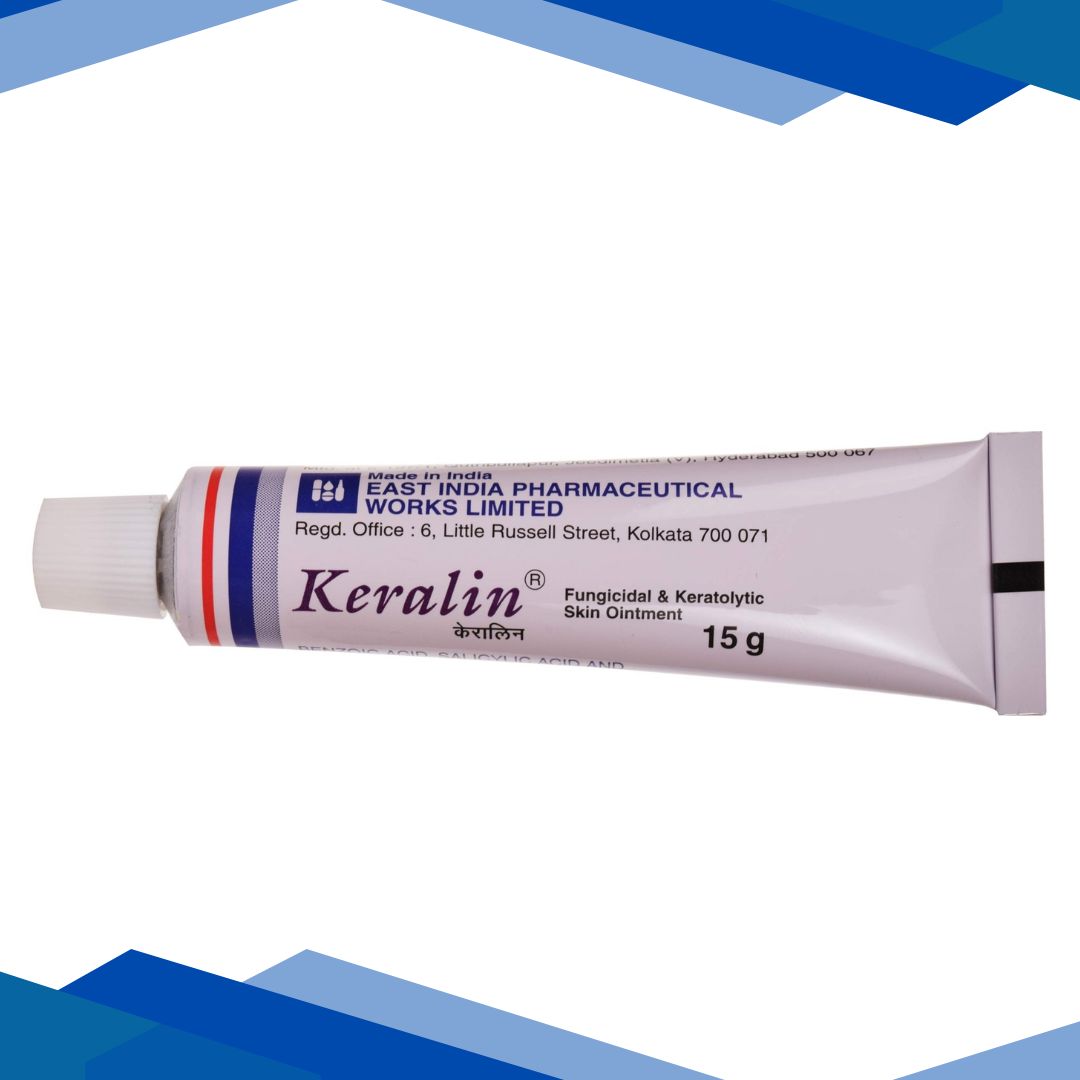
Keralin Ointment 15gm
No Prescription yet? Don’t worry! Click Here to Get Online Consultation
KERALIN OINTMENT is a combination of Hydrocortisone, Benzoic acid and Salicylic acid which belongs to the group of medicines called Corticosteroids, Antimicrobials and Keratolytic agents respectively. It is used for hyperkeratotic (thickening of the skin’s outer layer) skin lesions like ringworm, chronic dry eczema, cracked heels, warts, and corns, lichenification (thickened, hardened areas of skin), and psoriasis.
benzoic acid
Benzoic Acid
Benzoic Acid is a white, crystalline organic compound known for its antifungal and bacteriostatic properties. It is widely used in pharmaceuticals for treating superficial fungal skin infections. It is a key component of Whitfield’s Ointment (with Salicylic Acid), where it helps control fungal growth and promotes skin desquamation.
Indications
Tinea Infections: Effective for Ringworm (Tinea Corporis) and Athlete’s Foot (Tinea Pedis).
Fungal Skin Infections: Helps manage dermatomycoses by creating an unfavorable environment for fungal growth.
Pharmaceutical Preservative: Used in oral liquids (syrups) to prevent microbial contamination.
Wound Care: Acts as a mild antiseptic in some topical formulations.
How It Works
Benzoic Acid lowers the intracellular pH of microorganisms. Once inside bacterial or fungal cells, it disrupts metabolic and enzymatic activity, preventing growth and reproduction.
Application Guidelines
Topical Use: Clean and dry the affected area, then apply a thin layer as directed.
Frequency: Use 2–3 times daily as prescribed.
Hygiene: Wash hands after application to avoid contact with eyes or mucous membranes.
Safety & Precautions
Skin Reaction: May cause mild burning or stinging. Discontinue if irritation persists.
Avoid Sensitive Areas: Do not apply to eyes, nose, or broken/inflamed skin.
Pediatric Use: Consult a pediatrician before use in infants.
Pregnancy & Lactation: Generally safe topically, but medical advice is recommended.
Frequently Asked Questions
Q: Is it the same as Benzoyl Peroxide?
No. Benzoyl Peroxide is used for acne, while Benzoic Acid is mainly antifungal and used as a preservative.
Q: Can it treat ringworm?
Yes, often used alone or with Salicylic Acid for better penetration.
Q: Is it safe in food or medicine?
Yes, in regulated small amounts as preservatives like sodium benzoate.
Q: What if swallowed accidentally?
It is for topical use only. Seek medical help immediately if ingested.
Q: When will I see results?
Improvement may appear within 5–7 days, but complete the full course to prevent recurrence.
Hydrocortisone Acetate
Hydrocortisone Acetate (0.1%/1% w/w)
Hydrocortisone acetate is a slight corticosteroid (steroid) used topically to increase relief from rash, redness, and pruritus, which are the interactive component of many skin conditions. It does this by inhibiting the formation or release of mediators from endogenous chemical inflammation based on the tone of prostaglandins and histamines. This is usually given for eczema, dermatitis, allergies, or insect stings.
Therapeutic Uses
in Dermatitis: Decreases redness and inflammation due to contact dermatitis or atopic dermatitis.
Insect Bites and Rashes: It is nicely redundant to use this for reducing redness and persistent itching in a localized allergic reaction to insect bites.
Anal/Rectal relief: It comprises the so-called formulas capable of lessening the discomfort with itching and inflammation, seen while coming from piles (hemorrhoids).
Managing Psoriasis: Seen more than useful in handling moderate carcinoma psoriasis of particularly vulnerable areas.
Key Product Information
Anti-inflammatory: This rapidly reduces inflammation, redness, and heat.
Anti-pruritic: It brings itch to a stop right away. Again, it generally targets the "itch-scratch" cycle.
Weaker Potency: Thus probably safe for short-term use on a large body area under careful observation by a doctor.
How to Use
Preparation: Clean and dry your hands and the region of the skin you want to apply cream or ointment to.
Application: Thin yet judiciously applied directly onto the inflicted skin.
Massage: Rub gently until the cream is blended nicely on the skin.
Frequency: Must be applied 2–4 times daily, w.r.t. the extent of impairment and the prompt advice of a doctor, in agreement with said above.
Hygiene: Remember to wash your hands soon after applying unless, of course, the treatment is on your hands.
Common Side Effects
While very few patients show signs:
Stinging
Bright-red or brown streaks ("tertiary telangiectasia") through the skin
Temporary thinning of the skin (after very long-term use)
Changes in skin color toward a lighter shade (hypopigmentation)
Folliculitis (inflammation of hair follicles)
Do not apply on the face, groin, or underarms, as higher absorption occurs in these regions, unless instructed to do so by your physician.
Points for Prescriptions & Safety
Infections: No need to apply once the skin is broken, infected, or bearing active viral (herpes) or fungal infections.
Duration: Consult a doctor if the medication is to be used for a period of longer than 7 days because the extended period of use can increase systemic absorption.
Occlusive Dressing: Avoid wrapping bandages over the treated area in any occasion except when advised so by the doctor, as it increases the absorption strength and side effects.
Pediatric Use: Exercise extreme caution in children; consult a pediatrician for proper dosage and duration.
Frequently Asked Questions (FAQs)
Q: Will Hydrocortisone Acetate work on acne or pimples?
No. This should definitely be avoided because steroids can worsen acne or cause "steroid-induced acne." This is meant for inflammatory and allergic conditions, but not for bacterial infections.
Q: Is it safe to use while pregnant?
The utilization of topical steroids during pregnancy is advised only if the potential benefit justifies the possible risk to the fetus. It is always better if you consult your OB-GYN before using it.
Q: What does Hydrocortisone differ from Hydrocortisone Acetate?
Hydrocortisone acetate is the salt form of hydrocortisone, which is slightly more lipophilic (fat-soluble) and may be better absorbed into the skin or have an extended duration of action in some formulations.
Q: Can I use this for diaper rash on my baby?
No. Unless otherwise specified by a doctor, using steroids under a diaper that works as an occlusive dressing could lead to the excellent systemic absorption of medicine into the baby's system.
Q: Is it the cure for my skin disorder?
Hydrocortisone acetate treats the symptoms (inflammation and pruritus) and cannot cure the cause. If your condition persists even after one week of treatment, seeing a specialist dermatologist is an essential next step.
Storage
Store in a cool, dry place convivial to a mediate range of temperatures below 25°C. Ensure the tube is tightly closed to prevent medication from drying out and shop out of reach of children.
Disclaimer: The information provided above is for awareness at a very general level. Seek the advice of a medical professional. The prescribed form of Hydrocortisone should be used under doctor's orders.
At Gem Pharmacy, we make every effort to provide accurate, expert-written, and thoroughly reviewed information related to medicines. However, this information should not be considered a substitute for professional medical advice, diagnosis, or treatment from a qualified doctor.
The purpose of this information is to educate users and improve communication between patients and healthcare professionals. It should not be used to diagnose or treat any condition.
Always consult a certified healthcare professional before taking any medication.


Related products