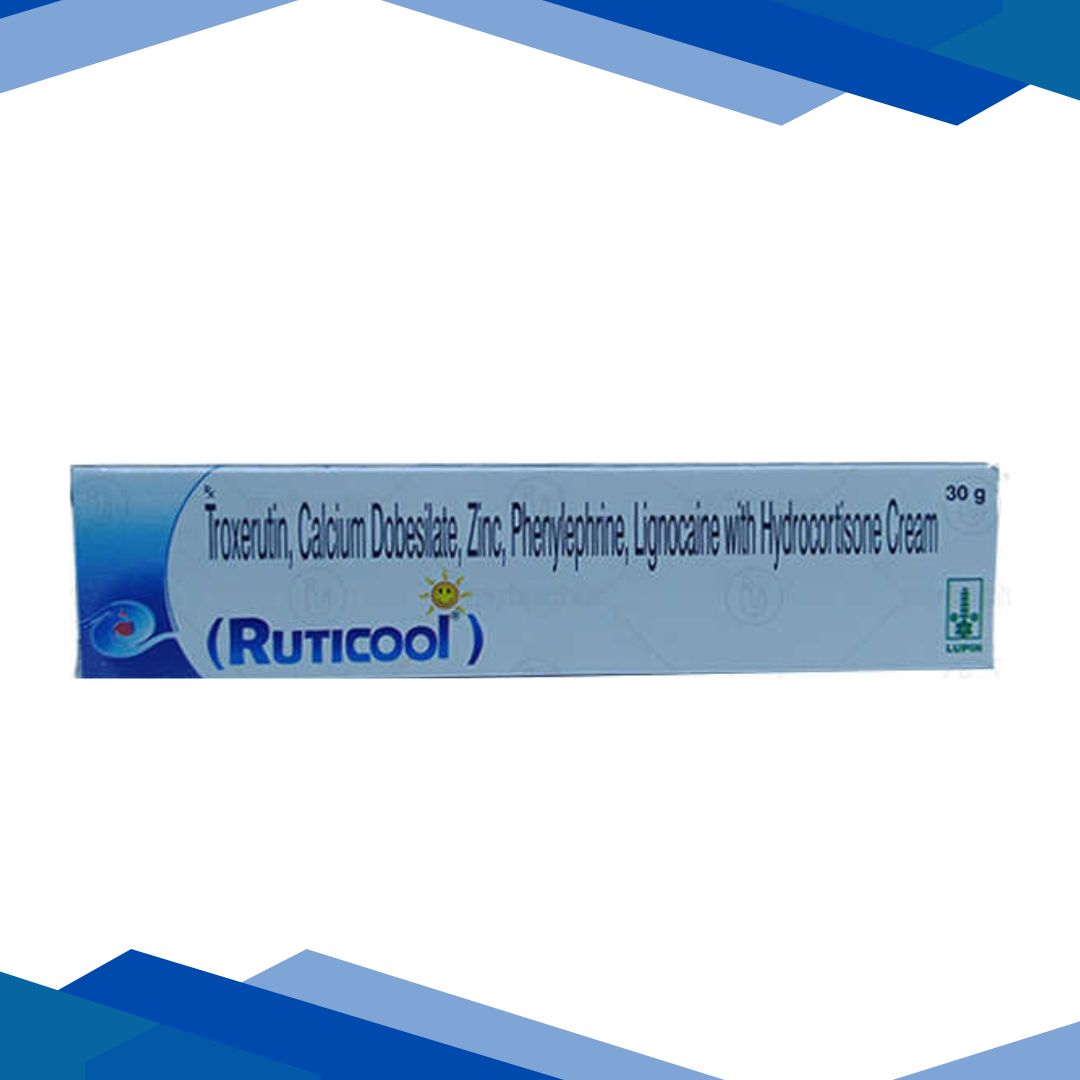
Ruticool Cream 30gm
No Prescription yet? Don’t worry! Click Here to Get Online Consultation
RUTICOOL CREAM is a combination of Calcium Dobesilate, Hydrocortisone Acetate, Lignocaine, Phenylephrine, Troxerutin and Zinc Oxide which belong to the group of medicines called Anti-haemorrhoids. It is indicated for pain and bleeding associated with anal fissures (a small tear in the lining of anus), haemorrhoids or piles (lumps inside or around your anus), after haemorrhoids removal surgery and in management of recurrence of piles following surgery.
Calcium Dobesilate
Calcium Dobesilate 500mg Capsule
Vascular Protector and Vasotherapeutic Agent
Overview
Calcium Dobesilate is a strong drug applied mainly for the enhancement of blood circulation and resistance of blood vessel walls to small veins (capillaries). It is used frequently in the treatment of diabetic retinopathy, hemorrhoids, and chronic venous insufficiency.
By downgrading "leakiness" and fragility in blood vessels, it is believed to be a big assistance in treating patients presenting with symptoms such as leg heaviness, edema, and fatigue.
Key Benefits & Uses
Strengthening Blood Vessels:
Acts directly on the capillary walls to decrease fragility and prevent unwanted leakage of fluids into surrounding tissues.
Improved Flow of Blood:
Regarding the fact that this medicinal component reduces the thickness of blood (viscosity), it permits an easier flow of blood along any narrow or damaged vein.
Hemorrhoid Management:
The substance efficiently reduces the inflammatory burden and swelling in the anal area, offering relief from the discomfort of hemorrhoids.
Benefits to the Eye:
In diabetic patients, it protects the delicate vessels in the retina from progressing to complications related to eyesight.
Using Techniques
Dosage:
Doctor's direction must be followed in terms of timeliness. For adults, 500 mg two or three times a day is usually sufficient.
Time of Intake:
It is advised to take this pill with food; even more absorption is noted when absorbed with food and the chances of gastric disturbance and sickness are greatly mitigated.
Regularity:
Take your doses time to time. Do not skip a dose. In case your missing two hours are about to pass for the next scheduled dose, skip the missed dose.
Safety Advice & Detriments
This is neither contraindication for pregnancy and breastfeeding nor recommended, unless a doctor said it is desperately needed. A professional advice has to be sought before you could initiate treatment.
Kidney/Liver Function:
If you suffer from kidney disease, your dosage might need to be altered accordingly.
It is essential to avoid alcohol while you are on this medication because it may increase the chances of becoming dizzy or getting stomach irritation.
Driving:
Please abstain from driving if you observe blurred vision or dizziness while on drug therapy.
Common Side Effects
Most of the adverse reactions of the medication are mild and transient. They may include:
- Nausea or discomfort to the stomach
- Diarrhea
- Skin rash or itching
- Fever (rare)
Notice: Stop taking the medicine and consult your healthcare provider immediately if the ache in your joints gets more severe, fever persists, or a sore throat develops with a rapid onset along with mild systemic symptoms. These could be due to a blood-related reaction rarely seen.
Frequently Asked Questions (FAQs)
1. When does Calcium Dobesilate work?
The time taken is variably haploid relative to the disease. Some patients show improvements in varicose veins or leg swelling after 2–3 weeks. By contrast, a more sustained use may be required for managing chronic ailments like diabetic retinopathy.
2. Can I take Calcium Dobesilate on an empty stomach?
It is better to take it with a meal. Taking one-centimetres with an empty stomach may incur nausea and stomach heavy, which are very frequently faced symptoms.
3. Does Calcium Dobesilate thin the blood?
It does thin the blood but not exactly. It actually thins blood by reducing blood viscosity to improve circulation. It is a vasoprotective agent, not a traditional anticoagulant like Aspirin or Warfarin.
4. Can a long-term administration of this drug treat piles?
This drug is often used to treat acute hemorrhoidal symptoms. Treatment is likely to provide relief from pain and swelling, but long-term management would most probably involve dietary changes (high fiber) and lifestyle adjustments.
5. What should I do in the event of a skin rash?
A mild skin rash may develop, but if you think that there might be a possibility of an allergic reaction, contact your doctor immediately. If the skin rash is associated with fever, see your doctor straight away.
Hydrocortisone
Hydrocortisone (Topical & Oral)
Hydrocortisone is a mild corticosteroid that provides anti-inflammatory effects, whether used as a topical cream for skin conditions or as an oral tablet for hormonal support. It works by reducing the body’s immune response, thereby decreasing swelling, redness, and itching.
Most Typical Uses
Soothe Your Skin: Used in conditions like atopic dermatitis, dermatitis herpetiformis, psoriasis, and insect bites.
Treatment of Allergy: Helps in the rapid relief of localized redness and swelling.
Hormone Replacement: In tablet form, replaces natural cortisol in patients with adrenal insufficiency.
Specialized Healthcare Uses: May be used in hemorrhoids, proctitis, and certain autoimmune conditions.
Directions for Proper Use
For Creams/Ointments:
First Cleanse: Thoroughly clean and dry the affected area.
Apply a Thin Layer: Use a small amount and gently rub until absorbed.
Hand Cleaning: Wash hands after application (unless treating hands).
Frequency: Typically 2–3 times daily. Do not exceed 7 days unless prescribed.
For Tablets:
Take with Food or Milk: Helps protect the stomach.
Morning Dose Preferred: Usually taken once daily in the morning, aligning with the body’s natural cortisol rhythm.
Important Safety Checklist
Pro Tip: Avoid using on the face, eyes, or broken skin unless advised by a doctor, as steroids may cause skin thinning.
Infections: Do not apply on infected areas such as pus-filled lesions, viral infections (e.g., cold sores), or fungal infections (e.g., athlete’s foot).
Pregnancy & Nursing: Consult your doctor before use, though topical use is generally low risk.
“Bandage Rule”: Avoid tight covering (occlusion) unless instructed, as it increases drug absorption into the bloodstream.
Side Effects to Watch For
Mild stinging or burning sensation at application site
Skin thinning, discoloration, or stretch marks (with prolonged use)
Polydipsia (increased thirst) or polyphagia (increased appetite) with oral use
Hormonal changes or sleep disturbances (oral forms)
Frequently Asked Questions (FAQs)
Q: Can hydrocortisone cream be used on the face for acne?
A: It is not recommended. While it may reduce redness temporarily, prolonged use can lead to skin thinning or “steroid acne.”
Q: Can children use it?
A: Use with caution. Children have thinner skin, leading to higher absorption. Always consult a pediatrician before use.
Q: What is the difference between cream and ointment?
A: Creams are better for wet or oozing skin, while ointments are ideal for dry, scaly skin, as they lock in moisture.
Q: Can hydrocortisone treat fungal infections like ringworm?
A: No. Steroids may worsen fungal infections by suppressing the immune response. Use an antifungal treatment instead.
Q: What should I do if I miss a dose?
A: Apply or take it as soon as you remember. If it’s close to the next dose, skip the missed dose. Do not double the dose.
Troxerutin
ZINC
Zinc (Elemental Zinc/Zinc Salts)
Zinc is an essential trace mineral vital for the activity of more than 300 enzymes in the human body. It plays a fundamental role in immune function, protein synthesis, wound healing, and DNA synthesis. With no specialized zinc storage system, a daily intake is necessary to maintain homeostasis. Zinc is mostly applied clinically to treat nutritional deficiencies, assist in pediatrics' growth and manage acute diarrhea.
Therapeutic Uses
Immune System Support: Acts as a gatekeeper of immune function, helping the body resist infections and reducing the duration of the common cold.
Diarrhea Management: WHO recommends zinc to reduce the severity and duration of diarrhea, particularly in children.
Skin Health & Repair: Essential for maintaining skin integrity; often used to treat acne, eczema-like rashes, and slow-healing wounds.
Sensory Function: Crucial for the maintenance of the senses of taste and smell.
Growth & Development: Synergists during growth & development, from pregnancy to childhood, & adolescence.
Key Features
Several Salt Forms: This nutritional mineral comes in Zinc Sulfate, Zinc Gluconate, and Zinc Acetate; the latter two should be preferred probably for easy GI tolerance as and when needed.
High Bioavailability: High bioavailability makes it rapidly absorbed from the small intestine.
Essential Micronutrient: Iron serves as an 'essential' mineral because it can't be made in the body.
Instructions for Use
Dosage: Per prescription from health care providers or on causal bases, one to two tablets is the recommended dose to make up the RDA of, say, 8mg for women and 11mg for men.
Timetime: One hour before or two hours after meal for maximal absorption.
Questionable Stomach? Nausea from zinc is through- add some food and this might reduce absorption a tad.
Avoid Interference: Do not take zinc with iron or calcium supplements, as these minerals compete for absorption.
Possible Side Effects
At recommended doses, side effects with Zinc are uncommon. Nonetheless, a few users may encounter the following difficulties:
GI Disturbances: Zinc Sulfate causes common nausea, vomiting, and stomach pains.
Metallic Taste: A lingering taste in the mouth will occur.
Copper Deficiency: Excessive zinc intake, longer than 40 mg/day, can be an obstruction to copper absorption, leading to anemia.
Cautions and Restriction
Drug Interactions: Zinc may interfere with the absorption of certain antibiotics (eg. Quinolones and Tetracyclines). So if you are on these medications, take them at least 2 hours before or 4–6 hours after taking Zinc.
Renal Health: Be cautious if you have kidney deficiencies, as minerals can build up.
Pregnancy & Lactation: Zinc needs are higher during these periods and supplementation should be by prescription only.
Avoid taking antacids two hours before/after your zinc dose since they may actually reduce its effectiveness.
Frequently Asked Questions (FAQs)
Q: Which is the best form of Zinc, sulfate, gluconate, or acetate?
All forms are equally good carriers of elemental zinc. Zinc sulfate tablets offer more zinc for the money and is commonly found, but zinc gluconate or acetate forms are most often desired in syrups and lozenges as they are less bitter and milder on the stomach.
Q: Can Zinc delete a common cold faster?
Yes, clinical studies show that taking Zinc lozenges or syrup less than 24 hours after the initial phase of a common cold can significantly reduce the duration and severity of a cold.
Q: How can I tell if I have Zinc deficiency?
Common signs include frequent infections, thinning of the hair, decreased appetite, changes in taste or smell, and wounds that are slow to heal among other few. If you are experiencing these symptoms, it is suggested to check with your clinician for a blood test.
Q: Can I take Zinc and Iron together?
That's correct. A large intake of iron (25mg or more) will seriously inhibit zinc absorption. It is best we supplement each with enough hours separation (e.g. morning and evening).
Q: Will it be safe to consume 50mg of zinc every day?
The "Tolerable Upper Intake Level" figure for adult consumption stands at 40 mg/mg per day. In any case, taking 50 mg/day or more on one's own overtime without any doctor's supervision will result in a copper deficiency and weakened immunity.
Storage
Store in the same fashion others are stored: dry places away from direct sunlight with the container tightly closed to prevent moisture from getting in.
Disclaimer: INFO THIS ARTICLE OFFERS IS PRESENTED IN AN INFORMATIVE WAY. IT IS NOT SUBSTITUTING FOR PROFESSIONAL MEDICAL ADVICE OR DIAGNOSIS. ALWAYS CONSULT YOUR DOCTOR BEFORE TAKING ANY NEW MINERAL SUPPLEMENT.
At Gem Pharmacy, we make every effort to provide accurate, expert-written, and thoroughly reviewed information related to medicines. However, this information should not be considered a substitute for professional medical advice, diagnosis, or treatment from a qualified doctor.
The purpose of this information is to educate users and improve communication between patients and healthcare professionals. It should not be used to diagnose or treat any condition.
Always consult a certified healthcare professional before taking any medication.


Related products