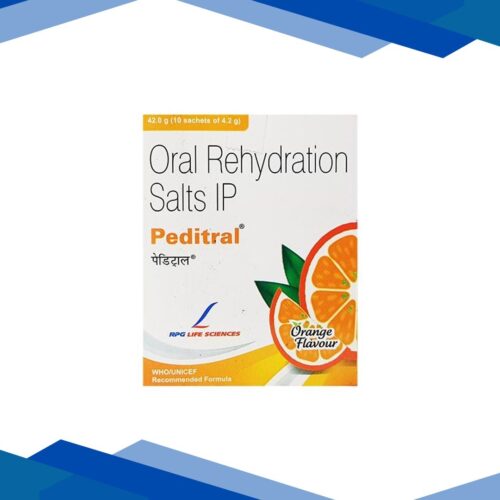
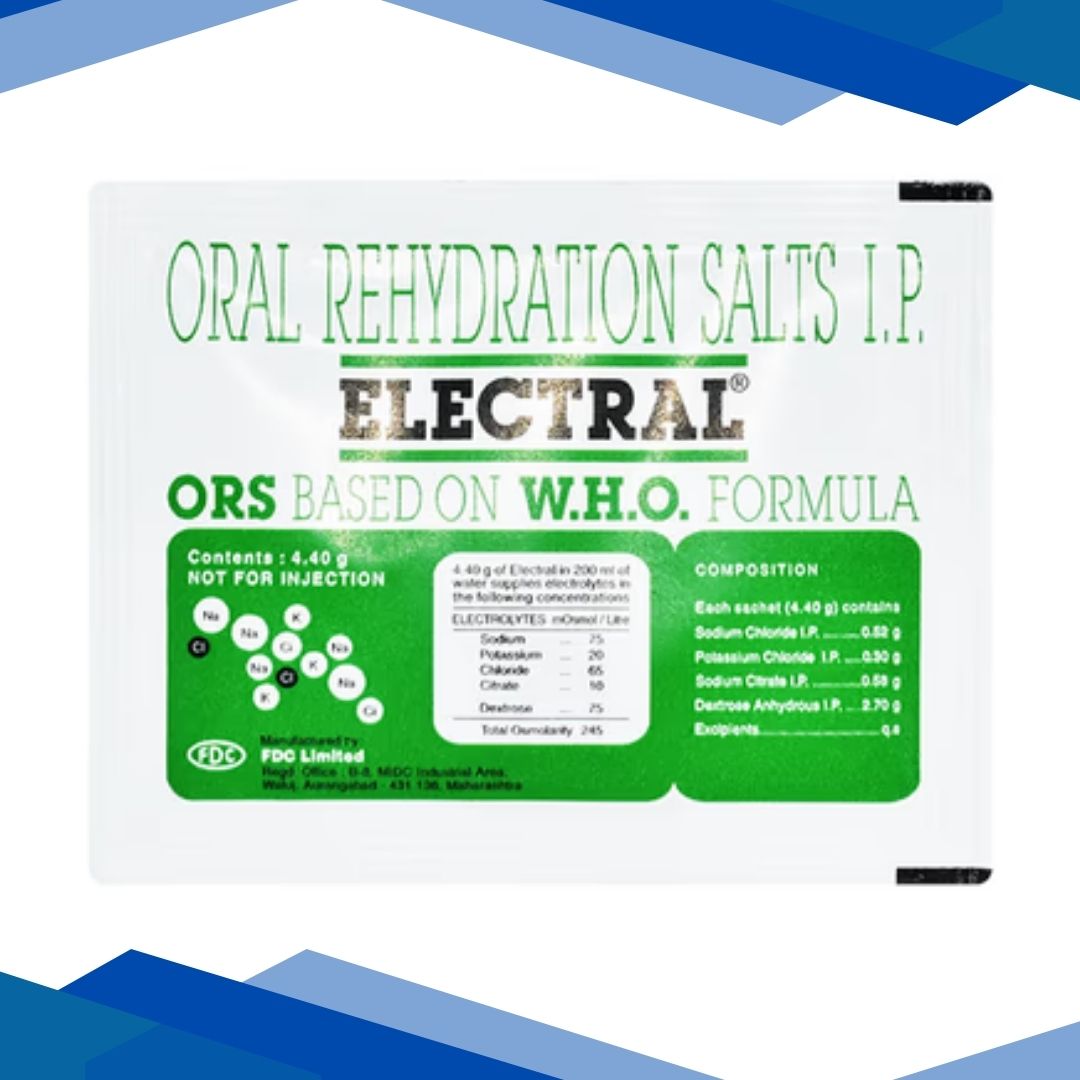
Electral Powder 4.4Gm
No Prescription yet? Don’t worry! Click Here to Get Online Consultation
Electral Powder 4.4gm – ORS Solution for Rehydration
Electral Powder is a WHO-recommended electrolyte solution used to restore body fluids and prevent dehydration caused due to diarrhea, vomiting, heat exhaustion, and physical exertion. It contains sodium chloride, potassium chloride, sodium citrate and anhydrous dextrose as active ingredients which hydrates and maintains normal fluid and salt balance in the body.
Dextrose
Dextrose (D-Glucose)
Brand/Manufacturer: [insert brand name]
Form: IV Fluid / Oral Powder / Tablet | Concentration: 5%, 10%, 25%, 50%
Product Overview
Dextrose acts as a simple sugar (glucose) derived from corn or other starches, which is chemically identical to the glucose found in blood and serves as the primary energy source for the body’s cells.
In medical practice, Dextrose is frequently administered intravenously with IV fluids to help manage dehydration and calorie deficiency. It is also widely used as a rapid treatment for sudden drops in blood sugar (hypoglycemia), especially in individuals with diabetes.
Key Benefits & Medical Uses
Fast Energy Replenishment: Helps rapidly restore blood glucose levels, providing an immediate energy boost in cases of fatigue or exhaustion.
Correction of Hypoglycemia: Used as an emergency treatment for diabetic patients experiencing low blood sugar episodes.
Fluid Balance Support: When administered through IV therapy, it helps maintain hydration and fluid balance, particularly during fever, diarrhea, or vomiting.
Nutritional Support: Often used as a carrier for other medications or as a carbohydrate source in parenteral nutrition for patients who cannot consume food orally.
Directions for Using Dextrose
Oral Form (Powder / Tablets): Dissolve the recommended dose of powder in water and consume immediately. Tablets should be chewed thoroughly before swallowing.
IV Infusion: Dextrose infusion must be administered by a healthcare professional, such as a doctor or nurse. The infusion rate should be carefully adjusted based on the patient’s age and clinical condition.
Dosage: Always follow the dosage instructions provided by your healthcare provider, as excessive intake may lead to hyperglycemia (high blood sugar).
Warnings & Precautions
Important for Diabetic Patients: Frequent blood glucose monitoring is necessary during Dextrose infusion to prevent dangerous spikes in blood sugar levels.
Allergy Warning: Inform your doctor if you have experienced allergic reactions to corn or grain-based products, since many Dextrose preparations are derived from corn.
Storage:
- Oral forms should be stored in a cool, dry place away from direct sunlight.
- IV solutions should be checked to ensure they are clear and free from particles before use.
Possible Side Effects: Some individuals may experience:
- Mild swelling at the injection site
- Increased urination
- Dizziness due to sudden blood sugar fluctuations
Frequently Asked Questions (FAQs)
1. Is Dextrose the same as table sugar?
Not exactly. Table sugar (sucrose) is a disaccharide made of glucose and fructose, whereas Dextrose is a monosaccharide (pure glucose). This allows Dextrose to be absorbed quickly and provide immediate energy without additional digestion.
2. Can I take Dextrose if I am not diabetic?
Yes. Athletes sometimes use oral Dextrose to help replenish glycogen levels after intense workouts. However, it should be consumed in moderation to avoid excess calorie intake and energy crashes.
3. Why is Dextrose used in IV drips?
Dextrose IV solutions help restore hydration and supply energy simultaneously, making them useful for patients who cannot eat or drink normally.
4. How quickly does Dextrose raise blood sugar levels?
When taken orally as tablets or gel, Dextrose typically increases blood glucose levels within 10–15 minutes, which is why it is often preferred in hypoglycemia management.
5. Is there a risk of Dextrose overdose?
Yes. Excessive intake can cause hyperglycemia, leading to symptoms such as excessive thirst, blurred vision, dry mouth, and frequent urination. Always follow recommended dosage guidelines when using Dextrose supplements.
Potassium Chloride
Potassium Chloride (Oral Supplement)
Intro
Potassium Chloride is a crucial mineral supplement that is prescribed to treat or prevent low blood potassium levels, also called hypokalemia. Potassium is an essential electrolyte, it works like a vital ignition point for your body; it helps keep the heart electrical conductivity stable, it supports smooth muscle contractions, and it backs healthy nerve function too.
This can happen because of diuretics use, long term gastrointestinal problems, or dietary imbalances that gradually tip the balance. When potassium goes low, the body can react with severe muscle weakness, persistent fatigue, and potentially risky irregular heart rhythms. So this medication refills the depleted reserves, and keeps your internal systems running with steady coordination, rather than drifting out of sync.
Main Medical Uses
Hypokalemia treatment: used to correct low blood potassium levels brought on by illness, or as a side effect of other medications.
Diuretic Support: it’s often given together with those “water pills” diuretics like furosemide or hydrochlorothiazide in order to replace the potassium that gets pushed out, kinda faster than usual, by these medicines.
Prevention: Potassium Chloride is used as a preventative measure for people who are at risk of potassium depletion, especially when they cannot keep up potassium levels with food changes alone, or when diet adjustments just do not work enough.
How Potassium Chloride Works
Potassium is one of the main cations located inside your cells. It works along with sodium to keep the “electrochemical gradient” stable across cell membranes. When you take Potassium Chloride, it releases potassium ions into the bloodstream. This additional potassium helps your cells hold onto their resting potential, meaning the basic electrical charge nerves use to fire, muscles use to contract, and, most importantly, the heart uses to keep beating in a steady, rhythmic way.
Quick Reference: Usage & Administration
Take with food: Potassium Chloride can be really irritating to the stomach lining, so always take your tablet or liquid dose with a full meal or immediately after one. Also use a large glass of water, that helps reduce digestive upset.
Keep upright: After you swallow your dose, stay sitting up or standing for at least 10 minutes. This helps stop the tablet from lingering in the esophagus, and that lingering can trigger local irritation or ulceration.
Stick to a routine: Take your dose at the same time each day, for steady potassium levels.
Do not crush or chew: If you were given extended release tablets, usually labeled ER or SR, swallow them whole. Crushing , or chewing them messes up the slow-release setup and can lead to a sudden dump of the medicine into your stomach, which is dangerous.
Important safety info
Potassium levels need to stay within a tight, healthy band. Too little potassium , hypokalemia, and too much potassium, hyperkalemia, can be life-threatening.
Signs that Potassium levels are high (Stop and get help):
Unexplained muscle weakness, or a "heavy" feeling in your limbs
A slowed up, shallow, or irregular heartbeat
Tingling that keeps happening, or numbness in hands, feet, or near the mouth
Odd confusion, or feeling light headed
Common not so severe Side Effects:
Nausea, vomiting, or pain in the stomach
Mild diarrhea, or abdominal gas
Heartburn
Medical Alert: If you have severe belly pain, vomiting that will not quit, or black tarry stools, reach out to your doctor right away, since this could mean irritation or bleeding inside the digestive tract
Expert Advice and Safety Notes
Regular Blood Work: your doctor will want routine blood testing (Serum Potassium tests) to keep track of your levels. Do not miss those visits, because your dose might need frequent tweaks depending on what shows up in your results
Salt Substitute Warning: A lot of “salt free” or “low-sodium” table salt substitutes contain high levels, of Potassium Chloride. So, you should not use them without talking to your doctor first, because you might accidentally take in too much and end up triggering dangerous hyperkalemia .
Renal Health: If you have kidney disease, your body might have trouble getting rid of extra potassium. Always let your doctor know if you have any past renal impairment before starting this supplement, because the risk changes with your excretion ability.
Frequently Asked Questions (FAQs)
Q. Can I just eat more bananas instead of taking this medication?
Bananas and other potassium rich foods (like avocados, spinach, and potatoes) are great for overall wellbeing , but they usually can not provide the strong concentrated amount needed to correct a medical grade deficiency. Your doctor prescribed this supplement because your potassium levels fell below the point where dietary choices alone will fix it.
Q. Why does my medicine taste or smell strange?
Potassium usually has a naturally strong, saline metallic flavor. The liquid versions are often made more palatable with extra flavorings, but the mineral taste is hard to cover, completely. This is expected and doesnt mean the medication is spoiled.
Q. What should I do if I miss a dose?
If you miss a dose, take it as soon as you remember, but only if you have a meal ready. If your next scheduled dose is already near, you should skip the missed dose. Do not take two doses together at the same time.
Q. Is there a specific diet I should follow while taking Potassium Chloride?
Keep up a balanced diet, but pay attention to how much you use salt substitutes. Also tell your doctor about any other medicines you take, especially ACE inhibitors, ARBs (blood pressure medicines), or potassium-sparing diuretics (for example, spironolactone), because together they can push potassium levels up to unsafe amounts.
Q. How long do I need to stay on this supplement?
The length of time really depends on what caused your low potassium. If you are taking it to counteract a medicine you use every day, you might need to stay on it for the long run. If the issue was temporary, for example a stomach bug, then your doctor will usually stop it once your blood levels return to normal.
Sodium Chloride
Normal Saline (Sodium Chloride)
Sodium Chloride is an essential electrolyte supplement that restores salt and water balance in the body. In healthcare settings, it is most commonly administered IV as Normal Saline (0.9%) to treat dehydration, intranasally as a decongestant, or drops in the eyes to clean out irritants. It is important in maintaining osmotic pressure and nerve-muscle functions.
Major Medical Forms
Pens: Also used for another drug and to replace fluid.
Nasal Drops/Spray: Pseudo-ephedrine for relief from dry or congested nasal passages.
Ophthalmic Solution: Eye irrigation or for reducting swelling of cornea.
Oral: Sodium chloride tablets are used for specific electrolyte deficiencies or "salt-wasting" conditions.
Main Benefits
Rapid Rehydration: Quickly restores fluid volume due to heatstroke or diarrhea. Flowers for free.
Amascus: Water-thinning in the nose to relieve breathing.
Electrolyte Balance: Essential to maintain the proper levels of alkalinity and acidity (pH) of the blood.
How to Use
For the Nose: Lean the head backwards and squeeze the number of drops instructed into each nostril. Avoid touching the dropper tip to the inside of the nose. This is to prevent contamination.
As IV Infusion: This should be given only in a hospital or clinic by a professional health worker.
For the Eyes: Rinse the eyes gently with the sterile solution when necessary.
Side Effects and Cautions
Although Sodium Chloride is found naturally in the human body, it can occasionally be red or irritating at the site (IV) upon administration, with sneezing being a common side effect (Nasal spray) and administered in large quantities may cause edema or fluid volume overload, raise your blood pressure.
Caution: Patients with congestive heart failure, severe kidney disease, or high blood pressure (hypertension) should use sodium chloride supplements only under strict medical supervision.
Frequently Asked Questions (FAQs)
Q: Is "Normal Saline" just salt water?
Though it comprises sodium chloride and water, "Normal Saline" (0.9%) is created to match the salt concentration in human blood and tears. As such, it is "isotonic," which implies the solution will not burn or disturb cells like homemade salt water will.
Q: Can I give Sodium Chloride nasal drops to my baby?
Saline nasal drops are typically the swiftest and least dangerous decongestion remedy for infants, given that there is no harsh decongestant-based chemical. Go for the products manufactured particularly for use in children of that specific age of yours.
Q: Why was I put on Sodium Chloride tablets?
They are typically prescribed to address "hyponatremia" (that is, low sodium levels in blood) that could result from intensive sweating, certain medications, or certain imbalances of the hormones.
Q: Is there a risk of "salt overdose"?
Higher-volume infusion of sodium chloride can give rise to hypernatremia in a clinical instance; symptoms are thirst, mental cloudness, and fluid retention. This does include medical oversight on one's electrolyte levels throughout therapy.
Q: Can I use saline to wash the lenses of my contact glasses?
You can use saline solution to rinse commercially prepared and disinfected contact lenses, though it is not possible to kill off bacteria or viruses. It should be used merely as a supplementary cleaning step by rinsing the impurities from the lens after utilizing proper disinfection solutions.
At Gem Pharmacy, we make every effort to provide accurate, expert-written, and thoroughly reviewed information related to medicines. However, this information should not be considered a substitute for professional medical advice, diagnosis, or treatment from a qualified doctor.
The purpose of this information is to educate users and improve communication between patients and healthcare professionals. It should not be used to diagnose or treat any condition.
Always consult a certified healthcare professional before taking any medication.


Related products
Electral Delicious Apple Flavour Liquid 200ml
LUPIN’S ORS TINGLING ORANGE FLAVOUR Sachet 21gm