




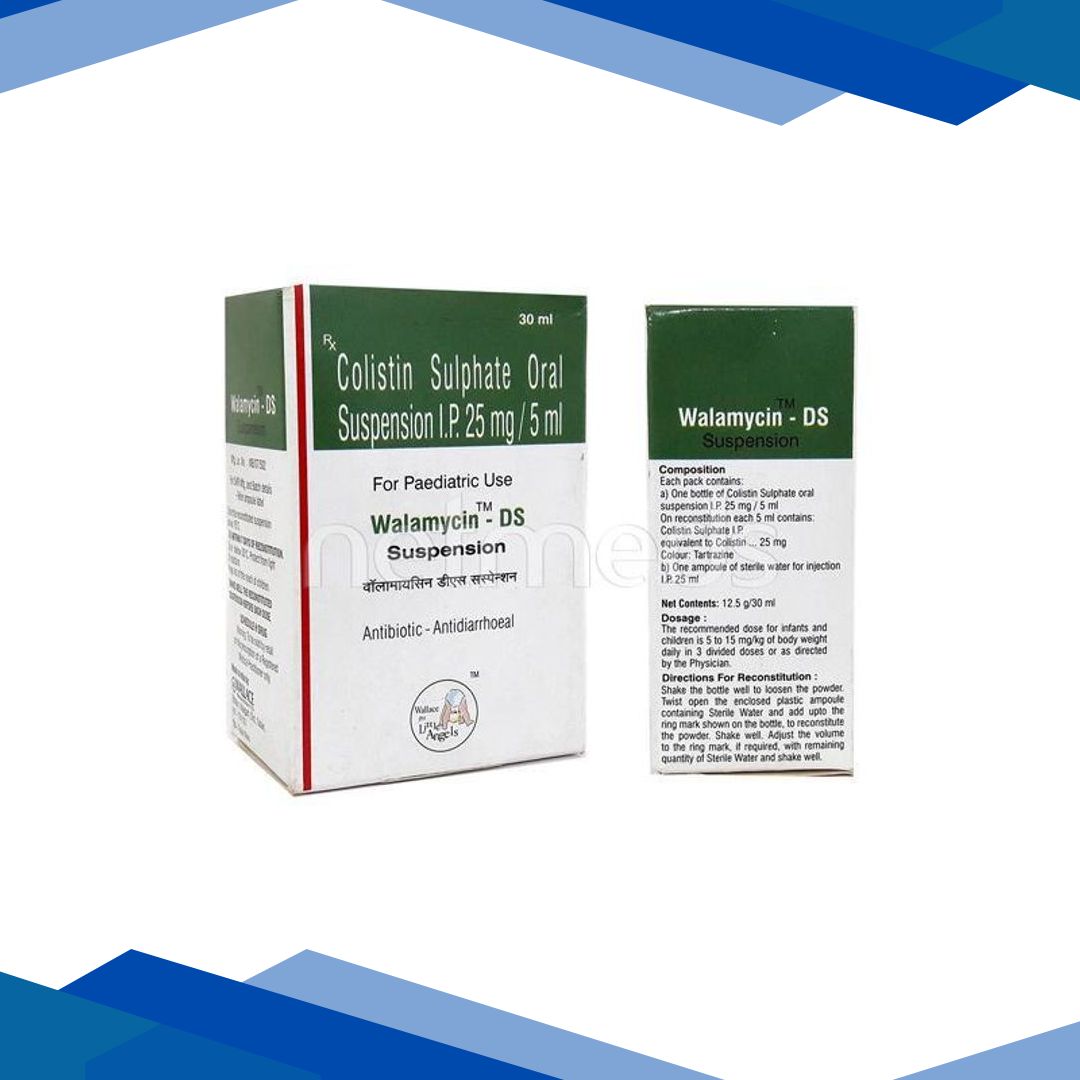
Walamycin DS Suspension 30ml
No Prescription yet? Don’t worry! Click Here to Get Online Consultation
Walamycin DS Suspension is a powerful antibiotic from the polymyxin class used to treat serious infections caused by multidrug-resistant Gram-negative bacteria, particularly when other antibiotics are no longer effective. It works by disrupting the bacterial cell membrane, leading to rapid bacterial death. This medicine is commonly used in hospital settings for severe infections such as pneumonia, bloodstream infections, and urinary tract infections, and may also be applied topically or taken orally for localized infections. Due to its potential side effects, including kidney and nerve toxicity, Walamycin DS Suspension should only be used under strict medical supervision.
Description
Walamycin DS Suspension is a potent antibiotic belonging to the polymyxin class of antimicrobial agents. it is primarily used to treat serious infections caused by multidrug-resistant gram-negative bacteria, particularly when other antibiotics are ineffective. originally derived from the bacterium paenibacillus polymyxa, colistin has regained clinical importance due to the increasing prevalence of antibiotic-resistant pathogens. it is commonly utilized in hospital settings for severe infections such as pneumonia, bloodstream infections, urinary tract infections, and infections involving the gastrointestinal tract or skin caused by resistant organisms.
the mechanism of action of Walamycin DS Suspension is unique and highly effective against certain bacteria. it works by interacting with the lipopolysaccharides (lps) and phospholipids in the outer membrane of gram-negative bacteria. this interaction disrupts the integrity of the bacterial cell membrane, leading to increased permeability and eventual cell death. essentially, colistin acts like a detergent, breaking down the protective barrier of the bacteria. because of this mechanism, it is particularly effective against pathogens such as pseudomonas aeruginosa, acinetobacter baumannii, and klebsiella pneumoniae, which are often resistant to multiple other antibiotics.
Walamycin DS Suspension is available in various formulations, including oral, topical, and parenteral forms. the oral form is typically used for gastrointestinal infections, as it is poorly absorbed from the gut and acts locally. injectable forms are reserved for severe systemic infections and are administered under strict medical supervision due to potential toxicity. topical preparations may be used for skin, ear, or eye infections. because of its potential side effects, particularly nephrotoxicity and neurotoxicity, its use is generally limited to cases where no safer alternatives are available.
this medication is intended for patients with confirmed or strongly suspected infections caused by susceptible organisms. it is not effective against viral infections such as the common cold or flu. proper diagnosis and susceptibility testing are important before initiating treatment to ensure optimal outcomes and to minimize the risk of resistance development. due to its narrow therapeutic window and potential for serious side effects, Walamycin DS Suspension should always be used under the guidance of a qualified healthcare professional.
ingredients
- Walamycin DS Suspension: the active pharmaceutical ingredient, Walamycin DS Suspension is a cyclic polypeptide antibiotic that exerts bactericidal effects by disrupting bacterial cell membranes. it is particularly effective against gram-negative bacteria and plays a crucial role in treating infections caused by multidrug-resistant organisms.
- excipients (varies by formulation): these may include stabilizers, preservatives, and buffering agents that help maintain the stability, efficacy, and safety of the formulation. in topical or oral preparations, excipients may also improve absorption, texture, or shelf-life.
key uses
- treatment of severe infections caused by multidrug-resistant gram-negative bacteria, especially when other antibiotics have failed or are not suitable.
- management of hospital-acquired pneumonia, particularly ventilator-associated pneumonia caused by resistant organisms.
- therapy for bloodstream infections (septicemia) due to susceptible bacteria.
- treatment of complicated urinary tract infections caused by resistant pathogens.
- use in gastrointestinal infections when administered orally, targeting bacteria within the gut.
- topical treatment of skin, ear, or eye infections caused by susceptible microorganisms.
- adjunct therapy in cystic fibrosis patients to manage chronic lung infections caused by pseudomonas aeruginosa.
how to use
Walamycin DS Suspension should be used strictly according to the instructions provided by a healthcare professional. the method of administration depends on the formulation and the type of infection being treated. injectable forms are administered intravenously or intramuscularly in a clinical setting, where patients can be closely monitored for any adverse effects. oral formulations are typically taken by mouth to treat infections within the gastrointestinal tract and are not intended for systemic infections due to limited absorption.
topical formulations should be applied directly to the affected area as directed, ensuring the area is clean and dry before application. patients should complete the full course of treatment even if symptoms improve earlier, as stopping the medication prematurely may lead to recurrence of infection or development of antibiotic resistance. it is important not to self-medicate or adjust the dosage without consulting a healthcare provider.
safety information
- warnings: Walamycin DS Suspension carries a risk of nephrotoxicity (kidney damage) and neurotoxicity (nerve damage), especially when used in high doses or for prolonged periods. close monitoring of kidney function and neurological status is essential during treatment. it should be used cautiously in patients with pre-existing kidney disease.
- side effects: common side effects may include nausea, vomiting, diarrhea, and mild skin irritation (with topical use). serious side effects can include kidney impairment, muscle weakness, dizziness, numbness or tingling sensations, difficulty breathing, and in severe cases, respiratory failure due to neuromuscular blockade. immediate medical attention is required if severe reactions occur.
- precautions: patients with kidney dysfunction, neuromuscular disorders (such as myasthenia gravis), or those receiving other nephrotoxic or neurotoxic medications should use Walamycin DS Suspension with caution. regular monitoring of renal function and electrolyte levels is recommended during therapy.
- pregnancy/breastfeeding: the safety of Walamycin DS Suspension during pregnancy has not been fully established. it should be used only if the potential benefits outweigh the risks. caution is advised during breastfeeding, as it is unclear whether the drug is excreted in significant amounts in breast milk. consultation with a healthcare provider is essential.
- interactions: Walamycin DS Suspension may interact with other medications, particularly those that affect kidney function (such as aminoglycosides, vancomycin, or certain diuretics) or neuromuscular function (such as muscle relaxants and anesthetics). concurrent use may increase the risk of toxicity. alcohol does not have a direct interaction but may worsen overall health and should be used cautiously.
additional information
- storage: store Walamycin DS Suspension according to the instructions on the label, typically in a cool, dry place away from direct sunlight. injectable forms may require refrigeration. keep out of reach of children.
- missed dose: if a dose is missed, it should be taken as soon as remembered. if it is close to the time of the next dose, skip the missed dose and continue with the regular schedule. do not double the dose to make up for a missed one.
- overdose: overdose of Walamycin DS Suspension can lead to serious toxicity, including kidney failure and neuromuscular blockade resulting in breathing difficulties. immediate medical attention is required in case of suspected overdose.
- habit forming: no, Walamycin DS Suspension is not habit-forming. it does not cause dependence or addiction, but it should still be used responsibly under medical supervision to prevent resistance and adverse effects.
frequently asked questions
Q: what is Walamycin DS Suspension used for?
A: Walamycin DS Suspension is used to treat serious bacterial infections caused by multidrug-resistant gram-negative organisms, especially when other antibiotics are ineffective.
Q: is Walamycin DS Suspension effective against all bacteria?
A: no, it is mainly effective against certain gram-negative bacteria and is not effective against gram-positive bacteria or viral infections.
Q: can i take Walamycin DS Suspension without a prescription?
A: no, Walamycin DS Suspension should only be used under the supervision of a qualified healthcare professional due to its potential toxicity.
Q: what are the major side effects of Walamycin DS Suspension?
A: major side effects include kidney damage, nerve toxicity, muscle weakness, and breathing difficulties in severe cases.
Q: how long does it take for Walamycin DS Suspension to work?
A: the onset of action depends on the severity and type of infection, but improvement is usually seen within a few days of starting treatment.
Q: can Walamycin DS Suspension be used in children?
A: yes, but only under strict medical supervision with appropriate dosing and monitoring.
Q: is Walamycin DS Suspension safe for long-term use?
A: long-term use increases the risk of toxicity and is generally avoided unless absolutely necessary.
Q: can i stop taking Walamycin DS Suspension once i feel better?
A: no, you should complete the full prescribed course to prevent recurrence and resistance.
Q: does Walamycin DS Suspension interact with other medications?
A: yes, especially with drugs that affect kidney or nerve function. always inform your doctor about all medications you are taking.
Q: what should i do if i experience severe side effects?
A: seek immediate medical attention if you experience symptoms like difficulty breathing, severe weakness, or reduced urine output.
this information is for educational purposes only and should not be considered medical advice. always consult a qualified healthcare professional before use.
At Gem Pharmacy, we make every effort to provide accurate, expert-written, and thoroughly reviewed information related to medicines. However, this information should not be considered a substitute for professional medical advice, diagnosis, or treatment from a qualified doctor.
The purpose of this information is to educate users and improve communication between patients and healthcare professionals. It should not be used to diagnose or treat any condition.
Always consult a certified healthcare professional before taking any medication.


Related products