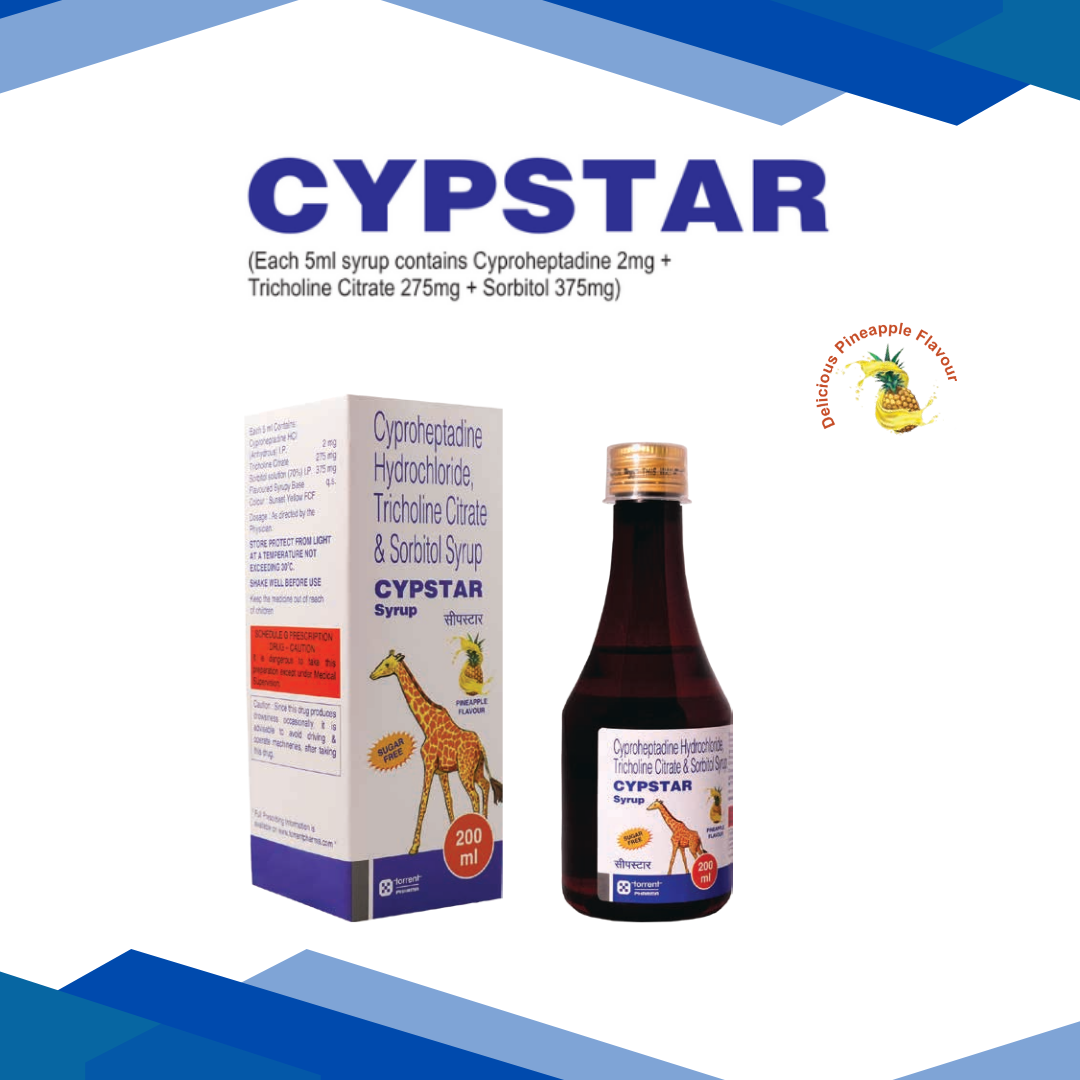
Cypstar
Cyproheptadine Tricholine Citrate
CYPROHEPTADINE TRICHOLINE CITRATE
Overview:
Cyproheptadine Hydrochloride+tricholine Citrate belongs to a group of medicines called 'appetite enhancers' used to stimulate the appetite and treat alimentary tract and metabolism problems
Classification:
Appetite enhancers
Uses:
Cyproheptadine Hydrochloride+tricholine Citrate helps in the treatment of lack of appetite, weight loss, and anorexia nervosa (an eating disorder with low body weight).
How It Works:
Cyproheptadine hydrochloride works by reducing the effect of a chemical messenger in the hypothalamus called serotonin, thereby helping stimulate the appetite. Tricholine citrate is a bile acid-binding agent that works by removing excess bile acid which causes the liver to produce more bile acid utilizing cholesterol, this, in turn, lowers the fat content in the body
Dosage:
As prescribed by your doctor.
Side Effects:
Dry mouth
Drowsiness
Confusion
Ataxia (impaired balance or coordination)
Precautions:
Do not take Cyproheptadine Hydrochloride+tricholine Citrate if you are allergic to any of its contents; if you have glaucoma, peptic ulcers, prostatic hypertrophy, bladder neck obstruction, or pylori duodenal obstruction. Inform your doctor if you have asthma, hyperthyroidism, high blood pressure, intraocular (eye) pressure or heart problems. Cyproheptadine Hydrochloride+tricholine Citrate may show additive effects if taken along with alcohol, CNS depressants, and anti-anxiety drugs. Consult your doctor if you are pregnant. It is not recommended to take Cyproheptadine Hydrochloride+tricholine Citrate if you are breastfeeding. Cyproheptadine Hydrochloride+tricholine Citrate may cause drowsiness, so drive with caution. Avoid consumption of alcohol while taking Cyproheptadine Hydrochloride+tricholine Citrate
Disclaimer:
This content is for informational purposes only. Always consult a healthcare provider for medical advice and proper dosage.
Sorbitol
Sorbitol, Oral Solution 70%/Powder
Sorbitol is a chemical formulas of polyol or sugar alcohols classified with properties that befit many applications in the pharmaceutical industry. The patient has insisted that Sorbitol, as osmotic laxative from time to time, is most often indicated in the treatment of occasional constipation. Its working principle is based upon drawing water into the large bowel, leading to increased bowel movements and softened stools. Sorbitol is now held as safe for human consumption, is considered a sugar-free sweetening agent for diabetes patients, who require careful medical observation.
Date Manufacturer
Has brand name: Sorbitol 70%-Made in China. There are indications for uses of related drugs in which Sorbitol is more frequently utilized. Certain chemical agents and formulations slow normal emptying of the gut, e.g., mild constipation disorders, so Sorbitol would certainly boost bowel movements as an osmotic agent.
FLAGON: The reason for using a sorbitol relaxant is to flush back self-discargant material from the colon for testing procedures, such as before colonoscopy.
Surgical irrigation: As a non-electrolytic irrigation solution in specific sterile concentrations, it is employed in transurethral surgical operations.
Mode of Action
Sorbitol is nonabsorbed from the gastrointestinal tract. It is osmotically active in orocecum due to gradients. Thus, the flux of water is seen to be from the mucosa to lumen, hence this is conducive to an increase in stool volume, a propagandism to mass movement (muscle contractions) from peristalsis and serosity germane to easier bowel commitment.
Administration & Dosage
- Oral Solutions: 30–50 ml is the standard dose applied for constipation in healthy adults. There is no prerogative over the choice of products for adults friendly products as long as it falls into Restolax's line.
- Mode of Administration: Either taken undiluted or mixed with a glass of water or juice to increase taste.
- Timing: Food consumption should not interfere, a bowel movement should be experienced within 1 to 3 hours after ingestion.
Side Effects & Monitoring
The most common side effects are mostly few, and usually, users are capable of tolerating them.
- Surplus or flatulence is nausea.
- Diarrhea (in overdosage)
- Electrolyte imbalance (especially with prolongation of administration or high doses)
Alert: In case of severe and persistent vomiting, rectal bleeding, or no bowel movement after use, seek immediate medical assistance.
Precautions & Warnings
- Diabetes: Sorbitol is partially metabolized to fructose in the body. Sorbitol has a lower glycemic index as compared to sucrose, but diabetic patients need to monitor blood glucose as it may become increased under high doses.
- Dehydration: Just maintain good fluid intake (8–10 glasses of water per day) while using osmotic laxatives.
- Pregnant Women/Lactation: Application during pregnancy must be under doctor's supervision. It is considered safe but should not be used except in an emergency need for the patient.
- Chronic Use: Never use laxatives for more than one week unless a doctor prescribes you otherwise; for overuse may cause "lazy bowel" syndrome.
Frequently Asked Questions (FAQ)
Q: How does Sorbitol compare to Lactulose?
Both are osmotically acting laxatives. But Sorbitol is considered possibly just as effective yet less expensive. Some patients may experience less bloating with Sorbitol when compared with Lactulose despite differences from one patient to another in terms of efficacy.
Q: Is Sorbitol safe for children?
Sorbitol can be used for pediatric constipation, and the dosage strictly depends on age and weight.
Please always consult a pediatrician before giving any laxative to a child below the age of 12.
Q: Can I use Sorbitol daily?
Sorbitol is a short-term aid meant for constipation, as prolonged use will make the person reliant on this stimulant and may result in an imbalance in electrolytes. For a persistent constipation, one must look into the root cause with the help of a physician.
Q: Will Sorbitol damage my teeth?
No. As opposed to regular sugar (sucrose), Sorbitol is not fermented by oral bacteria, so it does not contribute to dental cavity formation.
Q: May I take Sorbitol if I have Irritable Bowel Syndrome (IBS)?
Incidentally, if you have IBS-D (diarrhea-predominant), it is better to avoid sorbitol, which can worsen the symptoms. While, in the case of IBS-C (constipation-predominant), some caution needs to be shown, because, at times, gut fermentation of sugar alcohols increases gas and bloating.
STORAGE
Store it at a temperature below 30°C. Keep the bottle tightly closed. It may crystallize in cold weather. To dissolve the crystal, warm the bottle slightly in warm water.
Specifics: All of the information about this medication is published only for being opportunist and for educational purposes and should never be treated as a prescription for treatment. Therefore, any of the users should participate in discussions with a registered doctor. The label must always be read with care.
At Gem Pharmacy, we make every effort to provide accurate, expert-written, and thoroughly reviewed information related to medicines. However, this information should not be considered a substitute for professional medical advice, diagnosis, or treatment from a qualified doctor.
The purpose of this information is to educate users and improve communication between patients and healthcare professionals. It should not be used to diagnose or treat any condition.
Always consult a certified healthcare professional before taking any medication.


Related products
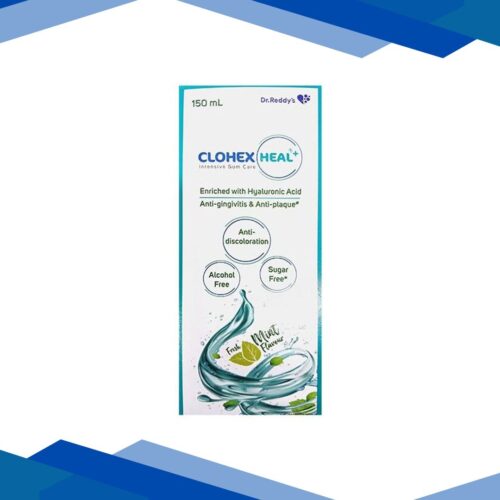
CLOHEX HEAL + SUGAR FREE FRESH MINT FLAVOUR INTENSIVE GUM CARE Liquid 150ml
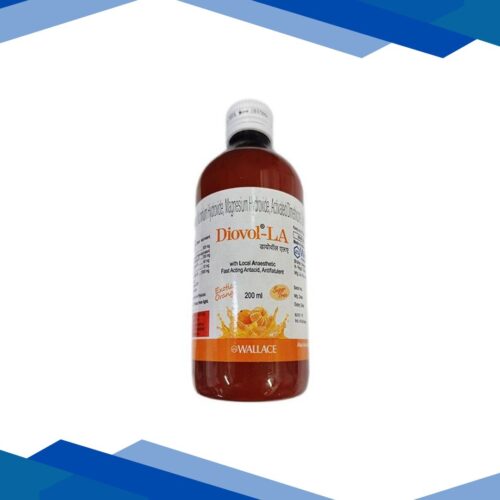
DIOVOL LA SUGAR FREE EXOTIC ORANGE Solution 200ml

CLOHEX HEAL FRESH MINT FLAVOUR SUGAR FREE INTENSIVE GUM CARE Liquid 150ml