
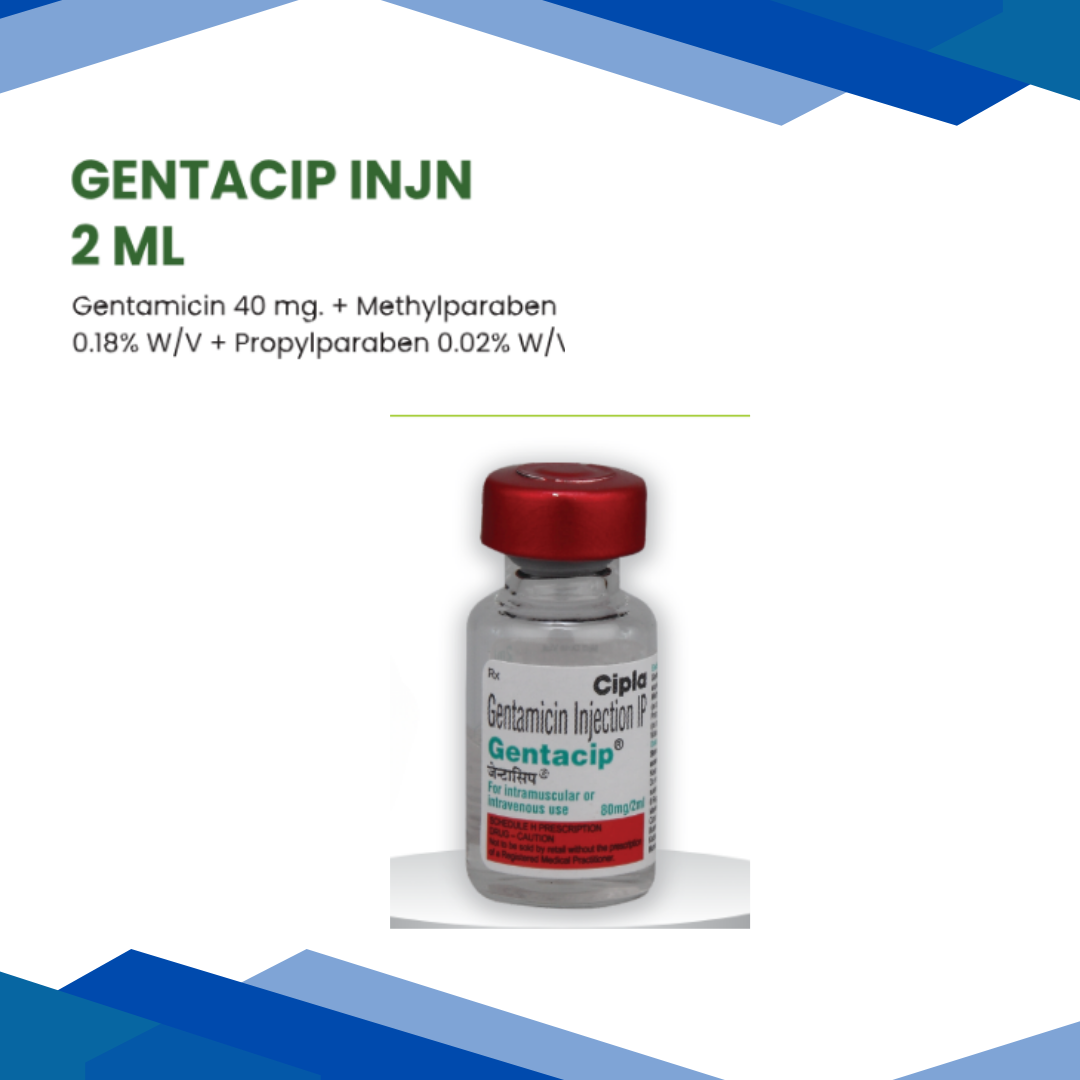
Gentacip
No Prescription yet? Don’t worry! Click Here to Get Online Consultation
Gentacip 2 ml injection is an antibiotic used to prevent or treat a wide variety of bacterial infections. This may include infections of the urinary tract, bones and joints, lungs (e.g., pneumonia), brain (e.g., meningitis), sepsis, and some others. However, it is not effective for gonorrhea.
Gentamicin
Gentamicin (IP/USP)
Gentamicin is a powerful, broad-spectrum aminoglycoside antibiotic used to treat serious bacterial infections, especially those caused by Gram-negative organisms like Pseudomonas and Proteus. It works by binding to the 30S ribosomal subunit, thereby inhibiting protein synthesis and leading to bacterial death.
It is available in multiple forms including topical creams/ointments, eye/ear drops, and injectable formulations for systemic infections.
Medicinal uses
Skin Infections: Effective in impetigo, folliculitis, and infected dermatitis
Ophthalmic Care: Used for conjunctivitis, keratitis, and eyelid infections
Otic Treatment: Treats otitis externa caused by susceptible bacteria
Systemic Infections: Injectable form used for sepsis, UTIs, and osteomyelitis
General information
Bactericidal Effect: Kills bacteria rather than just inhibiting growth
Rapid Absorption: Quick action at the site of application
Targeted Therapy: Minimal systemic absorption in topical forms
Usage Instructions
For Skin: Clean area and apply a thin layer 3–4 times daily
For Eyes/Ears: Instill drops carefully without touching the dropper tip
Course Completion: Always complete the full prescribed course
Warnings and Precautions
Nephrotoxicity & Ototoxicity: Monitor kidney function and hearing during systemic use
Allergy Alert: Avoid if allergic to aminoglycosides like neomycin or tobramycin
Long-Term Use: Avoid prolonged use to prevent fungal overgrowth
Pregnancy & Lactation: Use only under medical supervision
Frequently Asked Questions (FAQs)
Q: Can Gentamicin treat viral infections like cold or flu?
No, it is effective only against bacterial infections
Q: Is itching normal after application?
Mild irritation may occur, but severe reactions need medical attention
Q: Can I wear contact lenses while using eye drops?
Avoid use and consult an ophthalmologist if irritation persists
Q: What should I do if I miss a dose?
Use as soon as remembered; do not double dose
Q: Why is blood monitoring needed with injections?
To maintain effective drug levels while preventing toxicity
Propylparaben
PROPYLPARABEN
Overview
Propylparaben is a preservative used in many cosmetics, personal care products, and even medicines and foods. Its main job is to stop the growth of germs, bacteria, and mold, helping products stay fresh and safe to use for longer.
Classification
Propylparaben belongs to a group of chemicals called parabens. These are synthetic (man-made) preservatives commonly used to prevent spoilage and contamination in creams, lotions, shampoos, makeup, and medicines.
Uses
Keeps cosmetic products like lotions, creams, and shampoos from going bad
Helps preserve the shelf life of certain foods and medicines
Prevents bacterial or fungal growth in skin care and hygiene products
Used in pharmaceuticals to maintain product stability
How It Works
Propylparaben works by stopping the growth of microorganisms (like bacteria and mold) that could spoil products. This helps keep the product safe, clean, and usable for a longer time.
Dosage
As prescribed by your doctor.
Side effects
Most people use propylparaben safely, but some may experience:
Skin irritation or redness, especially on sensitive skin
Allergic reactions in rare cases (itching, rash)
Hormonal concerns have been raised in some research, but current levels used in products are considered safe by health agencies
Precautions
People with sensitive skin or allergies may react to parabens — always check product labels
Some studies suggest parabens may affect hormone balance, but more research is needed
It’s generally considered safe in small amounts approved by health authorities
Not recommended for use on broken or irritated skin unless prescribed
If you’re concerned about parabens, look for “paraben-free” products
Disclaimer
This content is for informational purposes only. Always consult a healthcare provider for medical advice and proper dosage
At Gem Pharmacy, we make every effort to provide accurate, expert-written, and thoroughly reviewed information related to medicines. However, this information should not be considered a substitute for professional medical advice, diagnosis, or treatment from a qualified doctor.
The purpose of this information is to educate users and improve communication between patients and healthcare professionals. It should not be used to diagnose or treat any condition.
Always consult a certified healthcare professional before taking any medication.


Related products