


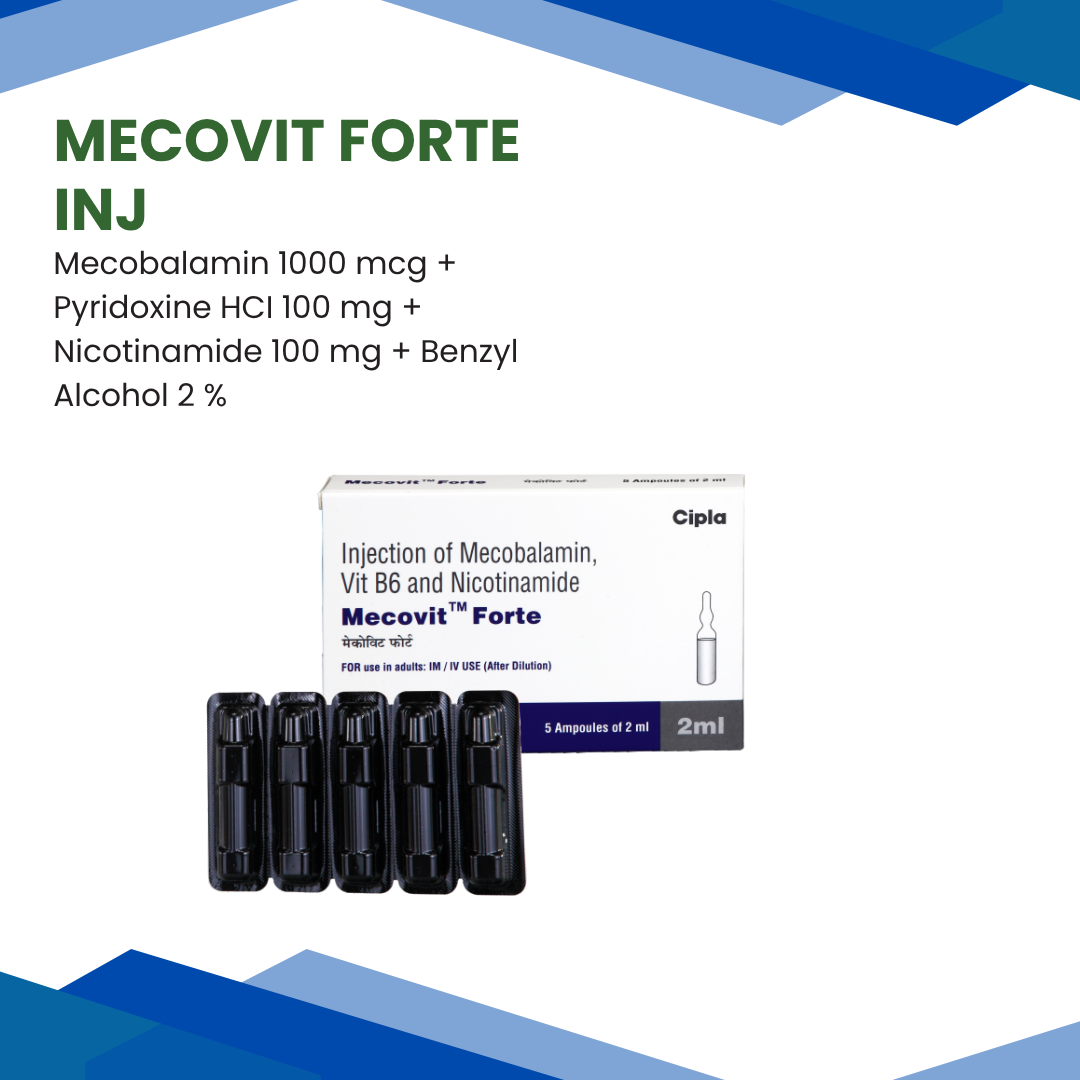
Mecovit Forte
No Prescription yet? Don’t worry! Click Here to Get Online Consultation
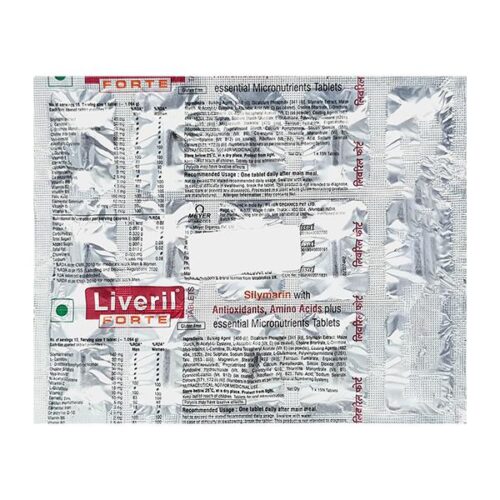
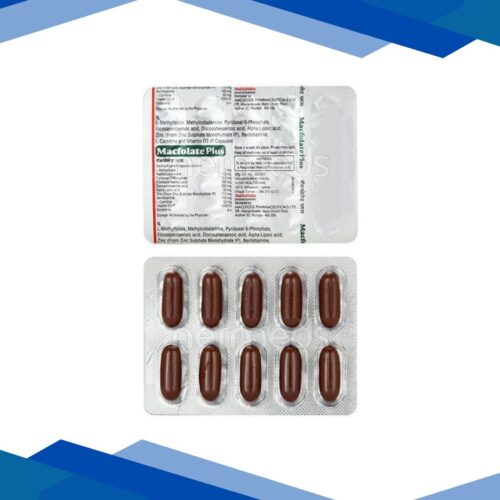
Mecovit Forte Injection is a combination of medicines that are prescribed to treat vitamin and other nutritional deficiencies. It ensures the proper growth and functioning of the body. For more details Kindly click on Medicine Salts below:
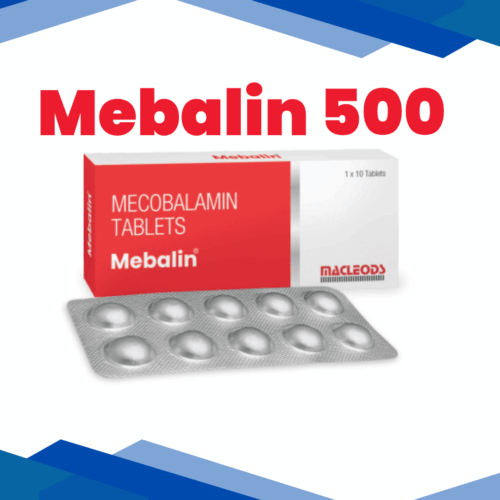
Mecobalamin
Mecobalamine Tablet/Injection 500 mcg
This molecule is the bioactive coenzyme form of the Vitamin B12 (hydroxycobalamin) vitamin. Unlike cyanocobalamin, which must be converted by the liver to be useful, Mecobalamin, the active form, is directly beneficial to tissue in treating pathological states, thus making it considerably more effective in treating peripheral neuropathy and megaloblastic anemia. Consequently, Mecobalamin has a very important role in myelination—which is the protective insulator of the nerve fibers—and in promoting the regeneration of damaged nerves.
Indications
Neuropathy: Feelings of numbness, sensation like "pins and needles," or uncomfortable tingling in the hands and feet.
Diabetic Neuropathy: Nerve damage due to high blood sugar levels over long periods.
Vitamin B12 Deficiency: Restoration of low B12 levels caused by diet, poor absorption, or age.
Megaloblastic Anemia: Production of healthy RBCs to lessen tiredness and weakness.
Cognitive Health: It has been helpful in supporting the well-being of the brain and nerve signaling.
Pharmacology & Mechanism
The Methylcobalamin donates methyl groups to ensure homocysteine is converted to methionine. This biochemical process is a must for:
Protein Synthesis: Essential for the growth of nerve cells.
Repair of Myelin Sheaths: Builds up the lipid insulation for nerve arteries to function effectively.
DNA Methylation: This is critical to red blood cell maturation in the bone marrow.
How to Use It
Dosage: Typically, an adult would take a dose of 1500 mcg per day. However, the physician may alter the dosage depending on how severe one's deficiency is.
Method: Tablets may be swallowed with a glass of water. Sublingual tablets should be allowed to dissolve without chewing.
Consistency: It is very essential for the formation of nerves to take the drug at regular intervals daily for steady-blood levels.
Safety and Side Effects
Mecobalamin is usually tolerated, so rarely poses any risks or adverse side effects due to its water-soluble nature. Nevertheless, rare occurrences have led to some individuals exhibiting:
Mild gastrointestinal disturbances like (nausea, diarrhea).
Decrease in the Appetite
Headache
Skin rash or itching (rare allergic reaction)
Note: Slight soreness may be experienced at the injection site with Mecobalamin administration. This will go away in a few hours.
Warnings and precautions
Absorption: Gastritis, Celiac disease, Crohn's disease (interrupting the bowel lining’s function to transport B12 to the rest of the body) can all cause limited absorption. In the treatment of such patients, injectables would be considered best.
Drug Interactions: Metformin or H2-blocking agents can deplete B12 levels with long-term use. If you are already on this medication, consult your doctor.
Pregnancy: Generally considered safe and often prescribed in prenatal vitamins. However, always confirm the dosage with your gynecologist.
Optic Nerve Disease: Patients with Leber's disease should avoid B12 supplements.
Frequently Asked Questions (FAQs)
Q: How soon can Mecobalamin work in patients with nerve pain?
Nerve regeneration is a slow-going process; although some patients could experience an energy boost during the first few days of Mecobalamin therapy, it takes four to eight weeks to notice a considerable reduction in numbness and neuropathic pain.
Q: Is Mecobalamin superior to Cyanocobalamin?
In terms of neurological health, it is indeed because it is the "active" form i.e., a better liver retainer, meaning it will convert better to nerve tissues in contrast to synthetic cyanocobalamin.
Q: Can Mecobalamin be taken empty stomach?
Yes, you can take it with or without food. But for those who are a little sensitive, taking it with a meal may help to minimize the minor upset stomach.
Q: Can Mecobalamin cause weight gain?
No evidence indicates that Mecobalamin causes patients to put on weight. Quite the reverse, it usually makes them more active, assists a lot in terms of energy levels and metabolism.
Q: Can I drink liquor while taking this supplement?
While significant consumption of liquor can inhibit the absorption of Vitamin B12 and exacerbate nerve damage, it is best to avoid this while being treated to be on the safer side.
Nicotinamide
Nicotinamide (Vitamin B3)
Nicotinamide is a water-soluble form of Vitamin B3 essential for energy metabolism and cellular repair. It is considered safer than niacin, as it does not typically cause flushing (skin redness and warmth) at usual doses. This makes it a preferred option for both dietary supplementation and skincare applications. It plays a key role in converting food into usable energy while supporting the skin, nervous system, and digestive health.
Key Therapeutic Benefits
Skin Barrier Support: Enhances ceramide synthesis, helping retain moisture and protect against environmental damage.
Acne & Inflammation Resistance: Reduces redness, swelling, and excess sebum production, especially in acne-prone skin.
Anti-Aging Benefits: Supports collagen production, improving fine lines, wrinkles, and hyperpigmentation.
Treatment for B3 Deficiency: Effective in preventing and treating pellagra, a severe Vitamin B3 deficiency disorder.
Joint Health: May improve joint flexibility and reduce pain and inflammation in osteoarthritis.
Directions for Use
Oral Medication: Can be taken with or without food. Taking it with meals may reduce stomach discomfort.
Topical Application: Apply a thin layer on clean, dry skin. Avoid contact with mucous membranes or broken skin.
Consistency Care: Use regularly as advised by a healthcare provider for best results.
Important Safety Information
Consult Your Doctor: Generally safe, but individuals with liver disease, diabetes, or kidney issues should seek medical advice before use.
Diabetes: May influence blood glucose levels—monitor regularly if diabetic.
Pregnancy & Breastfeeding: Considered safe in recommended doses, but always consult a healthcare professional.
Possible Side Effects
Usually well-tolerated, but some individuals may experience:
- Mild stomach upset
- Headache or dizziness
- Skin irritation or rash (with topical use)
Discontinue use and consult a doctor if any allergic reaction occurs.
Frequently Asked Questions (FAQs)
Q: Is Nicotinamide the same as Niacin?
A: Both are forms of Vitamin B3, but Nicotinamide (Niacinamide) does not cause flushing, making it more suitable for long-term use.
Q: Can I use Nicotinamide with Vitamin C in skincare?
A: Yes. They can be combined to brighten skin and improve texture. For sensitive skin, consider using Vitamin C in the morning and Nicotinamide at night.
Q: How long does it take to see results?
A: Visible improvements in acne and pigmentation are usually seen within 4–8 weeks of consistent use.
Q: Are there any drug interactions?
A: It may interact with certain medications like antiepileptics (e.g., Carbamazepine) and blood thinners. Always inform your doctor about all medications and supplements.
Q: Should I take it on an empty stomach?
A: Yes, it can be taken on an empty stomach. However, if nausea occurs, taking it with food may help reduce discomfort.
Pyridoxine
Pyridoxine Tablet (Vitamin B6)
Pyridoxine, also known as vitamin B6, is an important water-soluble nutrient necessary for more than 100 enzymes of the human body. It is involved in protein, carbohydrate, and lipid metabolism, the formation of neurotransmitters and red blood cells. Pyridoxine is primarily used to treat nutritional deficiencies, treat or mitigate drug-induced neuropathies (often from TB medications), and alleviate pregnancy-induced nausea.
Some of the Major Uses are as Follows:
Nutritional Deficiencies: Successful treatment and prevention of Vitamin B6 deficiency due to poor nutrition, chronic alcohol abuse, or malabsorption.
Drug-Induced Neuropathy: Pyridoxine is often given in conjunction with Isoniazid (for TB) to prevent peripheral neuritis (nerve damage).
Pregnancy-induced nausea: Often used as first-line management in morning sickness, sometimes together with Doxylamine.
Sideroblastic Anemia: It helps SSA-related type of hereditary anemias in producing healthy red blood cells.
Metabolic Support: Maintains the healthy brain development and makes the immune system work properly.
Pharmacologic Mechanism
Pyridoxine taken up is converted to an active coenzyme form Pyridoxal 5-Phosphate (PLP) by the liver. This active form acts as a catalyst for the following:
a. Amino acids metabolism: Breaking apart proteins into their constituent control for maintenance and repair.
Neurotransmitter formation: Serotonin, dopamine, GABA—neuromodulators that control mood modulation and rest.
Hemoglobin Synthesis: Assists in ensuring iron availability from GIT for hemoglobin production in an effort to obviate anemia.
Standard Dosage & Use
For Deficiency: Normally 50 mg to 150 mg in divided doses as prescribed by the physician.
For Isoniazid Prophylaxis: About 10 mg to 50 mg typically taken daily to stop symptoms of nervousness.
How to Take: Swallow the tablet whole with water. It can be taken with or without food. Try to take it at the same time every day to keep your B6 levels constant in your body.
Missed Dose: Take as soon as remembered; however, avoid a double dose. Skip the scheduled dose if close to another dose timing.
Safety Profile and Side Effects
Even though pyridoxine is a vitamin and generally safe, side effects at high use, long-term, or overdose were seen with the following:
Common: Mild nausea, headache, drowsiness
Sensory: Parasthesia may announce with tingling, "pins and needles" in the hands and feet.
Severe (rare): Chronic high doses (>200 mg/day for months) can cause reversible nerve parasthesia.
Alternative Lungales: Promptly consult your doctor if you observe an awkward gait and coordination loss while you are on this therapy.
Before Use and Interactions
Levodopa Interaction: If Levodopa (with Carbidopa) is used for Parkinson's Disease, supplementation with Pyridoxine may reduce the drug's effectiveness.
Precautions: Discretion should be exercised in people having a history of renal or hepatic disease.
Beverage: Too much alcohol decreases blood amounts of B6 and may actually make things worse in case of deficiency symptoms.
Pregnancy/Breast Feeding: Safe at therapeutic dosages but must be under doctor's administration.
Frequently Asked Questions (FAQs)
Q: Does Pyridoxine help with fatigue?
While Pyridoxine is involved in energy metabolism, it is most effective when that weakness arises due to Vitamin B6 deficiency. A blood test or doctor consultation should confirm the actual cause of fatigue.
Q: Can Pyridoxine be taken daily?
Most individuals can use daily supplementation in varying amounts or as advised by their doctor, unless they are megadosing like in the case of sideroblastic anemia.
Q: Does it change urine color like other B vitamins?
It is not the case. Pyridoxine is pretty unlikely to change the color of your urine.
Q: Should I take this along with TB medication?
Yes, Pyridoxine can be taken with your other TB medications, including Isoniazid, to protect your nerves from the effects of the TB medications.
Q: How long does it take to see results?
Relief may show within 24–48 hours for morning sickness. As for pain from B6-deficiency, do not expect quick results; these neural pains may need several weeks to settle with consistent treatment.
At Gem Pharmacy, we make every effort to provide accurate, expert-written, and thoroughly reviewed information related to medicines. However, this information should not be considered a substitute for professional medical advice, diagnosis, or treatment from a qualified doctor.
The purpose of this information is to educate users and improve communication between patients and healthcare professionals. It should not be used to diagnose or treat any condition.
Always consult a certified healthcare professional before taking any medication.


Related products