





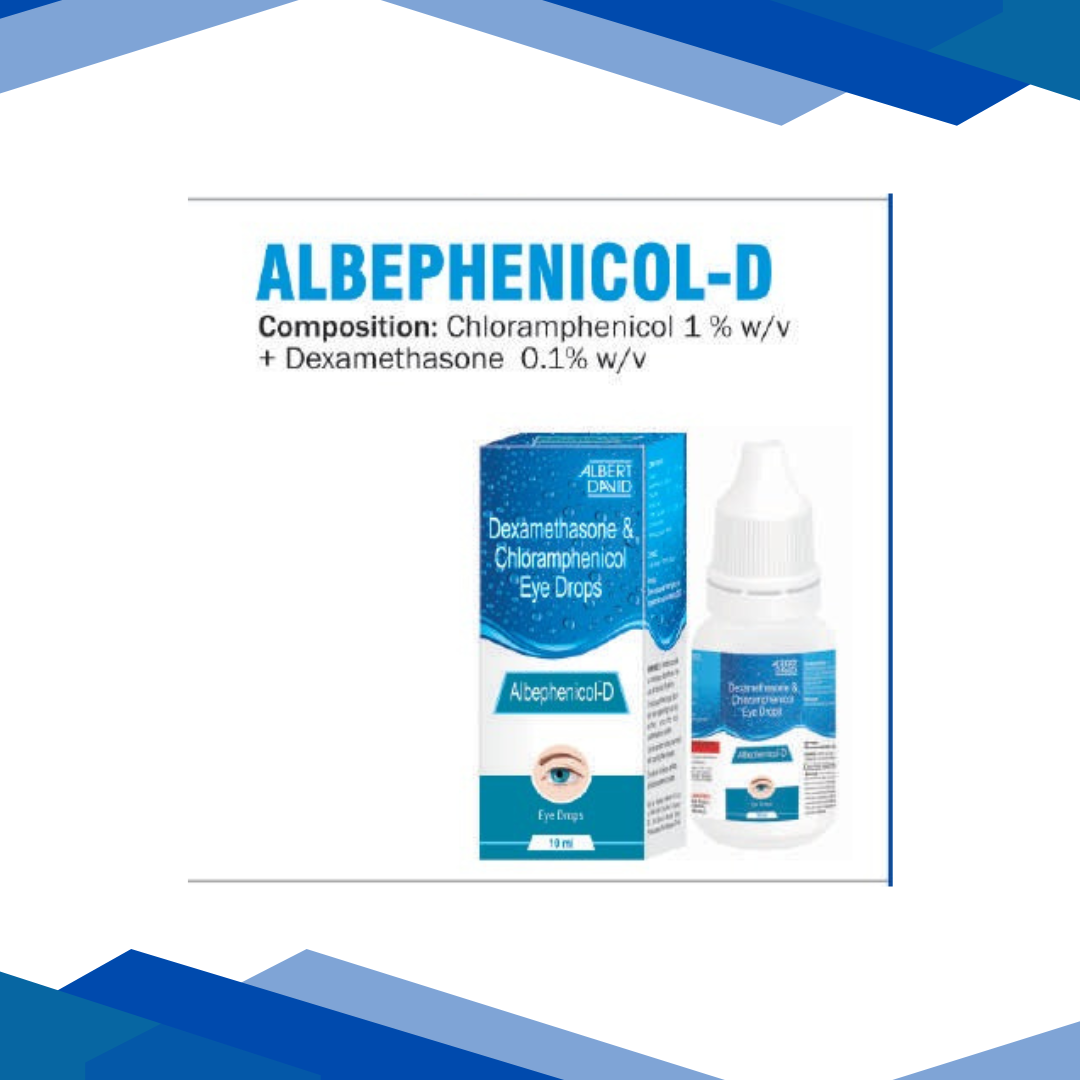
Albephenicol-D
❌ Due to high demand, this product is currently out of stock. New stock will be available shortly.
👉 Click here to Buy Same Salt medicine
No Prescription yet? Don’t worry! Click Here to Get Online Consultation
Chloramphenicol is a broad-spectrum antibiotic used to treat serious bacterial infections.Dexamethasone is a potent corticosteroid used to reduce inflammation, allergic reactions, and suppress the immune system.For more details kindly click on Medicine Salts below:
Chloramphenicol
Chloramphenicol (USP/IP) Chloramphenicol is a potent, broad-spectrum antibiotic used for treating serious bacterial infections. Originally derived from Streptomyces venezuelae, it works by inhibiting bacterial protein synthesis, thereby stopping bacterial growth. Due to its strength and risk profile, it is reserved for severe infections where other antibiotics are ineffective. Therapeutic Uses Chloramphenicol is available in forms like eye/ear drops, capsules, and injections, and is used for: Bacterial Conjunctivitis (“pink eye”) Otitis Externa (outer ear infections) Typhoid Fever (in resistant or severe cases) Meningitis (specific bacterial infections) Serious Anaerobic Infections Important Aspects Penetration: Crosses the blood-brain barrier effectively. Activity: Active against a wide range of organisms like H. influenzae and Salmonella. Action: Shows a rapid reduction in bacterial load. A Guide on How to Utilize Eye/Ear Drops: Wash hands, tilt head, and apply drops. Avoid touching the dropper tip. Oral Capsules: Take on an empty stomach (1 hour before or 2 hours after meals) with water. Duration: Complete the full prescribed course to prevent resistance. Contraindications Warning: Use is restricted due to risk of serious blood disorders like aplastic anemia. Monitoring may be required during prolonged therapy. Common side effects include: Nausea and vomiting Blurred vision (eye drops) Diarrhea Weakness or fatigue Metallic taste Seek immediate medical help if symptoms like fever, sore throat, unusual bruising, or pale skin occur. Precautions & Contradictions Pregnancy & Nursing: Avoid in late pregnancy and breastfeeding due to risk of Gray Baby Syndrome. Liver & Kidney Issues: May require dose adjustments. Immunization: May interfere with vaccine response. Alcohol: Avoid due to increased gastrointestinal side effects. Frequently Asked Questions (FAQs) Q: Can it treat viral infections? No. It is effective only against bacterial infections. Q: Why are blood tests needed? To monitor for bone marrow suppression affecting RBCs, WBCs, and platelets. Q: What if I miss a dose? Take it when remembered unless close to the next dose. Do not double dose. Q: How should eye drops be stored? Typically at 2°C to 8°C (check product instructions). Q: Can I wear contact lenses? Avoid until infection resolves; preservatives may damage lenses.
Dexamethasone
Dexamethasone Tablet (Corticosteroid) Dexamethasone is a potent glucocorticoid steroid that mimics hormones produced by the adrenal cortex. It is widely used to treat conditions involving inflammation and immune system overactivity. By suppressing immune responses and reducing inflammatory mediators, it helps relieve swelling, redness, and pain. Uses Inflammatory conditions: Effective in arthritis, lupus, and psoriasis. Allergy related: Helps manage allergic reactions, asthma, and drug-induced inflammation. Immune disorders: Used when the immune system attacks body tissues. Hormonal disorders: Acts as replacement therapy in adrenal insufficiency. Specialized care: Used in oncology for tumor swelling and chemotherapy-induced nausea. How Dexamethasone Works Dexamethasone is a corticosteroid that inhibits production of prostaglandins and leukotrienes, which trigger inflammation. It also stabilizes cell membranes and suppresses immune overactivity. How to Use Administration: Swallow the tablet whole with water, preferably in the morning. Timing: Usually taken once daily, with or without food. Consistency: Take at the same time each day. Important: Do not stop suddenly—gradual tapering is required to avoid withdrawal symptoms like fatigue and body pain. Precautions & Safety Infection Risk: May mask infections and increase susceptibility—avoid exposure to measles or chickenpox. Diabetes: Can raise blood sugar levels—monitor regularly. Bone Health: Long-term use may cause osteoporosis—ensure adequate calcium and Vitamin D. Common Side Effects Increased appetite and weight gain Insomnia Mood changes or irritability Swelling (edema) Skin thinning Seek medical help if you experience blurred vision, black stools, or severe pain. Frequently Asked Questions (FAQ) Q: Is it an anabolic steroid? No. It is a corticosteroid used for medical conditions, not muscle building. Q: Can I take vaccines while on it? Avoid live vaccines during high-dose therapy—consult your doctor. Q: Does it cause “moon face”? Yes, long-term use may lead to Cushingoid appearance, which is reversible after tapering. Q: Can I drink alcohol? Limit or avoid alcohol due to increased risk of stomach irritation and bleeding. Q: How fast does it work? For acute conditions, effects may appear within 1–2 hours; chronic conditions may take a few days.
At Gem Pharmacy, we make every effort to provide accurate, expert-written, and thoroughly reviewed information related to medicines. However, this information should not be considered a substitute for professional medical advice, diagnosis, or treatment from a qualified doctor.
The purpose of this information is to educate users and improve communication between patients and healthcare professionals. It should not be used to diagnose or treat any condition.
Always consult a certified healthcare professional before taking any medication.


Related products