


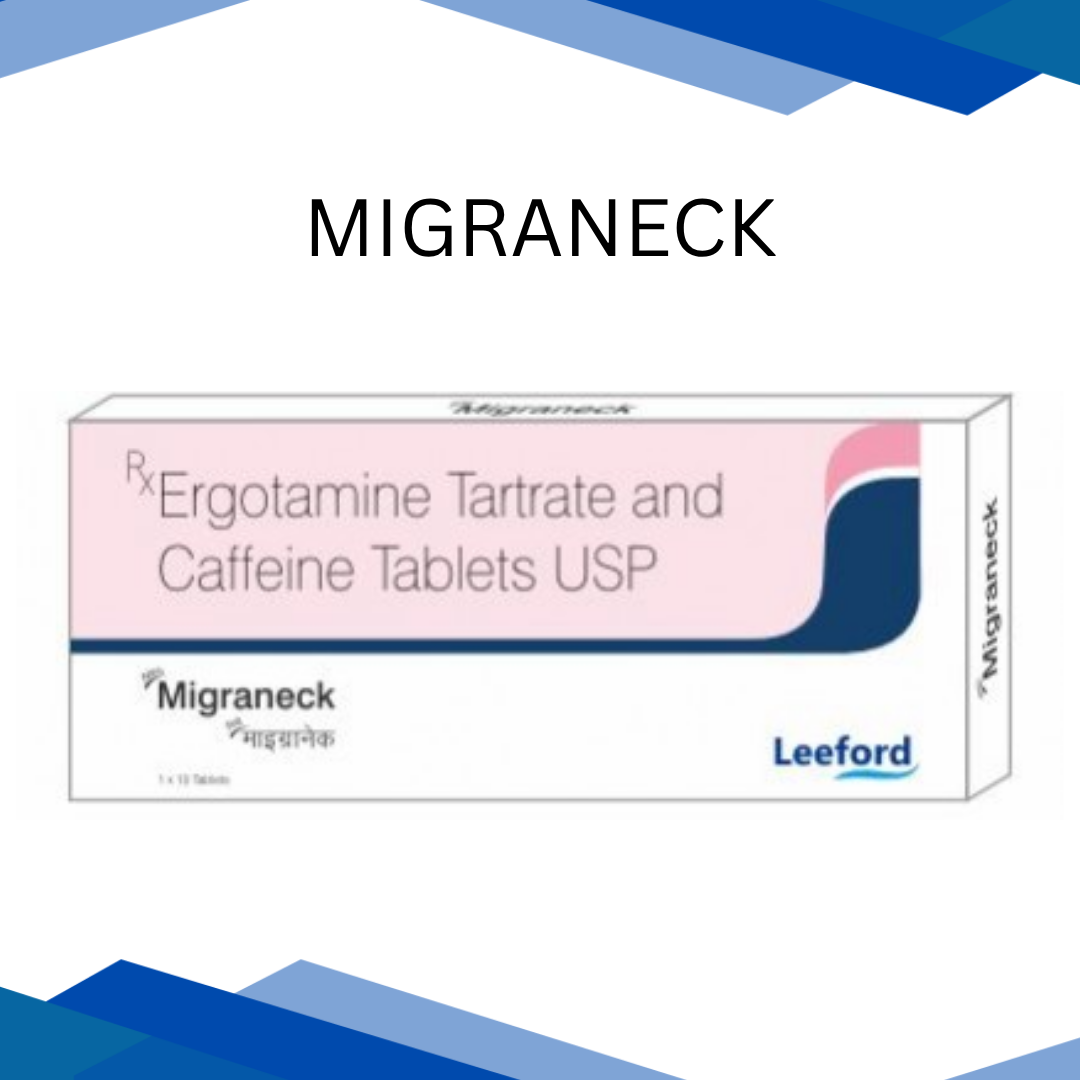
MIGRANECK
❌ Due to high demand, this product is currently out of stock. New stock will be available shortly.
👉 Click here to Buy Same Salt medicine
Caffeine
Caffeine 100/200 mg Tablet
Caffeine is a potent Central Nervous System (CNS) stimulant belonging to the class of methylxanthines. When fatigued or drowsy, most users will turn to this compound for a successful return to mental alertness or wakefulness. Instead of merely using Caffeine in the treatment of patient's energy levels, the drug is very useful in aiding the treatment of pain medications giving great recourse to enhance analgesics along with Paracetamol or Aspirin and then in selected treatment conditions where respiratory symptoms are overt.
Indications
Mental Alertness: Serves as a quick aid to improved concentration and focus with a rapid cognitive processing speed.
Relief of Pain: Assists in the relief of migraines and tension headaches as an adjuvant.
Physical Performance: Reduces perception of effort and fatigue during high-intensity exercise.
Respiratory support: In a neonatal unit, under close medical supervision, Caffeine is used to manage apnea of prematurity.
Mechanism of Action
Caffeine works primarily as an adenosine receptor antagonist in the brain. Adenosine is a naturally occurring neurotransmitter that promotes relaxation and sleep; thus, by inhibiting its receptor binding, caffeine suppresses the onset of fatigue/lassitude. Additionally, it causes an excess release in the brain of the neurotransmitters dopamine and norepinephrine, which improve mood and make one more perceptive.
Usage/Dosage Instruction
For Adults: 100 to 200 mg every 3 to 4 hours as needed.
Maximum Doses: Not to exceed 400 mg in a 24-hour period.
How to Use: Swallow the tablet with water; it can be taken without food or with some light snack to reduce stomach acidity.
Safety Information and Warnings
Pregnancy and Breastfeeding: Limit intake. At high doses, they are linked with low birth weight. Consult your OB-GYN.
Cardiovascular diseases: Use with extreme caution if you have hypertension (high blood pressure) or even heart diseases, as these may cause increased heart rate.
Anxiety Disorders: Stress, tremors, and panic attacks can exacerbate symptoms in people with sensitivity.
Sleep Hygiene: Consumption of tablets past six hours before bedtime may cause sleep obstruction.
Possible Side Effects
Generally well-tolerated at recommended doses, yet some users may occur:
Nervousness or "jitters"
Increased heart rate (palpitations)
Urination: more frequent (diuretic effect)
Digestive Troubles or Heartburn
Headaches (Often associated with the withdrawal of caffeine)
Frequently Asked Questions
Q: Can I take Caffeine tablets instead of sleeping?
A: No. Caffeine tablets are a stimulant and not a sleep substitute. Caffeine has the ability to mask sleep with tiredness, and not to play a healing biological role in sleep.
Q: Can I combine these tablets with coffee or energy drink?
Limit other caffeine sources while taking these tablets, or else you could easily take a dose of 400mg or more throughout the day, which would easily exacerbate caffeine toxicity symptoms like severe anxiety or a racing heartbeat.
Q: Why is caffeine included in pain relievers?
Caffeine constricts blood vessels in the brain which helps the body absorb pain-relief medication like Ibuprofen 40 percent faster, thus enabling better relief from a migraine.
Q: Can caffeine cause dehydration?
Caffeine tends to encourage increased urination; the substances do not lead to dehydration in those who habitually consume enough fluids throughout the day.
Q: Can Children Take No-Doz Caffeine Tablets?
No-Doz tablets should be avoided in children under 12 years of age; adolescent consumption should be exercised only under parental or medical guidance.
Expert Opinion
Pro Tip: For beginners of caffeine, a dose of 100 mg or below will work in order for the beginning while assessing tolerance. Keep the "crash" under control by keeping yourself hydrated and getting the necessary amount of sleep without relying on stimulants for exhaustion you might get due to chronic lack of sleep.
Disclaimer: Information presented here is for educational purposes only, not in the place of professional medical advice. Consult your physician before starting the regimen mentioned herein.
Ergotamine Tartrate
Ergotamine Tartrate - The Relief for Migraine and Vascular Headaches
Ergotamine tartrate is a potent alkaloid derived from the ergot fungus, specifically geared for the treatment of acute migraine attacks and cluster headaches. It belongs to the class of ergot alkaloids. Unlike general painkillers that provide analgesia, ergotamine is a vasoconstrictor that targets dilated blood vessels in the brain during a migraine attack.
Main Indications
Acute Migraine Attacks: Rapid relief from throbbing pain, light sensitivity, and sound sensitivity.
Hypnic Headache: Treats pain of vascular origin caused by abnormally dilated intracranial blood vessels.
How Ergotamine Functions
During a migraine, brain blood vessels often become dilated and inflamed. Ergotamine Tartrate stimulates receptors in these vessels, causing constriction, restoring normal blood flow, and inhibiting the release of inflammatory substances, thereby halting the migraine’s development and signaling.
Clinical Usage & Safety Guidelines
"The Golden Hour": Take the drug immediately after the aural phase or at the onset of a headache for maximum efficacy.
What to Follow after Administration: After dosing, lie down in a quiet, dark environment to allow the medicine to work optimally.
Dosage Limit: Never exceed the prescribed dose for a 24-hour period or within 7 days, as overuse can lead to ergotism or rebound headaches.
Ergotamine Tartrate: Frequently Asked Questions (FAQs)
Q: Can Ergotamine be used to prevent a migraine before it starts?
A: No. Ergotamine Tartrate is an abortive medication, used to stop an ongoing attack, not for prophylactic or preventative purposes.
Q: Can I take Ergotamine with my morning coffee?
A: Some combination products like Cafergot include caffeine to speed absorption. Follow your prescription carefully and avoid adding extra stimulants.
Q: What are the symptoms of overdose or "Ergotism"?
A: Symptoms include numbness or tingling in fingers/toes, leg muscle pain, or cold extremities. Seek medical attention immediately if these occur.
Q: Who should avoid using Ergotamine?
A: Individuals with coronary artery disease, peripheral vascular disease, hypertension, kidney/liver impairment, or pregnancy should avoid this medication.
Q: Can I take Ergotamine with "triptans" (e.g., Sumatriptan)?
A: Never take Ergotamine with triptans within 24 hours, as this may dangerously over-constrict blood vessels.
Safety Profile
| Side Effect | Frequency | Action |
|---|---|---|
| Nausea and/or Vomiting | Common | Rest in a dark room; consult your doctor for remedies. |
| Dizziness | Occasional | Avoid driving or operating machinery. |
| Muscle Weakness | Rare | Reduce strenuous activity; inform your physician. |
| Angina Pectoris, Hypertension | Rare/Serious | Stop medication immediately and call emergency support. |
Storage & Handling
Keep Ergotamine Tartrate at 20-25°C, away from sunlight and moisture. Store in a light-resistant container, out of reach of children.
At Gem Pharmacy, we make every effort to provide accurate, expert-written, and thoroughly reviewed information related to medicines. However, this information should not be considered a substitute for professional medical advice, diagnosis, or treatment from a qualified doctor.
The purpose of this information is to educate users and improve communication between patients and healthcare professionals. It should not be used to diagnose or treat any condition.
Always consult a certified healthcare professional before taking any medication.


Related products

VICKS ACTION 500 ADVANCED Tablet 10’s