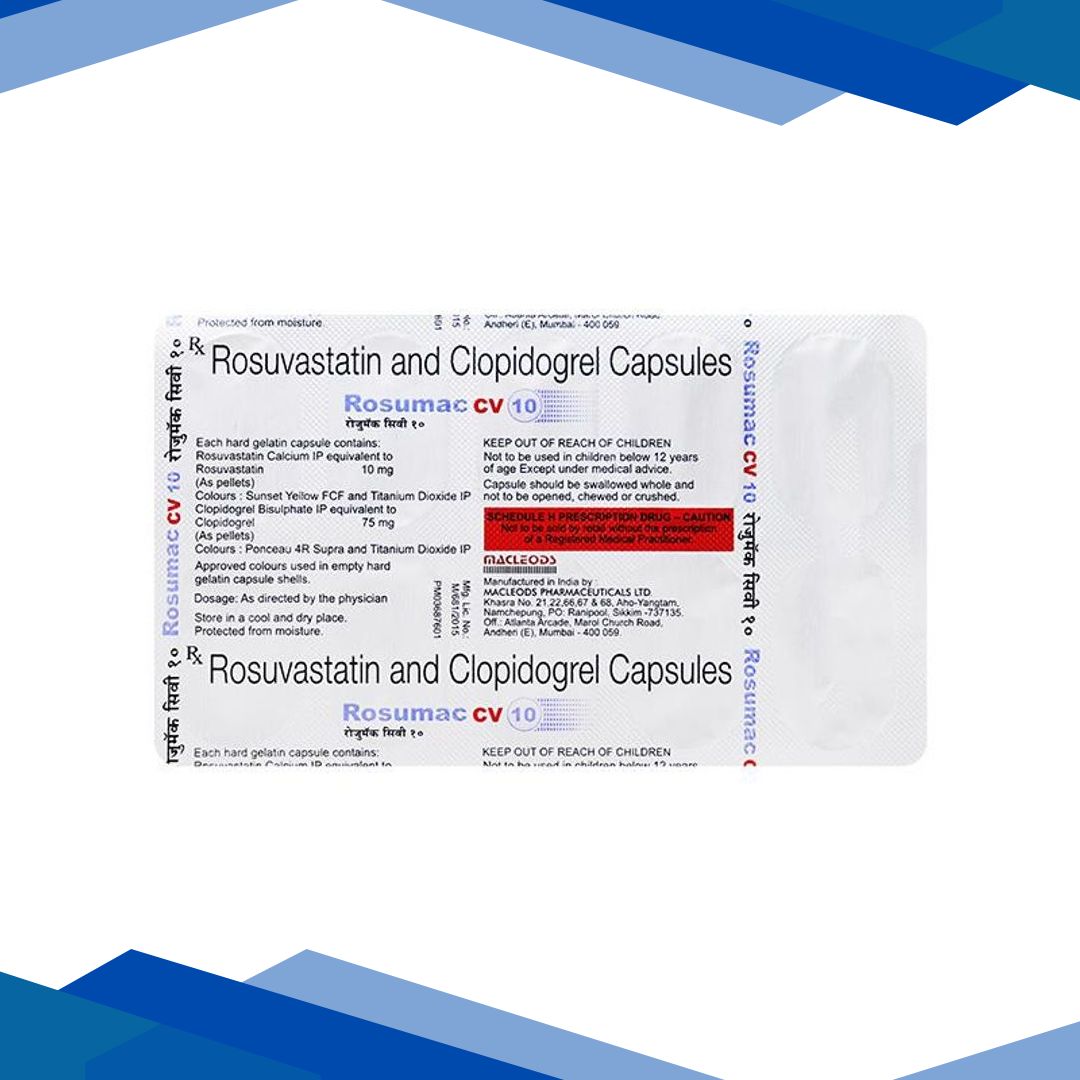
Rosumac CV 10mg Capsule 10’S
No Prescription yet? Don’t worry! Click Here to Get Online Consultation
Rosumac CV 10mg Capsule is an antiplatelet medication used to reduce the risk of blood clots that can lead to serious cardiovascular events such as heart attack and stroke. It works by blocking the P2Y12 receptor on platelets, preventing them from sticking together and forming harmful clots in the blood vessels. It is commonly prescribed for patients with a history of heart disease, stroke, peripheral artery disease, or those who have undergone procedures like coronary stent placement. By improving blood flow and reducing clot formation, Rosumac CV 10mg Capsule helps lower the risk of future cardiovascular complications.
Description
Rosumac CV 10mg Capsule is a widely prescribed antiplatelet medication used primarily to reduce the risk of blood clots in patients who are susceptible to cardiovascular events such as heart attack, stroke, and peripheral artery disease. it belongs to a class of drugs known as p2y12 inhibitors, which work by preventing platelets in the blood from sticking together. when platelets aggregate excessively, they can form dangerous clots that may block blood flow to vital organs like the heart or brain. by inhibiting this process, Rosumac CV 10mg Capsule plays a crucial role in improving long-term cardiovascular outcomes in high-risk individuals.
this medicine is commonly prescribed for patients who have already experienced conditions such as myocardial infarction (heart attack), ischemic stroke, or established peripheral arterial disease. it is also frequently used in combination with aspirin after procedures like coronary stent placement (angioplasty) to prevent stent thrombosis. Rosumac CV 10mg Capsule does not dissolve existing clots, but it is highly effective in preventing new clot formation and reducing the risk of recurrent cardiovascular events. its protective effects make it an essential part of modern cardiovascular therapy.
mechanistically, Rosumac CV 10mg Capsule is a prodrug, meaning it must be metabolized in the liver to become active. once activated, it irreversibly binds to the p2y12 receptor on platelets. this receptor normally responds to adenosine diphosphate (adp), a chemical that triggers platelet activation and aggregation. by blocking this receptor, Rosumac CV 10mg Capsule prevents adp-mediated platelet activation, thereby reducing clot formation. since platelets are affected for their entire lifespan (about 7–10 days), the drug’s effect persists even after discontinuation.
Rosumac CV 10mg Capsule is generally well tolerated when used appropriately, but it must always be prescribed and monitored by a healthcare professional due to its effect on bleeding risk. patients receiving this medication often require long-term therapy, especially those with chronic cardiovascular conditions. however, individual response may vary depending on genetic factors, drug interactions, and underlying medical conditions. careful assessment ensures optimal therapeutic benefit while minimizing risks.
ingredients
- Rosumac CV 10mg Capsule bisulfate: the active pharmaceutical ingredient responsible for antiplatelet activity. it selectively inhibits the p2y12 adp receptor on platelets, reducing platelet aggregation and preventing clot formation in arteries.
- microcrystalline cellulose: commonly used as a filler and stabilizing agent that helps maintain tablet structure and ensures uniform distribution of the active ingredient.
- hydrogenated castor oil: used as a lubricant and binding agent in tablet formulation, improving manufacturing consistency and tablet integrity.
- mannitol: acts as a diluent and provides stability to the tablet while improving disintegration and absorption.
- crospovidone: a disintegrant that helps the tablet break down efficiently in the digestive tract, allowing faster absorption of the active drug.
key uses
- prevention of heart attack: Rosumac CV 10mg Capsule reduces the risk of myocardial infarction in patients with a history of heart disease or those at high cardiovascular risk by preventing clot formation in coronary arteries.
- prevention of stroke: it is used to lower the risk of ischemic stroke, especially in patients who have already experienced transient ischemic attacks (tia) or previous strokes.
- peripheral artery disease (pad): helps improve blood flow in patients with narrowed arteries in the limbs, reducing pain and risk of complications like ulcers or gangrene.
- post-stent placement therapy: commonly prescribed after angioplasty with stent insertion to prevent clot formation within the stent (stent thrombosis), which can be life-threatening.
- acute coronary syndrome (acs): used in combination with aspirin to manage unstable angina and heart attack conditions, improving survival rates and reducing recurrence risk.
how to use
Rosumac CV 10mg Capsule is typically taken orally in tablet form, with or without food, as directed by a healthcare provider. it is usually prescribed as a once-daily medication due to its long-lasting effect on platelets. consistency in timing each day helps maintain stable drug levels in the body. patients should swallow the tablet whole with water and avoid crushing or breaking it unless advised otherwise by a medical professional.
it is important to follow the prescribed duration strictly, especially after procedures like stent placement, where premature discontinuation may significantly increase the risk of clot formation. even if the patient feels well, stopping the medication without medical advice can be dangerous. regular follow-up appointments may be required to monitor effectiveness and assess bleeding risk.
safety information
- warnings: Rosumac CV 10mg Capsule increases the risk of bleeding, including gastrointestinal bleeding, nosebleeds, and prolonged bleeding from cuts. patients should immediately report unusual bruising, dark stools, or blood in urine.
- side effects: common side effects include mild bleeding, dizziness, headache, and stomach discomfort. serious but rare effects may include severe bleeding, thrombotic thrombocytopenic purpura (ttp), or allergic reactions.
- precautions: patients with active bleeding disorders, severe liver disease, or a history of hemorrhagic stroke should use this medication cautiously or avoid it altogether. surgical procedures may require temporary discontinuation under medical supervision.
- pregnancy/breastfeeding: Rosumac CV 10mg Capsule should be used during pregnancy only if clearly needed and prescribed by a physician. it is not well studied in breastfeeding, so medical guidance is essential before use.
- interactions: Rosumac CV 10mg Capsule may interact with blood thinners (like warfarin), nsaids, and certain proton pump inhibitors such as omeprazole, which can reduce its effectiveness. alcohol may increase bleeding risk and should be consumed cautiously or avoided.
additional information
- storage: store at room temperature away from moisture, heat, and direct sunlight. keep the medication in its original packaging and out of reach of children.
- missed dose: if a dose is missed, it should be taken as soon as remembered. however, if it is close to the next scheduled dose, skip the missed dose. do not double the dose to compensate.
- overdose: overdose may lead to excessive bleeding, weakness, or prolonged clotting time. immediate medical attention is necessary in suspected overdose cases.
- habit forming: Rosumac CV 10mg Capsule is not habit-forming and does not cause dependence. however, it should only be used under medical supervision due to its effect on blood clotting.
frequently asked questions
Q: what is Rosumac CV 10mg Capsule mainly used for?
A: Rosumac CV 10mg Capsule is mainly used to prevent blood clots that can lead to heart attack, stroke, or complications after stent placement. it is prescribed for patients at high cardiovascular risk to improve long-term heart and vascular health.
Q: can Rosumac CV 10mg Capsule be stopped suddenly?
A: no, Rosumac CV 10mg Capsule should not be stopped suddenly without consulting a doctor, especially after a heart procedure. sudden discontinuation may increase the risk of clot formation and serious cardiovascular events.
Q: does Rosumac CV 10mg Capsule cause bleeding?
A: yes, since it reduces platelet activity, Rosumac CV 10mg Capsule can increase the risk of bleeding. this may include minor bleeding like bruising or nosebleeds, and rarely, serious internal bleeding.
Q: can Rosumac CV 10mg Capsule be taken with aspirin?
A: yes, Rosumac CV 10mg Capsule is often prescribed with aspirin in specific cardiovascular conditions. however, this combination increases bleeding risk and should only be used under strict medical supervision.
Q: how long does Rosumac CV 10mg Capsule stay in the body?
A: although the drug leaves the bloodstream relatively quickly, its effect on platelets lasts for several days because it irreversibly inhibits platelet function for their lifespan.
Q: is Rosumac CV 10mg Capsule safe for long-term use?
A: yes, Rosumac CV 10mg Capsule is often used long-term in patients with chronic heart disease or after stent placement, but regular monitoring is important to ensure safety and minimize bleeding risks.
this information is for educational purposes only and should not be considered medical advice. always consult a qualified healthcare professional before use.
At Gem Pharmacy, we make every effort to provide accurate, expert-written, and thoroughly reviewed information related to medicines. However, this information should not be considered a substitute for professional medical advice, diagnosis, or treatment from a qualified doctor.
The purpose of this information is to educate users and improve communication between patients and healthcare professionals. It should not be used to diagnose or treat any condition.
Always consult a certified healthcare professional before taking any medication.


Related products