
Showing the single result
Filter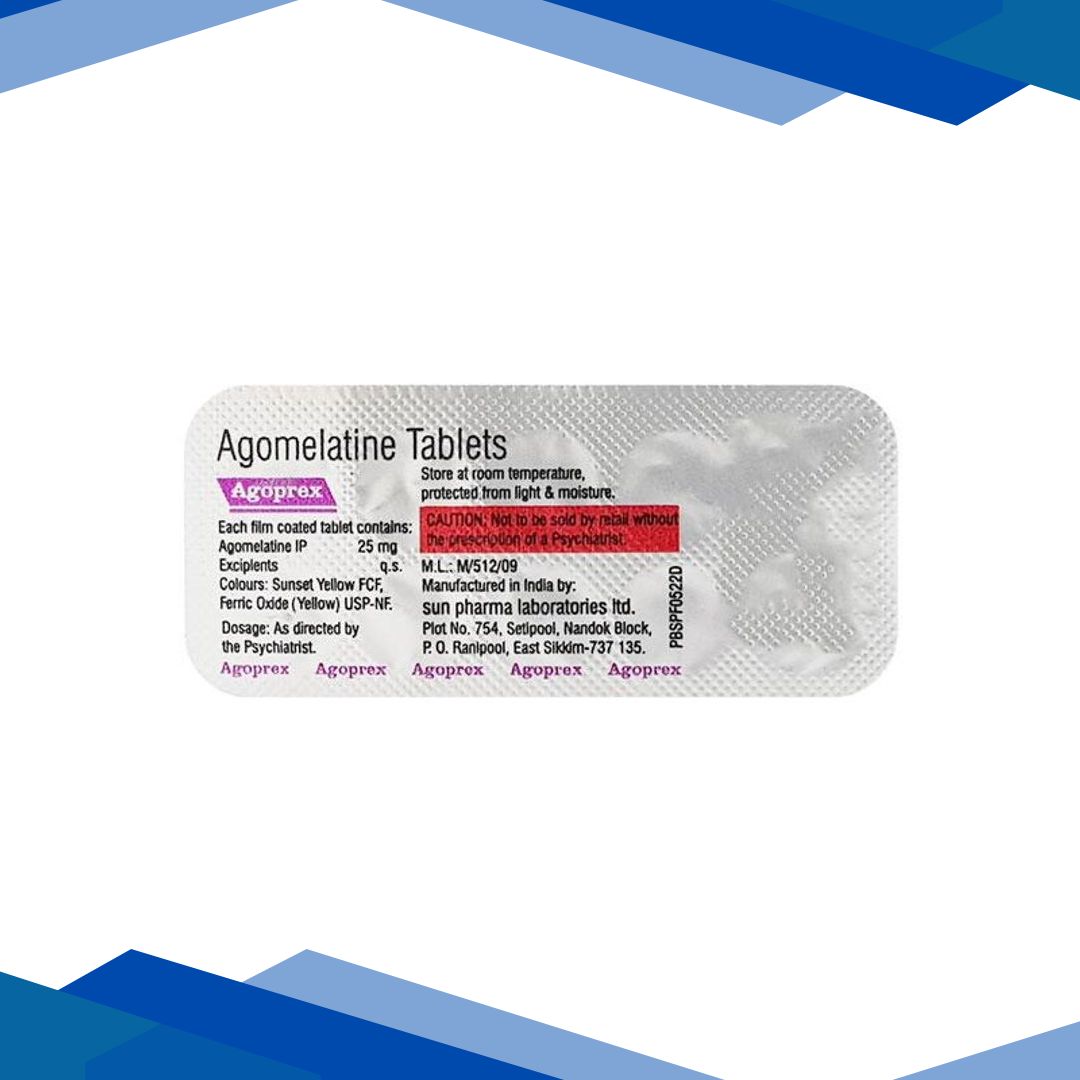
Agomelatine 25 mg Tablets
Agomelatine is an innovative non-snooze, atypical antidepressant mostly given for Major Depressive Episodes (MDE) in adults. Unlike the more usual antidepressants that work on serotonin or norepinephrine reuptake systems, Agomelatine kind of uses a fresher style of action, it syncs out-of-whack circadian rhythms (the body’s internal biological clock) and that can help daytime functioning along with nighttime rest quality.
Therapeutic Class: Antidepressants
Pharmacological Class: Melatonergic Receptor Agonist & 5-HT2C Receptor Antagonist
Available Strengths: 25 mg Tablets
Prescription Required: Yes (Schedule H / Rx Only)
Primary Uses & Clinical Benefits
1. Treatment of Major Depressive Disorder (MDD)
Agomelatine can reduce the main signs of moderate-to-severe depression, things like ongoing sadness, loss of interest in usual activities (anhedonia), anxiety, and those feelings of worthlessness.
2. Restoration of Sleep-Wake Cycles
Sleep trouble is a big depression symptom. Agomelatine improves sleep initiation and sleep quality by stabilizing the body’s natural circadian rhythm, and it generally does not lead to daytime drowsiness, morning sluggishness, or sedation.
3. Favorable Tolerability Profile
Since it does not globally raise serotonin levels across the body, Agomelatine tends to show a lower rate of many familiar antidepressant problems, for example sexual dysfunction, sudden weight increase, or severe gastrointestinal distress.
Mechanism of Action: How It Works
Agomelatine has a dual-action pharmacological setup:
Melatonergic Agonist ( $MT_1$ and $MT_2$ receptors ):
It attaches to melatonin receptors in the suprachiasmatic nucleus, the brain master clock, to promote natural sleep signals and reset the sleep-wake schedule.
Serotonergic Antagonist ( $5\text{-HT}_{2C}$ receptors ):
It blocks particular serotonin receptors, which selectively disinhibits and can increase release of dopamine and noradrenaline in the frontal cortex region of the brain.
Together this can support mood and daytime drive, while promoting restorative sleep during the night.
Directions for Use and Dosage
How to take:
Swallow the tablet whole with water. It may be taken with food or without food.
Timing:
Agomelatine should be taken strictly at bedtime. This timing lines up the drug activity with the body’s natural melatonin production rhythm.
Standard Adult Dose:
The common start is 25 mg once daily at bedtime. If symptoms do not improve after two weeks, a psychiatrist or oncologist may raise the dose to 50 mg, meaning two 25 mg tablets taken together at bedtime.
Treatment Duration:
Antidepressants often need several weeks before full therapeutic results show up. Treatment is typically continued for at least 6 months to support recovery and lower relapse risk.
Side Effects to Watch For
Agomelatine is usually well tolerated, but side effects may appear especially during the first two weeks.
Common Side Effects:
- Headache or mild dizziness
- Nausea, diarrhea, or upper abdominal pain
- Back pain or fatigue
- Anxiety or vivid dreams
Serious Side Effects (Get medical help right away):
Liver Stress:
Persistent nausea, unusual tiredness, dark urine, severe abdominal pain, or yellowing of the skin/eyes (jaundice).
Behavioral Changes:
Worsening depressive symptoms, sudden panic attacks, or suicidal thoughts.
Mandatory Safety Commitments & Liver Monitoring
The key clinical safety step with Agomelatine therapy is liver function monitoring. The medicine can raise liver enzymes in some patients.
LIVER FUNCTION TEST (LFT) TIMELINE
[Before Starting] ➔ [3 Weeks] ➔ [6 Weeks] ➔ [12 Weeks] ➔ [24 Weeks]
Then, a baseline test is required for all patients before the first dose.
Patient Profile Safety Rating, Clinical Directive & Guidelines
| Patient Profile | Safety Rating | Clinical Directive & Guidelines |
|---|---|---|
| Pre-existing Liver Disease | ❌ Strictly Contraindicated | Do not use if you have hepatic impairment, cirrhosis, or active liver disease |
| Alcohol Intake | ❌ Unsafe | Avoid alcohol completely. When alcohol is mixed with Agomelatine the chance of intense liver injury rises a lot |
| Elderly Patients | ⚠️ Caution | Not recommended for people aged 75 years or above since there is not enough documented clinical efficacy data in this group |
| Pregnancy & Lactation | ⚠️ Caution | As a careful precaution, it is better to avoid use in pregnancy or while breastfeeding unless your doctor judges it as absolutely essential |
Frequently Asked Questions (FAQs)
Q. Is Agomelatine a sleeping pill?
No, Agomelatine is not a sedative or a classic hypnotic, sleep-inducing tablet. It helps rebuild normal sleep cycles by working through melatonin receptors, but the core clinical purpose is to address biochemical drivers behind depression. It does not lead to dependence, addiction, or that groggy morning feeling.
Q. Why do I need regular blood tests while taking Agomelatine?
Agomelatine is metabolized mainly by the liver, so occasionally it may push liver enzymes (transaminases) higher. Your doctor will request Liver Function Tests (LFTs) before you start, then again at 3, 6, 12, and 24 weeks to check that the medication is being handled safely.
Q. What should I do if I forget to take my dose at bedtime?
If you miss your bedtime dose, skip it completely. Do not take it the next morning, because that can disturb your circadian rhythm, and can bring daytime tiredness. Take your next usual dose at your regular bedtime the next night. Never double your dose to catch up.
Q. Can I stop Agomelatine suddenly if I feel fully better?
No, you should not stop an antidepressant abruptly without medical direction. Sudden discontinuation can trigger withdrawal-like effects or bring your depressive symptoms back quickly. When it is time to stop, your doctor will guide a step-down taper plan, so the dose comes down in a safer way.