
Showing all 2 resultsSorted by popularity
Filter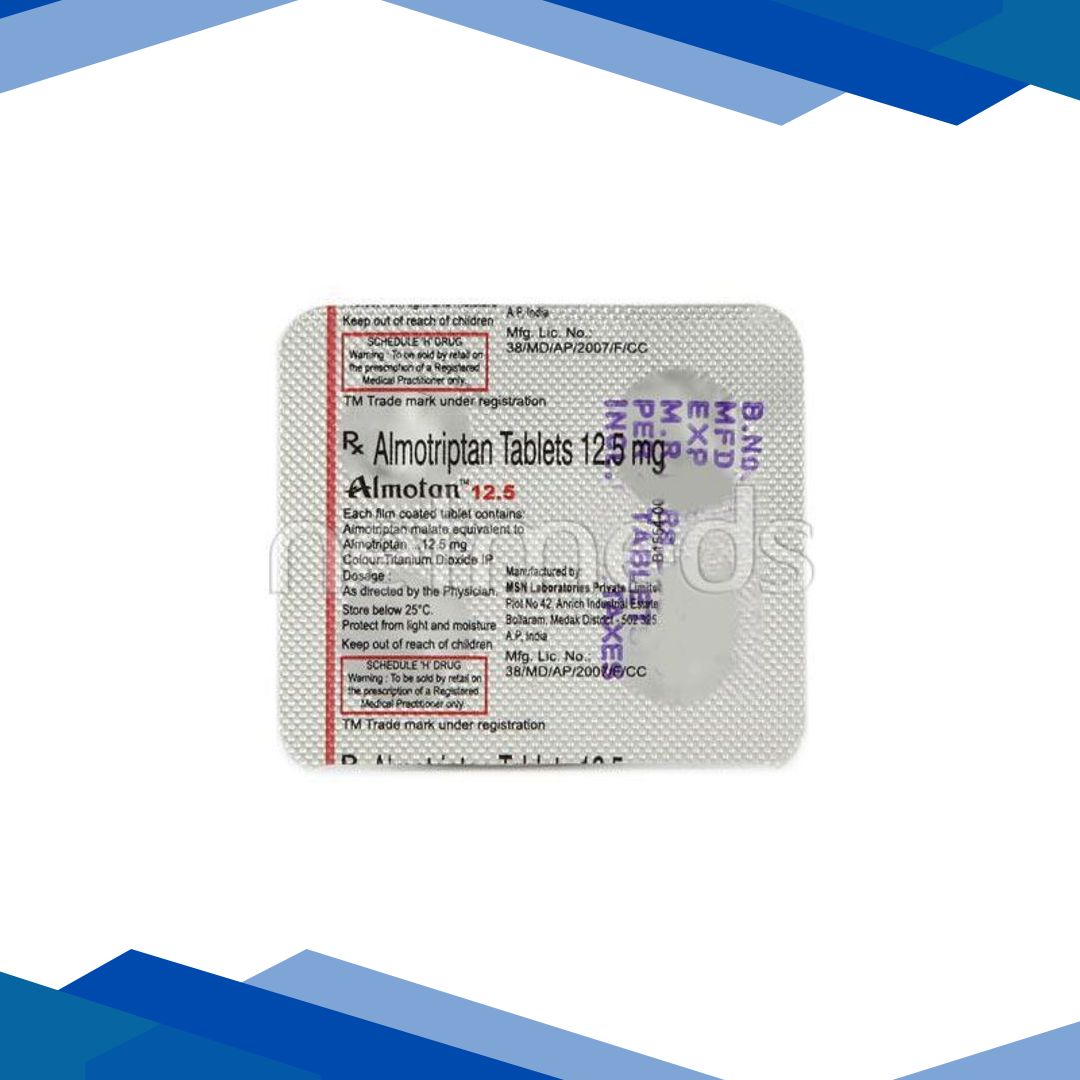
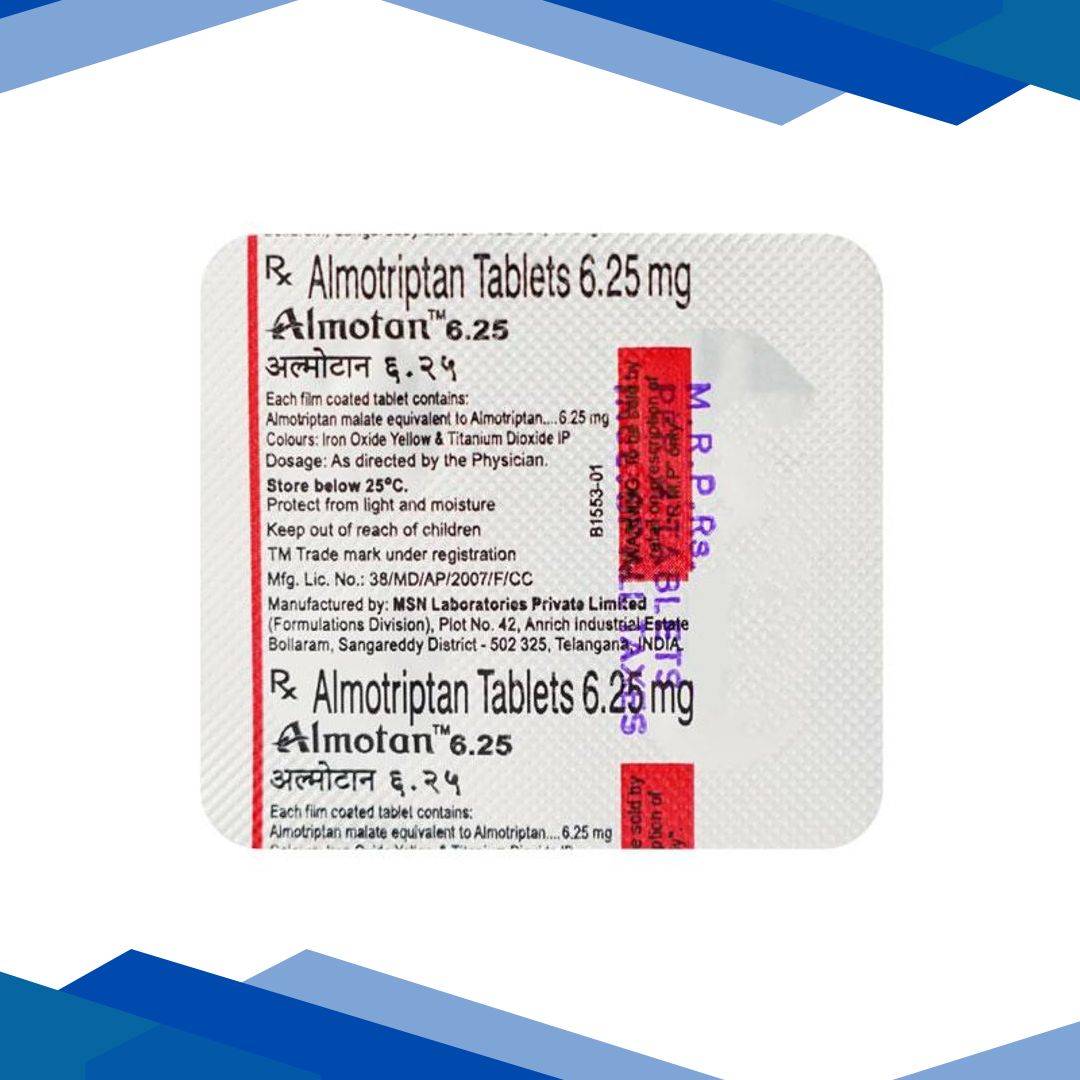
Almotriptan Tablets
Overview
Almotriptan is a prescription medicine in the “triptan” family (selective serotonin receptor agonists). It is made to handle the early, acute phase of a migraine attack with or without aura, for adults plus adolescents from 12 years and up. Compared with common pain relievers, Almotriptan tends to work on the biological drivers of migraine, not only cover over the pain.
Key Benefits & Uses
Acute migraine relief:
helps calm throbbing headache pain during a migraine episode, usually fairly fast.
Works on related symptoms:
eases extra migraine issues like strong sensitivity to light, also sensitivity to sound, and nausea together with vomiting.
Targeted action:
it is meant for migraines that have already begun. It does not prevent later attacks, and it does not reduce how often headaches happen.
How it Works
When someone is in the middle of a migraine attack, the blood vessels in the brain widen, or dilate, and that can set off inflammatory signals that lead to intense pain. Almotriptan works by attaching to serotonin, specifically the 5-HT 1B/1D receptors, found on those cranial blood vessels. By doing this it brings the enlarged blood vessels back to their usual size and also blocks the release of the body’s own compounds that contribute to pain and inflammation across the brain.
Directions for Use
When to Take:
Take 1 tablet with water right when you notice the migraine starting. You may take it with food or without food.
Second Dose Protocol:
If the headache fades but later comes back, you can take a second dose. Just be sure there is at least a 2 hour gap between the first and the second tablet.
Maximum Limit:
Do not exceed 2 tablets in any 24 hour window unless your physician explicitly tells you to.
Side Effects
Most of the side effects people notice with Almotriptan are mild, and they tend to fade on their own once the medicine is out of your system, just takes a bit of time.
Common side effects
- Feeling dizzy or sleepy
- Nausea, or a dry mouth
- Light paresthesia like numbness, tingling, or prickling
- A sense of tightness, heaviness, or pressure in the neck throat or chest, sometimes that comes on fast
Serious side effects, get help right away
- Strong chest pain, pressure, or tightness that moves toward your jaw or shoulder
- Sudden trouble breathing or steady heart palpitations
- Stroke warning signs such as sudden numbness on one side of the body , slurred speech, or confusion
Warnings and precautions
Important safety note:
Almotriptan should only be used after a clear migraine diagnosis has been confirmed by a qualified medical specialist. It should not be used for other headache varieties, like tension headaches or cluster headaches.
Cardiovascular Risks:
Don’t take Almotriptan if there is a past of ischemic heart disease, angina , prior heart attacks, poorly controlled high blood pressure, or peripheral vascular disease.
Serotonin Syndrome:
When you combine this medicine with certain antidepressants such as SSRIs, or SNRIs you can get a hazardous accumulation of serotonin. Call for help right away if you notice agitation, hallucinations, a fast pulse, or severe muscle twitching.
Liver and Kidney Impairment:
If you have severe kidney trouble, or severe liver disease, your doctor will probably modify the dose down. For people with severe renal or hepatic problems, the highest daily limit is usually capped at one tablet per day.
Medication Overuse Headaches:
If you use “migraine rescue” drugs too often, more than 10 days per month, the headaches can start to worsen. If your migraines return frequently, discuss preventive options with your physician.
Frequently Asked Questions (FAQs)
Q. How fast does Almotriptan begin working?
Most clinical studies say Almotriptan starts giving you noticeable relief around 30 minutes to 1 hour after you take it. Usually, the strongest effect happens near the 2 hour mark, so timing matters a bit. If you take the tablet at the first sign of a migraine, you tend to get better results even if the symptoms are mild or strange.
Q. Can I take Almotriptan to prevent a migraine from happening?
No. Almotriptan is meant for acute care, in other words to halt an attack that is already going on. During the “aura” period before the actual head pain begins, it is completely ineffective. Also, it cannot block or prevent later migraines from appearing.
Q. What should I do if the first tablet does not relieve my headache at all?
If the first dose does nothing, do not take another tablet for that same episode, without checking with your doctor first. No response at all can mean the pain might not be a true migraine. In that case, your doctor may need to re-assess the diagnosis, or adjust the whole treatment approach, because the current plan may not fit.
Q. Does Almotriptan make you sleepy?
Yes, Almotriptan can lead to drowsiness along with dizziness, these are well documented side effects. Also, the migraine episode itself often brings on fatigue, so it can feel confusing. Until you know how this medicine affects your body, avoid driving, using heavy machines, or doing any task that needs keen mental focus.
Q. Can I use Almotriptan if I am pregnant or breastfeeding right now?
The effects of Almotriptan in pregnancy are not fully confirmed. In practice it should be used during pregnancy only when the possible benefit outweighs the possible risk to the fetus. For breastfeeding, Almotriptan is known to pass into breast milk. Because of that, mothers should refrain from breastfeeding for at least 24 hours after taking a dose, so the baby gets less exposure.