
Showing the single result
Filter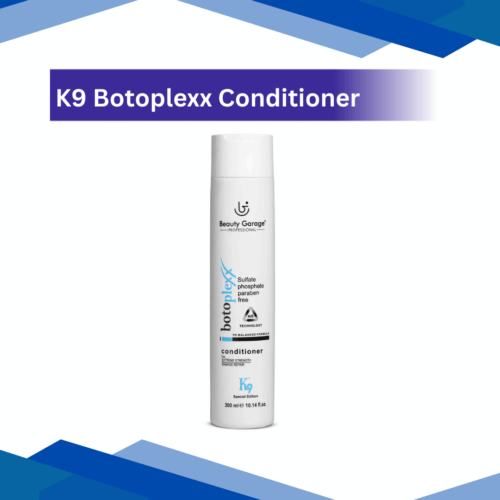
K9 Botoplexx Conditioner 300 ml
Hydrolysed Keratin: Uses, Benefits, and Application
The chemical process of hydrolysis transforms keratin protein into hydrolysed keratin, resulting in smaller peptide molecules. Naturally, keratin exists as large molecular structures that cannot easily penetrate the hair shaft or skin.
Through hydrolysis, keratin is converted into a low molecular weight form, enabling better absorption for damage repair and structural support.
Key Functions & Benefits
“Liquid Bandage” Effect: Hydrolysed keratin acts like a protective barrier over hair cuticles and helps reinforce the nail plate when used in premium shampoos or supplements.
Structural Repair: Penetrates the hair cortex to restore lost protein, reducing hair breakage and split ends.
Moisture Retention: Improves hydration, enhances elasticity, and gives hair a bouncy, healthy appearance.
Smooth & Shiny Hair: Helps align cuticle scales, resulting in sleek, shiny hair that remains manageable even in humid conditions.
Nail Strengthening: Forms a protective coating that prevents nail peeling and strengthens the nail bed through both topical application and supplementation.
How to Use
Topical Application: Found in leave-in conditioners and serums. Apply to damp hair, focusing on mid-lengths to ends, where protein loss is highest.
Oral Supplements: Included in “Hair, Skin, and Nails” formulations to support internal repair.
Dosage: Typical intake ranges from 250 mg to 500 mg daily, as per label instructions.
Professional Use
Used in salon treatments as a “protein shot” for hair damaged by chemical treatments and heat styling.
Standard Keratin vs Hydrolysed Keratin
Molecular Size: Standard keratin is large and bulky, while hydrolysed keratin is small and micronized.
Penetration: Standard keratin works on the surface, whereas hydrolysed keratin provides deep penetration.
Function: Surface coating vs internal repair and strengthening.
Frequently Asked Questions (FAQs)
Q: Is Hydrolysed Keratin safe for color-treated hair?
A: Yes. It is widely recommended by professionals, as color treatments open the hair cuticle and strip natural proteins, making hydrolysed keratin beneficial for repair and protection.
