
Showing all 2 resultsSorted by popularity
Filter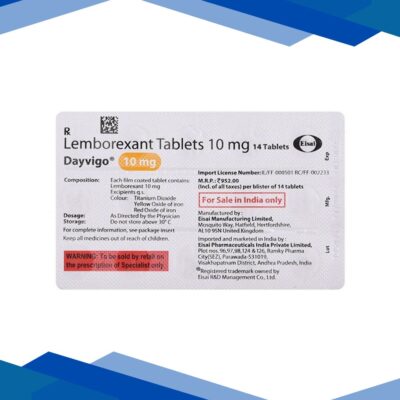
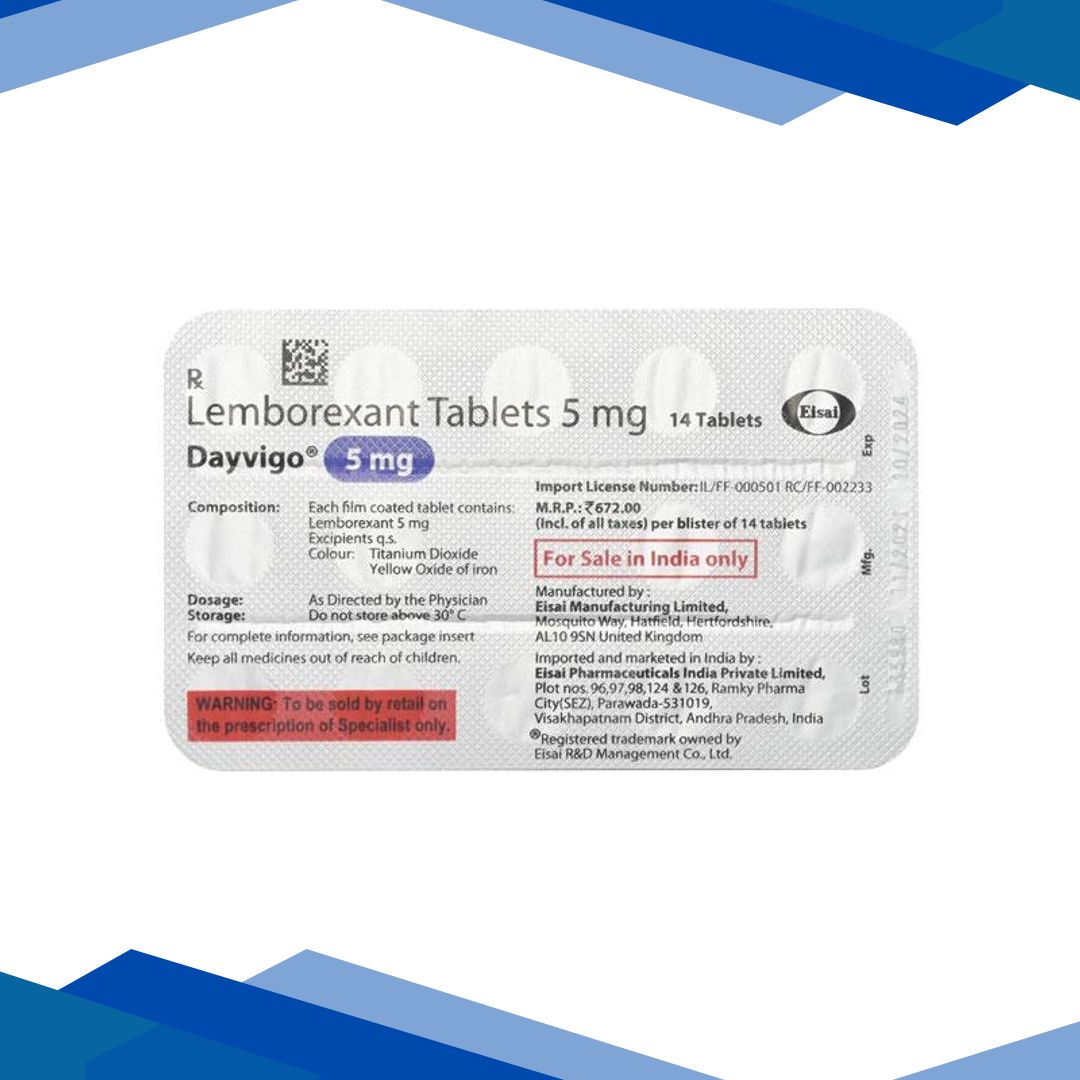
Lemborexant 5 mg / 10 mg Tablets
Lemborexant is a modern prescription medicine made to help chronic insomnia in adults. Instead of pushing the entire brain into a broad, generalized slowdown like older sedatives do, Lemborexant works by briefly turning off the chemical signals that keep you awake. It helps people fall asleep faster, cuts down on those repeated night-time wake ups, and supports longer, calmer sleep without constant interruptions.
Therapeutic Class: Hypnotics / Sedatives
Pharmacological Class: Dual Orexin Receptor Antagonist (DORA)
Available Strengths: 5 mg and 10 mg
Prescription Required: Yes (Schedule H / Controlled Substance)
Primary Uses & Clinical Benefits
1. Faster Sleep Onset (Reduces Sleep Latency)
Lemborexant can shorten the time it takes to go from fully awake to being asleep, which matters if you end up lying there for hours.
2. Improved Sleep Maintenance
It helps you stay asleep through the night. The medicine reduces the number of unexpected awakenings and often improves sleep efficiency overall.
3. Preserved Next-Day Functioning
Because it targets the brain’s alertness pathways instead of acting like a heavy tranquilizer, many users experience less next-morning “hangover” grogginess, when it is taken properly with enough rest.
How it Works: The Science of Orexin
Your body naturally makes chemical messengers called orexins (Orexin A and Orexin B), which attach to specific receptors to keep you alert, steady, and awake. In a lot of insomnia cases, that “wake” signaling stays overactive at night.
Lemborexant is a competitive dual orexin receptor antagonist. It temporarily attaches to both OX1R and OX2R receptors, so your internal wakefulness signals get blocked, and your normal sleep pattern can take over with less friction.
Directions for Use and Dosing Profile
When to Take: Take one tablet by mouth once per night, right before you get into bed. It tends to start working fairly quickly, so do not take it early, outside of your usual bedtime routine.
Food Window: You may take it with food or without food. That said, taking it with, or right after a heavy meal may delay how fast it starts, so it might take longer to help you fall asleep.
The 7-Hour Rule: Only take Lemborexant if you can plan on 7 to 8 hours of uninterrupted sleep before you must be active or drive.
Potential Side Effects
Even with this different chemical approach, you still need careful use, and an awareness of possible side effects.
Common Side Effects:
- Somnolence (daytime drowsiness, or lingering sleepiness)
- Mild to moderate headaches
- Vivid, unusual dreams, or nightmares
Rare but Serious Behavioral Effects (Contact your doctor immediately):
- Sleep Paralysis: A short episode where you cannot move or speak for a few minutes while falling asleep or waking.
- Complex Sleep Behaviors: Leaving the bed while not fully awake to do things like cooking food, walking around, making phone calls, or driving, with little or no memory of it later the next morning.
- Worsening Mood: New or worsening anxiety, depression, or suicidal thoughts.
Safety Advice & Key Precautions
Interaction Category — Clinical Status — Medical Directives & Safety Reasoning
Alcohol ❌ Unsafe
Do not take alcohol with or near your dose. Alcohol can intensify central nervous system depressant effects, leading to unsafe sedation levels.
Narcolepsy ❌ Contraindicated
Strictly avoid it. People with narcolepsy already have a natural reduction in orexin signaling, so using this can severely aggravate symptoms.
Driving ⚠️ Caution
Even if you feel fully alert, coordination, reaction time, and mental sharpness may be subtly affected the next morning. Use extreme care.
Severe Liver Disease ❌ Not Recommended
If you have Child-Pugh Class C liver impairment, you should avoid it because your liver may not clear the drug effectively.
Grapefruit ⚠️ Avoid
Do not eat grapefruit or drink grapefruit juice while using this medication. Grapefruit can block enzymes needed to break down the drug, so levels may rise to harmful ranges.
Frequently Asked Questions (FAQs)
Q. Is Lemborexant habit-forming like older sleeping pills?
Clinical studies indicate Lemborexant has a lower risk of physical dependence, tolerance, and withdrawal than traditional benzodiazepines or “Z-drugs” (for example zolpidem). Still, because it affects sleep architecture, it is treated as a controlled substance and should be used exactly as your doctor tells you.
Q. What should I do if I wake up in the middle of the night?
If you wake up a few hours after taking your tablet, do not take another dose. Taking more than one tablet per night, or taking it when you have less than 7 hours left in bed, raises the odds of next-day drowsiness and unsafe coordination problems.
Q. How long can I safely use Lemborexant for my insomnia?
Your prescriber will check your progress from time to time. Some people use it short-term during stressful periods, others may receive longer treatment. If your insomnia does not improve, or becomes worse after 7 to 10 days of continuous use, contact your doctor to review possible underlying health causes.
Q. Can I take Lemborexant if I use medications for anxiety or depression?
Lemborexant may interact with other central nervous system depressants, including certain antidepressants, anti-anxiety drugs, and muscle relaxants, which can strengthen sedation. Share a full list of your current prescriptions with your doctor before you start this sleep therapy.