
Showing all 2 resultsSorted by popularity
Filter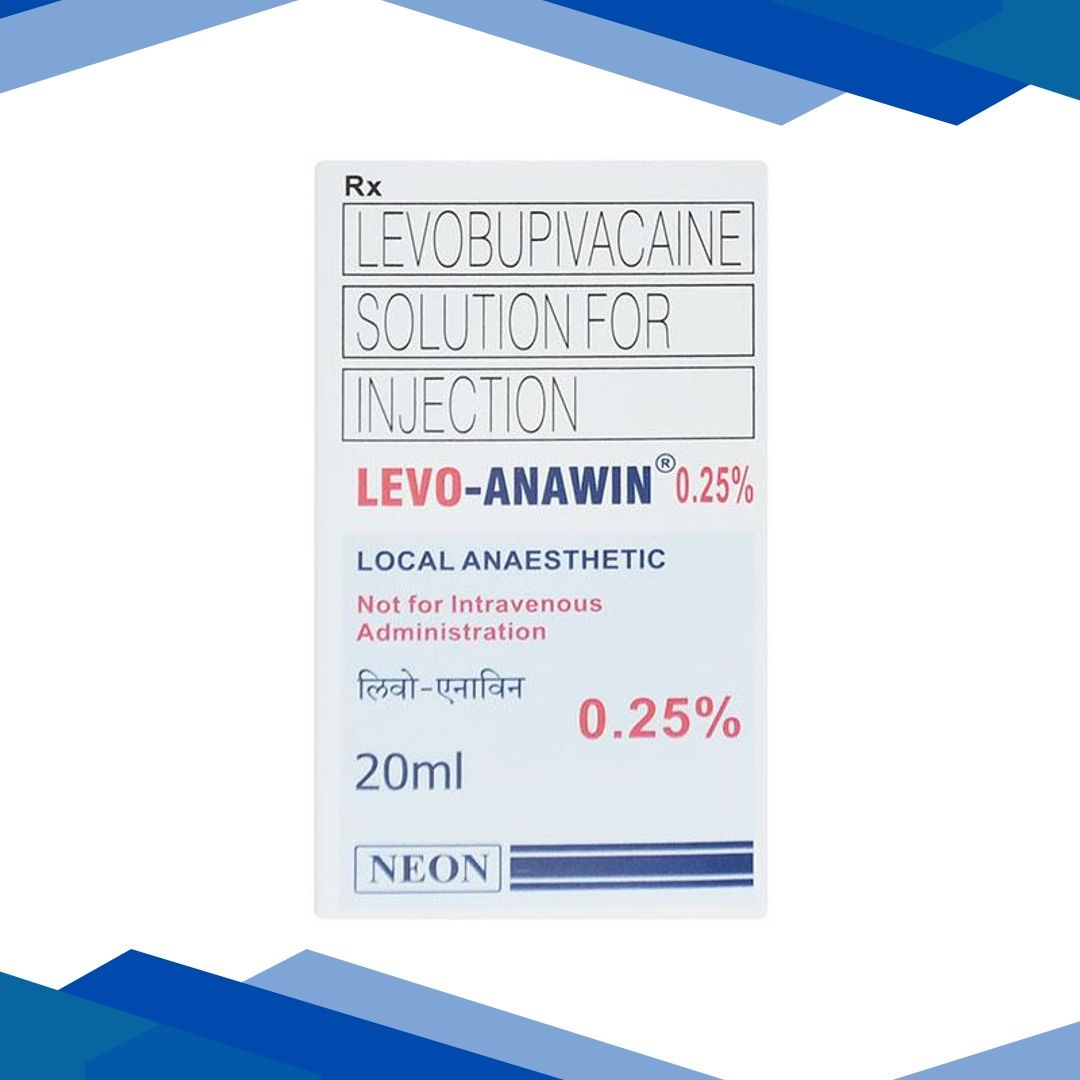

Levobupivacane: Use, Mechanism of Action, Side Effects and Proper Safety
Levobupivacaine is a potent, long-acting local anesthetic belonging to the amino-amide group. It is the pure S-enantiomer of bupivacaine, created with an intention to provide a safer profile with reduced risk of cardiac and central nervous system (CNS) toxicity while maintaining high-quality anesthetic and analgesic effects.
It is usually intended for local anesthesia (epidural, nerve blocks) and immediate postoperative or labor pain control in clinical practice.
Key Points
Main Indications: Surgical anesthesia, pain management in labor, and postoperative analgesia.
Drug Class: R-type (an amide-type local anesthetic).
Clinical Benefit: Lower cardiotoxicity compared to racemic bupivacaine.
Form invariably is: Sterile aqueous solution injection (usually in concentrations of 2.5 mg/ml, 5.0 mg/ml, or 7.5 mg/ml).
Levobupivacaine: Mechanism of Action
Levobupivacaine functions by binding to sodium channels leading to conduction blockade of nerve impulses:
Sodium Channel Blockade: Thus, it binds to the intracellular portion of voltage-gated sodium channels on the nerve cell membrane.
Depolarization Block: Hence, blocking these channels stops the influx of sodium ions necessary for nerve depolarization.
Sensory and Motor Block: Hence, these actions result in a reversible loss of sensation (analgesia) and in greater concentrations, motor blockade in the area innervated by the affected nerves.
Clinical Guidelines for its Administration
Levobupivacaine is to be utilized by adequately trained clinical experts (anesthesiologists) at a monitored clinical site.
Infiltration Anesthesia: Localized numbness for the surgical site.
Regional Nerve Blocks: Epidural anesthetics are injected near nerves to achieve regional anesthesia in broader areas of the body (e.g., brachial plexus block).
The concerns begin here with the balance of efficacy against safety.
The second element to be discussed is the introduction of transitory blockades to nerves during precise nerve blocks.
Side Effects and Clinical Concerns
Bleeding & Hematoma: Bleeding and hematoma formation may occur at the injection site.
Inadequate Analgesia: It requires being on the same plane with the nerve; sometimes repeat injection is needed to achieve the desired anesthetic effect.
Possible toxicity reactions associated with local anesthetics are rare but important.
Hypotension: Prolonged and occasionally severe low blood pressure has been observed with epidural use; orthostatic hypotension can occur.
Nausea and Vomiting: Less common with epidural administration compared to systemic exposure.
Candidiasis: Extremely rare in heavily immunocompromised epidural cases; almost never occurs on intact skin.
Cardiac Monitoring: Accurate monitoring is essential as cardiac depression, circulatory arrest, and severe complications are rare but serious risks.
Liver Damage: Patients with severe hepatic disorder may require dose adjustment as Levobupivacaine is metabolized in the liver.
Pregnancy/Labour: Commonly used for epidural analgesia during childbirth, though high concentrations are generally avoided unless necessary.
CNS Toxicity: Symptoms like metallic taste, dizziness, blurred vision, and tinnitus may indicate systemic toxicity if accidentally absorbed in high amounts.
Frequently Asked Questions (FAQs)
1. Is Levobupivacaine safer compared to Bupivacaine?
Yes. Clinical studies have shown that Levobupivacaine has less potential for severe cardiovascular depression or seizures than Bupivacaine upon inadvertent entry into the bloodstream. It offers a stronger safety profile for the heart and brain.
2. How long does the numbing effect last?
Levobupivacaine is a long-lasting anesthetic. Duration of effect varies depending on the injection site and dose, typically lasting 3 to 9 hours, providing effective intraoperative and postoperative analgesia.
3. Would I be awake during the procedure?
This depends on the type of procedure. Levobupivacaine provides regional or local anesthesia, meaning you may remain awake but pain-free. It is often combined with sedation or general anesthesia if required.
4. Can I drive when given Levobupivacaine?
No. Local anesthetics may temporarily impair coordination, motor function, and spatial awareness. Driving should only be resumed after full recovery and medical clearance.
5. Are there any long-term effects after I receive this injection?
Most patients recover completely once the drug is metabolized. Persistent numbness or tingling is uncommon and should be reported immediately to your surgeon or anesthesiologist for evaluation