
Showing the single result
Filter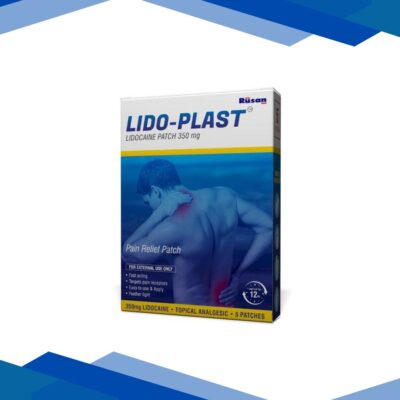
Rusan Lido – Plast Lidocaine Pain Relief Patch (350 mg) 5’s
Lidocaine Topical Patch (5%), Lidocaine Patches are a targeted, non-invasive treatment for localized pain relief. Classified as a topical local anesthetic, these patches work by desensitizing the nerves in the area of application. They are mostly used to manage postherpetic neuralgia, known as the chronic pain that follows a shingles outbreak, and are also prescribed off-label for localized chronic pain like lower back strain or minor nerve discomfort.
Key Therapeutic Benefits
Target Error Relief: Supplies medicine at the given source of pain with no effect on the entire body.
Public-release: Offers a stable release of anesthetics over 12 hours.
Non-Addictiveness: A robust adjunct to relieving nerve-originated sensitivities with an opioid-free approach.
Increases Mobilities: The pain will effectively bear themselves if the treatment is conceived to a point of numbness.
How It Works
Lidocaine stabilizes the nerve membrane. For instance, it inhibits necessary ionic fluxes, which are responsible for the initiation and transmission of the nerve impulse. By placing the patch, this can result in a numbing effect on the area where the pain is located, preventing the signal from reaching the brain by targeting sodium channels in the nerve endings of the skin.
Application Instructions
Preparation: Make sure the area of the skin is clean and dry—a free of oils and lotions.
Sizing: The patch can be cut into several sizes (with the release liner still on) to fit the painful area.
Timing: Apply, then take off, again in 12 hours. Always dispose of it when taking it off, and wait 12 hours before using another to avoid danger of overdose.
Disposal: Fold the used patch in half (sticky sides together) and discard safely away from children and pets.
Warning Safety & Precaution
Major point to consider is never to put it on broken skin—burned or irritated skin. Pads always have a chemical reaction of their own—patients are sometimes tempted to use heating pads when wearing the patch—this may shoot them to their ends, putting the pain relief in their bloodstream and causing an overdose.
The patient is not to bathe or shower while wearing the lidocaine patch. More so, getting the patch wet lessens the amount of medicine on the patch—A fresh patch might either be applied towards the end of a 12-hour period or be replaced earlier in case of loss of adhesive power. Dry it off right away and follow the previous instructions.
Allergy inclusion: you must indicate if you have any allergies to other amide-type anesthetics (those used at dentists’ offices).
Side Effects
Symptoms that may occur at the site are commonly limited today to:
A mild or superficial redness
Mild swelling or paleness
Temporary tingling or a cold feeling
Take consultation if you feel any symptoms of strong dizziness, blurred vision, or slow heart rate, and do not overlook such. They may be early symptoms of lidocaine toxicity.
FAQs
Q: Can I use more than one lidocaine patch at a time?
Typically, three patches are applied together, depending on their size, if the pain is moving (along the nerve pathway) across a larger area. However, the actual work of using it in such combination should be a doctor’s decision only.
Q: Have the patch work on deep muscle pain?
Mainly, the patch is used to relieve pain where the pain is more superficial, at or near the skin (nerve pain). For deeper muscle or joint pain, the doctor might advise a combined regimen with oral medication.
Q: What should I do if the patch comes off?
In the event that it falls off, remove it, and replace it with a new one. Just make sure you don’t go over the 12-hour-a-day wear of both patches.
Q: Can I apply this one in the case of simple back pain?
Though conventionally used to relieve back pain, this patch is mainly for nerve-related pain. It is advisable to discuss with your doctor to know whether it is musculoskeletal or of neurologic origin.
Q: In pregnancy, can lidocaine be applied as before?
Lidocaine is a Category C medication and is used during pregnancy only when clearly indicated and with the benefits weighed against the risks.
Storage
Keep the patches in the original resealable envelope to retain moisture. It is the best way to keep them for lukewarm room temperatures of $20\text{°C}$ to $25\text{°C}$. Keep them away from the reach of children. This product should be kept under lock and key.
Disclaimer: The information has been proposed only for awareness purposes and should not replace or suffice as prescription or advice offered by a doctor. Always take all prescription meds with the advice of medical personnel, and specifically from your personal medical doctor.