
Showing the single result
Filter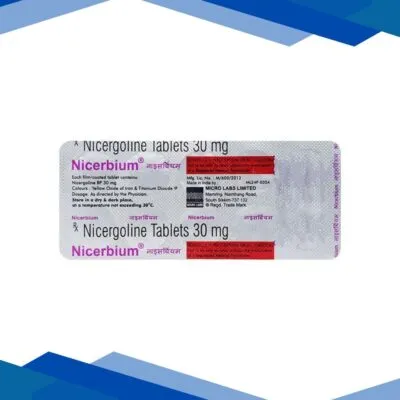
Nicerbium 30mg Tablet 10’S
Nicergoline Tablet Product Overview
Nicergoline is a strong ergot derivative, mostly prescribed to help improve blood flow to the brain, raise metabolic activity in the brain, and also manage peripheral vascular troubles. By bringing down vascular resistance and boosting arterial blood supply, it helps move oxygen and important nutrients to tissues. It is commonly used for vascular migraines, cognitive decline linked to senile dementia, and circulatory problems like Raynaud’s disease.
Key Benefits & Uses
Vascular Migraine Prevention: It can reduce how often severe, vessel-related headaches happen and also reduce how intense they feel, by influencing vasoconstriction of blood vessels.
Cognitive Support: Helps memory, focus, and mental alertness in people dealing with cerebral metabolic problems or age-related cognitive decline.
Improves Peripheral Circulation: Useful for conditions like Raynaud’s syndrome, where limited blood flow leads to numbness or coldness in the extremities, fingertips, and toes.
Neuroprotective Properties: Shows antioxidant-like actions that help shield fragile nerve cells from cellular injury and oxidative stress.
How It Works
Nicergoline acts as an alpha-1 adrenergic receptor antagonist. Once it enters the system, it causes vasodilation, widening constricted blood vessels and lowering peripheral resistance. This supports microcirculation in the brain and peripheral tissues, allowing brain cells to use glucose and oxygen more efficiently, while also limiting unwanted clot formation.
Safety Advice & Quick Tips
Crucial Safety Information
Pregnancy & Breastfeeding: Ask your doctor first, because safety in pregnant or nursing individuals hasn’t been fully established.
Alcohol Consumption: Use extra caution. Alcohol paired with this medicine may worsen dizziness or cause sudden drops in blood pressure.
Driving: This product may cause mild drowsiness or vertigo. Avoid heavy machinery and do not drive until you understand how it affects your attention.
Expert Tips for Use
Consistency is Key: Take it exactly as your clinician instructs, ideally at the same time each evening before sleep.
Do Not Abruptly Stop: Stopping suddenly can trigger a rebound response and may worsen vascular headaches.
Lifestyle Adjustments: For better migraine control, maintain a steady sleep rhythm and reduce exposure to triggers such as loud noises, processed cheeses, or extreme heat or cold.
Common Side Effects
Most people tolerate Nicergoline well, but a few mild effects may appear as the body adjusts. If anything persists, contact your physician:
Mild nausea or temporary stomach discomfort
Flushing or sudden hot flashes
Dizziness or orthostatic hypotension (lightheadedness after standing)
Fatigue or restless sleep patterns
Frequently Asked Questions (FAQs)
Q. What is Nicergoline prescribed for?
A. Nicergoline is mainly used for cerebral vascular disorders (like cerebral thrombosis or transient ischemia), peripheral circulation issues such as Raynaud’s disease, and prevention of vascular migraines.
Q. Is Nicergoline safe for long-term use?
A. Yes, when used under medical supervision. It has been used for decades in cognitive decline related to aging. Doctors may monitor kidney and liver function during long-term therapy.
Q. Can I take Nicergoline during an active, acute migraine attack?
A. No. Nicergoline is prophylactic, meaning it is used to reduce frequency and severity over time. It is not a rescue medication for active migraine attacks.
Q. How long does it take for this medication to start working?
A. Oral effects on blood flow may begin within 1 to 1.5 hours. However, noticeable improvements in memory or reduction in migraine frequency may take several weeks of consistent use.
Q. Are there any known drug interactions I should be aware of?
A. Nicergoline may enhance the blood pressure-lowering effects of vasodilators and beta blockers (such as propranolol). Always inform your doctor about all medications and supplements you are taking.