
Showing all 5 resultsSorted by popularity
Filter


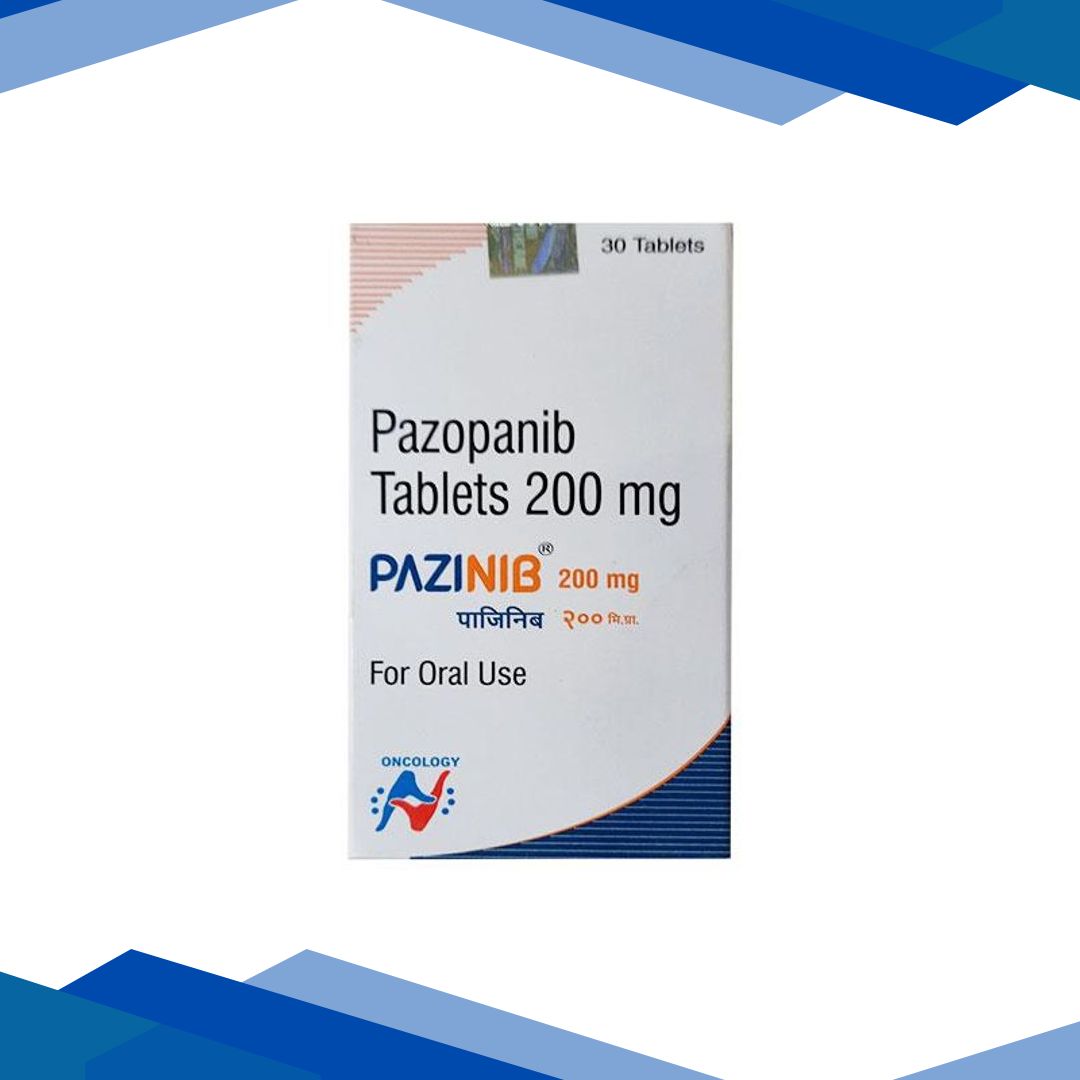
PAZINIB 200 Tablet 30’s
PAZINIB 400 Tablet 30’s
Pazopanib 200 mg / 400 mg Tablets
Pazopanib is a powerful small-molecule multi-tyrosine kinase inhibitor (TKI). It is a more advanced targeted oncology therapy, made for certain malignant conditions, like advanced Renal Cell Carcinoma (RCC, kidney cancer) and advanced Soft Tissue Sarcoma (STS) in people who have already received prior chemotherapy.
Therapeutic Class: Antineoplastics (Targeted Cancer Therapy)
Pharmacological Class: Multi-Targeted Receptor Tyrosine Kinase Inhibitor
Available Strengths: 200 mg and 400 mg Tablets
Prescription Required: Strictly Schedule H (Rx Required)
Primary Uses & Clinical Benefits
1. Advanced Renal Cell Carcinoma (RCC)
Pazopanib is often used as a first-line approach for patients diagnosed with advanced, or metastatic, kidney cancer, or to slow the tumor’s progression when standard systemic choices need better optimization.
2. Advanced Soft Tissue Sarcoma (STS)
It is prescribed for selected advanced soft tissue sarcoma subtypes, cancers that grow in muscles, fat, blood vessels, tendons, or tissue linings, especially for individuals who have completed conventional chemotherapy cycles already.
3. Anti-Angiogenesis Control
Acting as an anti-angiogenic agent, Pazopanib blocks the creation of new blood vessels inside tumors, in a way that cuts off the metabolic support malignant growths depend on, for expansion.
Mechanism of Action: How It Works
Tumor cells release signal proteins that instruct the nearby environment to create new vessel routes to feed them. Pazopanib binds to and blocks several receptor tyrosine kinases (RTKs) sitting on cell surfaces. Main targets include:
- Vascular Endothelial Growth Factor Receptors (VEGFR-1, VEGFR-2, and VEGFR-3)
- Platelet-Derived Growth Factor Receptors (PDGFR-$\alpha$* and PDGFR-$\beta$)*
- Cytokine receptor (c-Kit)
When those pathways are interrupted, the tumor loses access to oxygen and essential nutrients. This slows cellular growth, and can trigger apoptosis (programmed cell death) within the cancer structure.
Administration Protocols & Dosage
Standard Adult Dose:
For advanced kidney cancer or soft tissue sarcoma, the usual clinical recommendation is 800 mg by mouth, once daily. Your oncologist may adjust downward to 600 mg, 400 mg, or 200 mg, depending on liver profiles and how you personally tolerate the treatment.
Strict Empty Stomach Rule:
Pazopanib must be taken on an empty stomach, at least 1 hour before meals, or 2 hours after a meal. If you take it with food, absorption can rise sharply, and the chance of dangerous side effects can increase.
Swallow Whole:
Do not chew, split, or crush the tablets. Changing the tablet form can alter how fast the drug enters your system, which may raise toxicity.
Missed Dose Guidance:
If you miss a dose and your next scheduled dose is more than 12 hours away, take it now. If it is less than 12 hours away, skip the missed dose. Never take two doses together.
Side Effects & Clinical Risks
Because targeted therapies can affect body-wide pathways, Pazopanib needs careful monitoring through an oncology team.
Common Side Effects:
- Diarrhea and mild nausea or vomiting
- Hypertension (high blood pressure)
- Hair color changes, like depigmentation or lightening
- Loss of appetite, with gradual weight reduction
- Persistent fatigue or muscle weakness
Serious Adverse Events (Contact your healthcare team immediately):
- Hepatotoxicity: Severe or life-threatening liver damage. Watch for dark urine, yellowing eyes/skin (jaundice), pale stools, or pain in the upper-right abdomen.
- Bleeding Problems: Unexplained nosebleeds, coughing up blood, vomiting that looks like coffee grounds, or dark tarry stools.
- Gastrointestinal Perforation: Severe sudden abdominal swelling or sharp stomach pain, from rare intestinal tears.
- Cardiac Risks: Chest tightness, sudden trouble breathing, irregular heart rhythm (QT prolongation), or swelling in lower limbs.
Safety Warnings & Contraindications
| Risk Parameter | Clinical Directives |
|---|---|
| Hepatic Function | ❌ High Risk. Severe liver impairment is a strict contraindication. Baseline liver function tests (LFTs) are required, then again at weeks 3, 5, 7, and 9, and afterward monthly. |
| Pregnancy | ❌ Unsafe. Pazopanib can cause embryo-fetal toxicity. Patients need reliable contraception throughout treatment and for at least 1 month after the last dose. |
| Breastfeeding | ❌ Contraindicated. It is not known whether pazopanib enters breast milk. Breastfeeding must stop during treatment and for 2 weeks after the final dose. |
| Surgeries | ⚠️ Wound Healing Delay. Pazopanib can impair healing. Stop at least 7 days before planned surgeries, and restart only after wounds are healed. |
| Dietary Limits | ❌ No Grapefruit. Avoid grapefruit and grapefruit juice since it interferes with intestinal enzymes, pushing drug levels toward unsafe, toxic ranges. |
Frequently Asked Questions (FAQs)
Q. Is Pazopanib considered a standard chemotherapy drug?
No. Pazopanib is a targeted therapy (a multi-kinase inhibitor), not conventional cytotoxic chemotherapy. Traditional chemotherapy works by broadly damaging rapidly dividing cells, across the body. Pazopanib targets selected proteins and receptors on cancer cells and tumor blood vessels, which may reduce some generalized side effects seen with standard chemo.
Q. Why must I take Pazopanib strictly on an empty stomach?
Pazopanib absorption can vary a lot, and it depends on pH. Clinical data show that taking it with high-fat, or low-fat meals, can increase absorption and peak concentration. That might sound good, but it can also over-concentrate the drug, raising the risk of serious liver toxicity, unsafe blood pressure spikes, or severe diarrhea.
Q. Can I use common antacids or heart-burn medicines while on Pazopanib?
You should avoid proton pump inhibitors, like omeprazole, pantoprazole, or esomeprazole. Pazopanib needs a sufficiently acidic stomach environment to dissolve properly. Medications that significantly reduce stomach acid can lower absorption, which can make treatment less effective. Ask your doctor about properly timed short-acting antacids if you need them.
Q. Why did my hair color change after starting Pazopanib treatment?
Hair depigmentation, lightening, or turning gray/white, is a known and fairly common side effect. It occurs because the medication inhibits pathways involved in melanin production in hair follicles. The change is often temporary, and your original color usually returns after the treatment course ends.