
Showing all 2 resultsSorted by popularity
Filter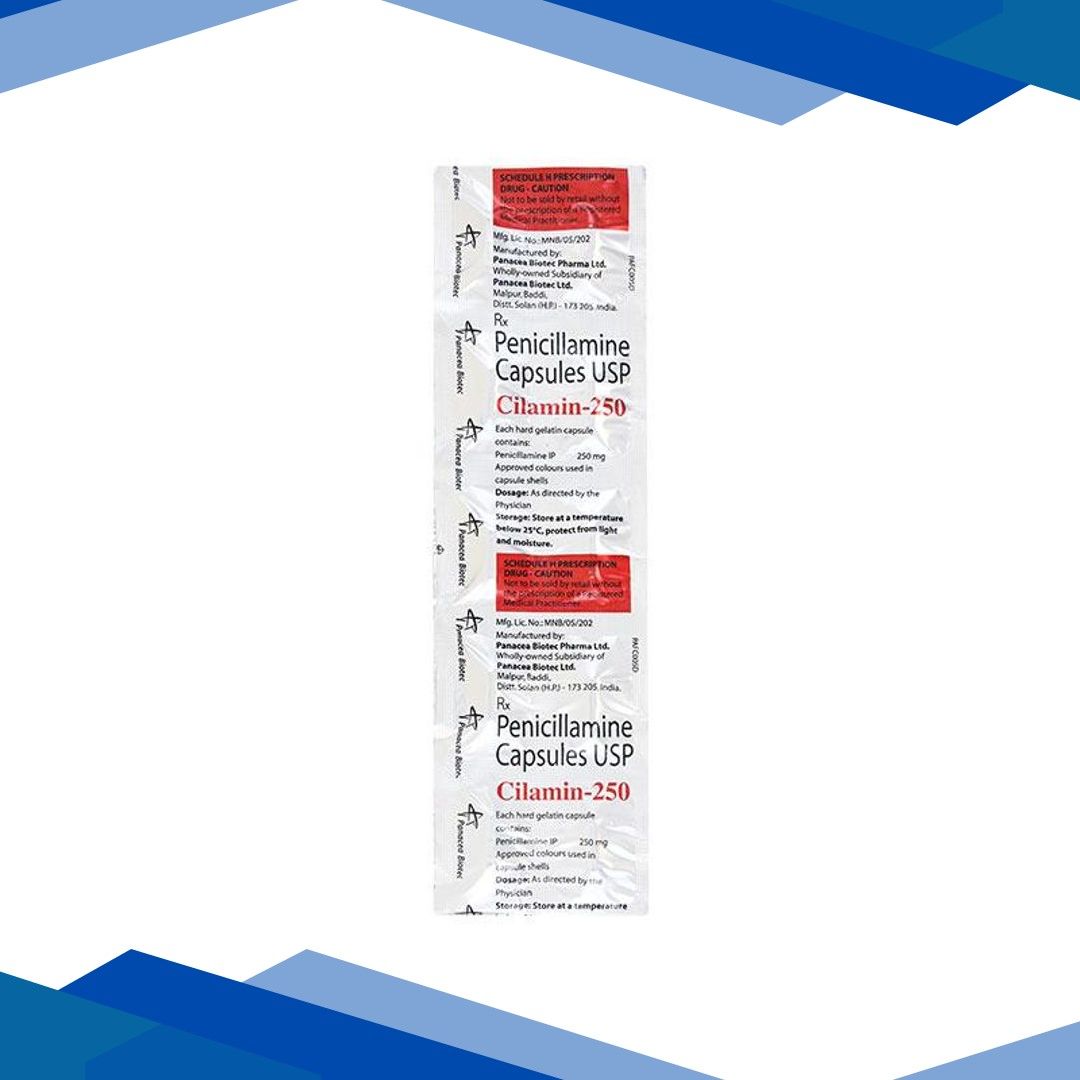
Cilamin 250mg Capsule 10’S
Penicitin 250mg Capsule 10’S
Penicillamine 250mg Capsule/Tablet
Generics: Penicillamine
Therapeutic Class: Antirheumatic / Heavy Metal Antagonist (Chelating Agent)
Prescription Status: Required (Schedule H Drug)
Product Introduction
Penicillamine 250mg is a specialized prescription medication, mainly used to manage Wilson’s disease, a rare genetic disorder where poisonous copper builds up in important organs. It also works as a Disease-Modifying Anti-Rheumatic Drug (DMARD) for severe , active rheumatoid arthritis when other treatments don’t work well enough. Additionally it is used to reduce stone formation in people dealing with cystinuria.
+1
By binding to surplus heavy metals, this medicine turns them into a more soluble form so your body can remove them through urine. It needs to be taken strictly under clinical supervision, and routine blood plus urine testing is important to keep safety in check.
Primary Uses of Penicillamine
Management of Wilson’s disease: it helps remove the copper that’s built up and turns hazardous in the liver, brain and other organs.
Severe rheumatoid arthritis: it reduces joint inflammation, eases intense pain, and can help slow the ongoing breakdown of joints when first line treatments no longer work as expected.
Cystinuria control: it bonds with the amino acid cystine so that its concentration drops in urine, which helps avoid the repeat of painful kidney and bladder stones.
How penicillamine works
Penicillamine uses two main modes, and which one is most relevant depends on what condition is being treated:
As a chelating agent: In Wilson’s disease it chemically attaches to heavy copper compounds present in tissues. The formed metal complex becomes very water soluble, so the kidneys can filter it and flush it out through urine.
As an anti inflammatory: In rheumatoid arthritis, it suppresses certain T lymphocytes and dampens inflammatory chemical messengers, which slows down the structural degradation of the joints.
Expert Tips for Proper Administration
Get the timing down: take this medication on an empty stomach, ideally 1 hour before you eat, or at least 2 hours after your evening meal. Food really does lower absorption of the drug, noticeable.
Be careful with supplements: try not to take iron supplements, antacids, calcium, or zinc within 2 hours of your Penicillamine dose, because they bind with it, and the medicine ends up less effective.
Keep yourself well hydrated: if you are using it for cystinuria, drink plenty of water all day long, especially before bedtime, to dilute your urine.
Stick with a steady routine: do not miss doses and dont change your schedule without checking with your doctor. Stopping suddenly then restarting can lead to unexpected hypersensitivity reactions.
Common Side Effects
Many people adjust well, but some may have short lived side effects. Contact your healthcare provider if they continue:
Altered, or temporary, loss of taste (dysgeusia)
Nausea, vomiting, or mild abdominal discomfort
Loose stools or diarrhea
Mild skin rashes , or itching
Elevated protein levels in urine (proteinuria)
Quick safety advice
Category | Safety Advisory
Alcohol Consult Doctor: It is advisable to reduce alcohol intake while taking this medication , so the liver does not get extra strain.
Pregnancy Unsafe: Penicillamine has known risks to the fetus . It should be used only when the lifesaving benefit to the mother clearly outweighs the possible harm to the unborn child.
Breastfeeding Caution Required: The medicine can get into breast milk. Talk to your doctor about the risks, or maybe adjust timing depending on your situation.
Driving Be watchful: Some patients have dizziness, or visual disturbances. Refrain from driving if you feel unsteady or less alert.
Kidney health Close monitoring: Because the drug is cleared via the kidneys, regular renal function tests are mandatory. Do not use it in severe kidney disease.
Frequently asked questions (FAQs)
Q1: Is Penicillamine the same thing as Penicillin?
Ans: No, they are not the same at all. Penicillin is a well known antibiotic, that’s used to fight bacterial infections. Penicillamine is not that at all, it’s a chemical derivative related to penicillin, but it has zero antibiotic effect. Instead it acts more like a heavy metal binder and an anti inflammatory agent, which is a different whole purpose.
+1
Q2: Why does my doctor require regular blood and urine tests while I am on this drug?
Ans: Penicillamine can sometimes mess with bone marrow function, which can mean lower blood counts. It can also put extra strain on the kidneys, so protein or even blood can show up in the urine. These frequent checks help your physician detect those internal changes early, then adjust your dose in a safer, steadier way.
Q3: How long does it take for Penicillamine to show results in Rheumatoid Arthritis?
Ans: Because it is a disease-modifying drug, it works at a slower , steadier pace. You might not see a clear lessening in joint stiffness, swelling, or pain for the first 2 to 3 months of taking it continuously.
Q4: What should I do if I have a surgery scheduled in the near future?
Ans: Tell your surgeon and the doctor who prescribed it right away. Penicillamine can shift collagen cross-linking, which sometimes changes how neatly or how quickly your skin heals after an operation. Your doctor may lower your dose for a short time before the procedure.
Q5: Can I take daily multi-vitamins with my Penicillamine dose?
Ans: You need to put them apart. Minerals such as zinc, copper, and iron will bind to Penicillamine in your digestive tract, canceling both the vitamin and the medication. Make sure there is a strict gap of at least 2 hours between them.