
Showing the single result
Filter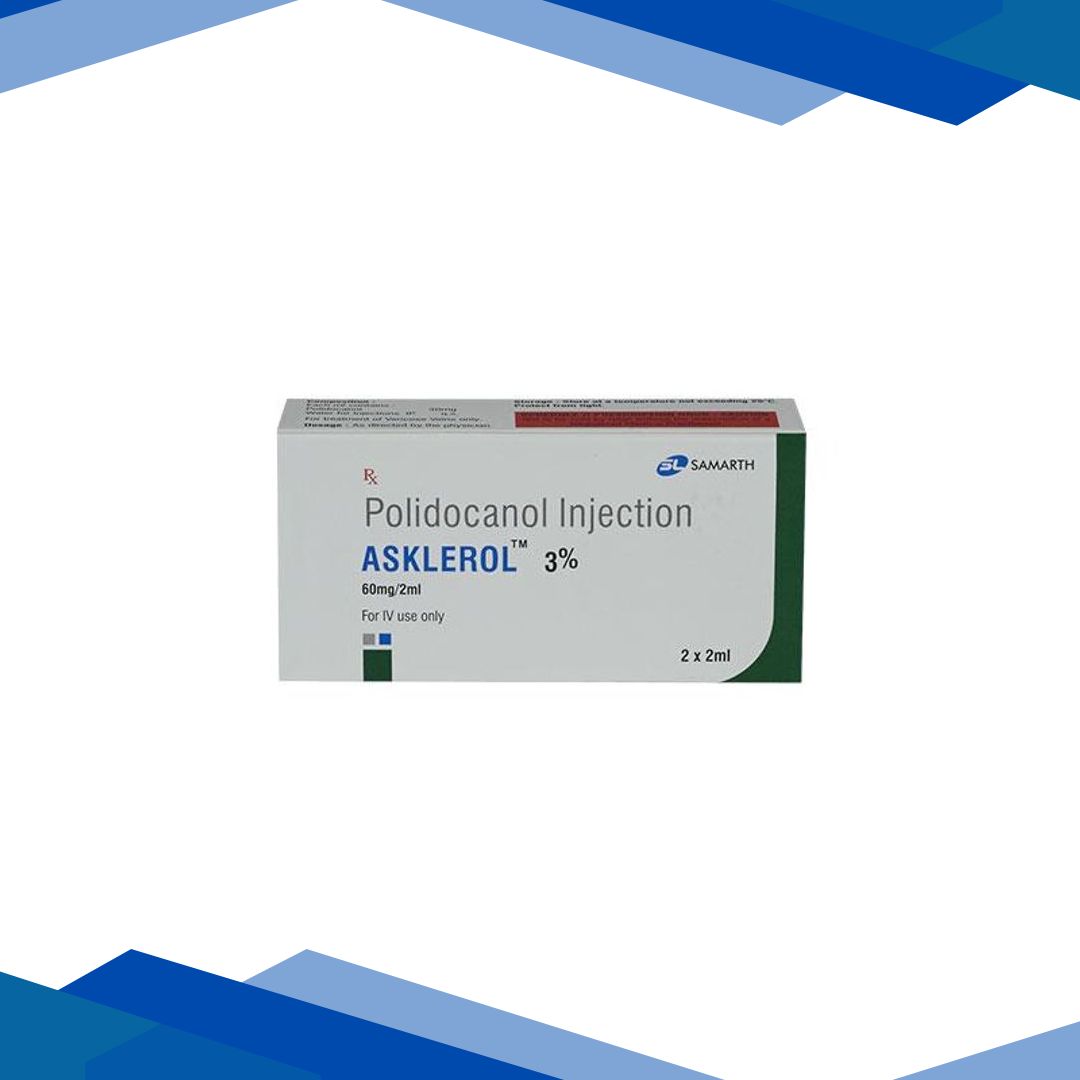
Polidocanol Injection (Sclerosing Agent)
Polidocanol, is a specialized pharmaceutical sclerosing agent or sclerosant that is mainly used during less intrusive endovenous procedures to treat unremarkable varicose veins and those reticular spider veins of the lower limbs. When it triggers a localized endothelial change, it helps shut down troublesome, widened blood vessels, so your body can naturally reroute blood flow through other, more healthy venous routes.
Therapeutic Class: Sclerosing Agents / Varicose Vein Preparations
Common Strengths: 0.5% (5 mg/mL) and 1% (10 mg/mL) Liquid Solutions / Microfoam
Route of Administration: Intravenous (IV) Injection Only, (usually delivered by direct target infiltration)
Prescription Required: Yes, (Strictly Schedule H / Rx-Only)
Primary Clinical Uses & Benefits
1. Fading of Spider Veins (Telangiectasia)
The 0.5% strength of Polidocanol is particularly useful for treating small spider veins, that are under 1 mm across, and it can markedly reduce their noticeable look plus the localized surface heat you may feel.
2. Management of Reticular Veins
For slightly larger blue-green reticular veins around 1 mm up to 3 mm in diameter, the 1% strength supports collapse of the faulty vascular channel, easing ongoing lower-limb cosmetic issues and physical discomfort.
3. Help for Superficial Venous Incompetence
If used as an activated endovenous microfoam, Polidocanol is applied to seal wider incompetent areas within the great saphenous vein (GSV) system, which helps with secondary issues like leg heaviness, aching, and localized swelling.
Mechanism of Action: What it Does
Polidocanol functions as a specialized chemical surfactant. After it is injected straight into a compromised vein, it produces quick, local damage to the vessel lining (endothelium). This targeted irritation encourages rapid platelet clumping, creating a localized coagulum and turning the once-open channel into a collapsed fibrotic scar-like strand.
Since the lumen, or opening, is then permanently occluded, blood can no longer collect in that winding vein. Over the next weeks to months, the body’s macrophage cells break down the nonviable vascular tissue and fully reabsorb it.
Administration Protocol & Post-Procedure Care
Polidocanol is never taken by the patient themselves. It is administered by a trained vascular clinician or dermatologist in a clinic setting, often using real-time ultrasound to pinpoint deeper compromised veins.
Dosing Limits:
Typical liquid dosing lands around 0.1 mL to 0.3 mL per vein site. For one clinical session, the total amount placed is strictly limited to 10 mL to reduce systemic adverse effects.
Immediate Walking Requirements:
Patients are told to keep walking continuously for about 15 to 20 minutes right after the injection. This movement dilutes the medication as it leaves the superficial venous channels, lowering the odds that it will pool within deeper, normal vessels.
Compression Therapy:
Wear specialized compression stockings or medical bandages continuously for 2 to 3 days after the procedure, then switch to daytime-only wear for 2 to 3 weeks, as your clinician outlines. The steady outside pressure helps keep the treated vessel walls flattened and stuck together, supporting better cosmetic results.
Documented Side Effects & Adverse Actions
Even though Polidocanol is designed to feel more tolerable than older sclerosants due to its inherent mild anesthetic properties, patients still may get localized or wider body reactions.
Common Localized Effects:
- Temporary bruising, tenderness, or hematoma around the injection site
- Mild warmth, localized itching, or hives along the treated vein
- Infusion site thrombosis, small trapped clots in the sealed vessel
- Temporary skin darkening, or hyperpigmentation
Serious Medical Hazards, seek help right away:
- Anaphylaxis: sudden facial swelling, hives, trouble swallowing, or wheezing.
- Tissue Necrosis: severe burning pain plus skin sloughing or deep discoloration at the injection location (suggests accidental spread into neighboring tissues or micro-arteries).
- Deep Vein Thrombosis (DVT): continuing throbbing pain, major swelling, or sudden warmth moving through the calf or thigh.
Patient Safety Matrix & Contraindications
| Patient Risk Factor | Safety Status | Clinical Justification & Guideline |
|---|---|---|
| Acute Blood Clots | ❌ Contraindicated | Absolutely do not use if there is an active past of Deep Vein Thrombosis (DVT) or Pulmonary Embolism (PE). |
| Recent Major Surgery | ❌ Contraindicated | If major surgery happened within the last 3 months, or you had prolonged immobilization, treatment must wait, because systemic clot risk is higher. |
| Pregnancy | ❌ Not Recommended | Because sclerotherapy is primarily symptomatic and cosmetic, it does not justify possible risk to fetal development. Postpone until after delivery. |
| Lactation | ⚠️ High Caution | There is not enough evidence about whether it enters human breast milk. Nursing parents should consider pumping then discarding milk for 8 hours after the injection. |
| Post-Care Activity | ⚠️ Restrictions | Avoid hot saunas, direct sun exposure, heavy resistance training, and long flights or long car trips for 3 to 7 days following your visit. |
Frequently Asked Questions (FAQs)
Q. Is Polidocanol painful compared to other vein treatments?
No, Polidocanol has naturally mild localized anesthetic qualities. Compared with older alternative sclerosants, like hypertonic saline, it usually causes less burning or cramping during the injection itself. Most people report only a small pinprick and a quick inside warmth sensation.
Q. How long before varicose or spider veins fade after injection?
Small spider veins often start fading around 3 to 6 weeks after a clinical treatment session. Larger varicose or reticular veins may take about 2 to 4 months to collapse fully and be reabsorbed by nearby tissues. Depending on how dense the affected area is, you may need several sessions spaced a few weeks apart.
Q. What if Polidocanol leaks outside the vein by accident?
If it leaks into surrounding tissue (extravasation) or enters an unintended micro-artery, it can lead to intense local tissue ischemia, meaning reduced blood supply, and skin necrosis, meaning ulceration or tissue death. That is why the procedure should be done only by a seasoned specialist who can respond fast with emergency counter-measures if a leak happens.
Q. Can I return to work right after a Polidocanol session?
Yes, many patients can restart regular, lighter work tasks right after their appointment, as long as their job does not require standing for very long periods or heavy lifting. Still, you must complete the required 20-minute walking immediately after the session, and use your prescribed compression stockings as directed.