
Showing the single result
Filter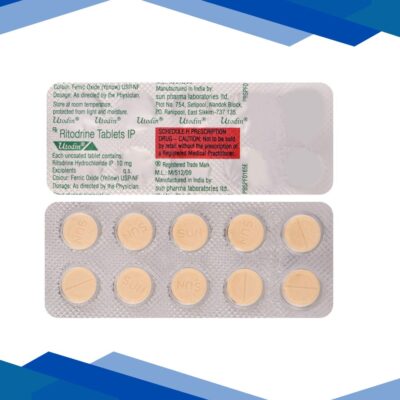
Ritodrine 10 mg Tablet (10’s)
Manufacturer: Sun Pharmaceutical Industries Ltd / Juggat Pharma / Neon Laboratories
Therapeutic Class: Tocolytic Agent (Beta-2 Adrenergic Agonist)
Common Brands: Utodin, Ritolan, Ritrod, Ritodine
Ritodrine is a specialized medication primarily used in obstetrics to manage and delay preterm labor (labor that begins before the 37th week of pregnancy). As a selective beta-2 adrenergic agonist, it works by targeting the smooth muscles of the uterus (myometrium). By stimulating these specific receptors, Ritodrine effectively relaxes the uterine muscles, reducing the frequency and intensity of contractions. This delay provides a critical window for healthcare providers to administer other essential treatments, such as corticosteroids, to help accelerate the baby’s lung development.
Key Therapeutic Benefits
-
Suppression of Preterm Labor: Effectively stalls premature uterine contractions to prolong pregnancy.
-
Fetal Development Window: Provides extra time (typically 48 hours) for the administration of maturity-boosting medications for the fetus.
-
Improved Neonatal Outcomes: By delaying delivery, it helps reduce complications associated with extreme prematurity.
-
Targeted Relaxation: Specifically designed to act on uterine tissue with minimal impact on other smooth muscles.
How to Use
-
Hospital Initiation: Treatment usually begins in a clinical setting with an intravenous (IV) infusion to stop acute contractions.
-
Maintenance Dose: Once contractions are stabilized, your doctor may switch you to oral tablets (10 mg to 20 mg) every 4 to 6 hours.
-
Consistency: Take the tablets exactly as prescribed by your obstetrician. Do not skip doses, as maintaining a steady level in the bloodstream is vital for preventing the return of contractions.
-
Duration: Usually continued until the 37th week of pregnancy or as determined by your specialist.
Safety Advice & Clinical Precautions
| Feature | Guidance & Expert Monitoring |
| Heart Health | Caution. Ritodrine can increase maternal and fetal heart rates. Your pulse will be monitored regularly during treatment. |
| Diabetes | Monitoring Required. This medication can raise blood sugar levels. Diabetic patients may need adjusted insulin dosages. |
| Hydration | Strict Control. Avoid over-hydration. Excessive fluid intake while on Ritodrine can increase the risk of pulmonary edema (fluid in the lungs). |
| Activity | Bed Rest. Often prescribed alongside modified bed rest to maximize the effectiveness of the treatment. |
Common Side Effects
Most side effects are manageable and result from the medication’s primary action:
-
Tremors (shaking of hands)
-
Palpitations or rapid heartbeat (Tachycardia)
-
Nausea or vomiting
-
Headache and nervousness
-
Flushing or redness of the skin
Frequently Asked Questions (FAQs)
Q: Is Ritodrine safe for my baby?
A: Ritodrine has been used for decades to manage preterm labor. While it can cause a temporary increase in the baby’s heart rate (fetal tachycardia), it is generally considered safe when used under strict medical supervision after the 20th week of pregnancy.
Q: Why was I started on an IV before getting these tablets?
A: In emergency preterm labor, the IV route is used because it works almost instantly (within 5 minutes) to stop intense contractions. The tablets are used as “maintenance therapy” to keep the uterus relaxed once the initial crisis is over.
Q: Can I take Ritodrine if I have high blood pressure?
A: You must inform your doctor if you have hypertension or any heart condition. Ritodrine can affect blood pressure and heart rhythm, so your doctor will need to weigh the benefits against the risks in your specific case.
Q: Does Ritodrine cause a dry cough?
A: Unlike some other blood pressure medications, Ritodrine does not typically cause a cough. However, if you feel any shortness of breath or chest tightness, inform your nursing staff or doctor immediately, as this requires urgent evaluation.
Q: What should I do if my water breaks while taking this?
A: If you experience a sudden gush of fluid (Rupture of Membranes) or if contractions become regular and painful again, contact your hospital or obstetrician immediately. Ritodrine is less effective once active labor has progressed past a certain point.