
Showing the single result
Filter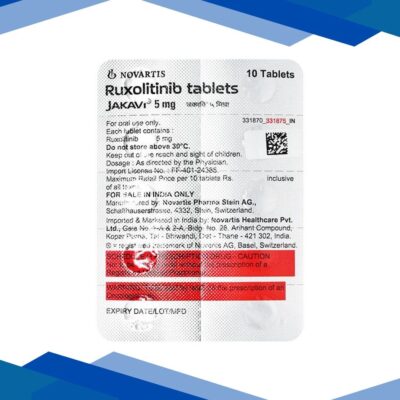
Ruxolitinib Tablets
Category: Antineoplastic Agents | Class: JAK1/JAK2 Inhibitor
Product Overview
Ruxolitinib is a breakthrough in molecularly targeted therapy and is indicated for treating patients with complex bone marrow and blood diseases. It is mainly indicated in the treatment of myelofibrosis, including primary and secondary forms due to polycythaemia vera and essential thrombocythemia, and polycythaemia vera, in patients who are refractory to hydroxyurea.
Furthermore, Ruxolitinib is an anchor in the management of graft-versus-host disease (GvHD), a condition wherein the donor cells that have been transplanted, thereafter attack the host body. It aims to reduce some of the dreadful symptoms of these conditions—enlarged spleen (splenomegaly) and severe night sweats—by targeting specific signaling pathways.
The Mechanism: Its Actions
Ruxolitinib halts the operation of Janus Associated Kinases (JAK1 and JAK2), which in multiple blood disorders are overactive, with the result that there is a constant signal running through these JAK enzymes demanding the body to generate more blood cells or inflammatory cytokines. By “turning down the volume” on these signals, Ruxolitinib restores normalcy to blood cell production while suppressing the inflammatory response of the body.
Advantages and Indications
Reduction of Splenic Volume: Ruxolitinib effectively reduces the splenic volume, alleviating severe abdominal discomfort and feelings of fullness.
Management of Symptoms: This drug targets “constitutional symptoms” like bone pain, pruritis (itching), and extreme fatigue.
GvHD Control: Ruxolitinib helps regulate the immune system in cases of steroid-refractory Graft-versus-Host Disease.
Improved Quality of Life: By stabilizing the blood counts, patients are able to resume everyday activities with a renewed vigor.
Ruxolitinib Dose for Consumption
Administration: Take by mouth two times daily. Take with or without food.
Adjustments in Dosage: An initial dose will be determined by your blood platelets specifically during the full blood count (FBC).
Compliance: Once established strictly, this medication has to be taken at a constant hour every single day to assure that blood levels remain dense.
Frequently Asked Questions (FAQs)
1. Is Ruxolitinib chemotherapy?
Although it has uses in the management of marrow as well as the blood cells, the targeted therapy Ruxolitinib is simply a kinase inhibitor. It operates differently from other chemotherapies such as alkylating agents or anthracyclines; instead of killing all swiftly growing cells, it addresses the specific JAK enzymes fueling the disease.
2. Why are frequent blood tests needed when I am on this medicine?
Ruxolitinib can bring down your blood cell count, including platelets, red blood cells, and white blood cells. Regular follow-ups will allow the hematologist to adjust the dosage safely and to prevent complications like anemia or increased risk of infection.
3. What happens if I miss a dose?
If you miss a dose, simply skip it and take your next scheduled dose at the usual time. Do not take two doses at once to “catch up,” as this can lead to an adverse reaction.
4. Are there any dietary restrictions?
You should avoid eating grapefruit or drinking grapefruit juice while taking Ruxolitinib. Grapefruit can interfere with how your body processes the drug, potentially leading to higher-than-normal levels in your system.
5. Can I stop taking Ruxolitinib if I feel better?
No. You should never stop taking Ruxolitinib abruptly. Doing so can cause a “withdrawal” effect where your disease symptoms return rapidly. Always follow your doctor’s tapering schedule if you need to discontinue the drug.