
Showing all 2 resultsSorted by popularity
Filter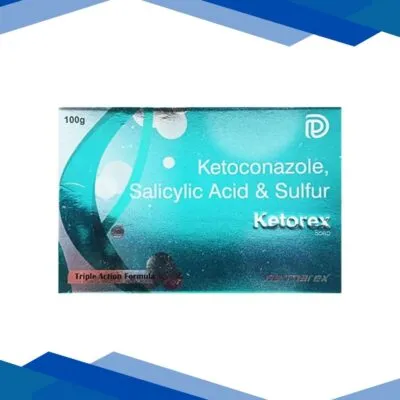
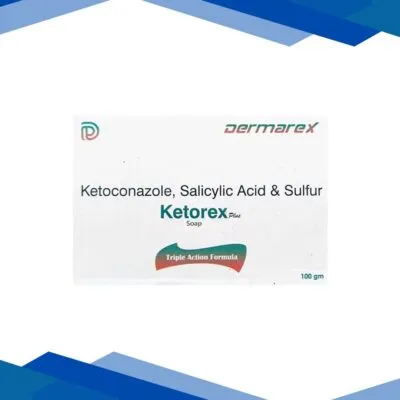
KETOREX PLUS Soap 100g
Here is your text with bold headings and appropriate bold/italics emphasis, without changing the original content:
Sulfur (Topical): Expert Guide to Skin Health
Sulfur is one of the oldest therapeutic agents in dermatology, going back thousands of years in history. As a naturally occurring mineral, it offers to serve as a “keratolytic” entity, promoting the shedding of dead cells in the skin. The key to the success of this acceptance is in the exceptional potential of sulfur where it, on its own, has not been detrimental to the skin due to additive properties to soaps, lotions, and ointments for treating such conditions as acne, redness, and flaking of skin.
Major Therapeutic Benefits
Acne & Blemish Control: Helps to dry out whiteheads and blackheads by absorbing excess sebum (oil) and cleaning out pores.
Seborrheic Dermatitis Relief: Reduces the redness and scaling characteristic of oily, flaky patches of skin notably around the nose and close to the hairline.
Antibacterial & Antifungal: Functions to inhibit bacteria and fungi naturally on the skin’s surface, limiting minimal infections.
Gentle Exfoliation: In this respect, sulfur provides a familiar cleaning regime towards the skin, encouraging turnover of the skin through gentle exfoliation as an ideal remedy for sensitive skins since it is gentle to them.
How It Works
Immediately after application to the skin, sulfur initiates its biological processes in a unique manner:
Keratolytic Action: This self-synthesizes into hydrogen sulfide within the skin, assisting to dissociate keratin, thereby breaking the top layer of the skin to get rid of dead cells quite efficiently.
Oil Regulation: Its natural astringent properties supposedly absorb excess lipids that are culprits of breakouts, rather deteinizing, hence “matting” the skin.
Pathogen Defense: The somewhat acidic medium is very effective against the life cycle of numerous mites and microbes including the scabies mites and certain forms of dermatitis.
Usage Instructions
For optimal delivery and to avoid irritating the skin, follow this basic application guide nightly for a minimum of two weeks:
Cleansing: Use a gentle, soap-free cleanser for washing the areas afflicted by the infection. Pat the rubbed areas dry.
Application: Only use a thin layer applied directly on the areas affected. If using a soap with sulfur, the suds should be left to rest on the skin for at least a minute before relative.
Frequency: Some people need only an application a day to effectively curb the acne; a much clearer skin will ensue. Others may have to moisturize after their applications.
Safety Information & Precautions
Patch Test: Carry out a patch test on a small area of your forearm before trying out the full therapy, keeping it on for 24 hours to check for sensitivity.
Odor: Raw sulfur gives out a peculiar “rotten egg” odor. Certain formulations have been engineered to eliminate this, though a faint odor does signify that sulfur is present and functioning.
External Use Only: Dwell strictly on instructions, avoid exposure of the eyes, mouth, and broken areas of the skin with sulfur. If such an accident should occur, immediately wash the touched area with plenty of water.
Keep Sulfur Away from Metals: Sulfur tarnishes silver jewelry. It is best to remove jewelry before applying the sulfur-based ointment.
Frequently Arec-Asked Questions (FAQs)
Q: Can I use Sulfur with other acne treatments like Benzoyl Peroxide?
A: Using multiple drying agents at once may cause skin to peel and be very irritated. Either they are better used at separate times throughout the day (e.g., sulfur in the morning, other cream/serums at night), or it would be prudent to seek your dermatologist’s advice.
Q: Is Sulfur safe for sensitive skin?
A: Mostly, yes. Sulfur is oftentimes better tolerated than Salicylic Acid or Retinoids. Nevertheless, it is best to start at a lower concentration, say around 3%, to remain characteristic of the skin barrier intact.
Q: By approximately what time should one notice improvements in acne prone skin?
A: Skin must look less oily in decreases within a few days. But notice that significant reality about relieving blemishes generally takes about 1 to 4 weeks of consistent use.
Q: Can I use Sulfur for dandruff?
A: Sulfur is one of the commonly used actives in dandruff shampoos. It works to control the yeast-like fungus that contributes to dandruff and relieves itching on the scalp.
Q: Does it help with Scabies?
A: High ringworm pills for body rashes are classical in high-tar medications usually ranging from 6-10% sulfur that have been used in scabies therapy, especially in the patients for whom the use of pesticides is contraindicated. This demands the application of the ointment for several nights in a row.
If you want, I can also refine grammar + convert this into a professional eCommerce product page format.