
Showing all 10 resultsSorted by popularity
Filter




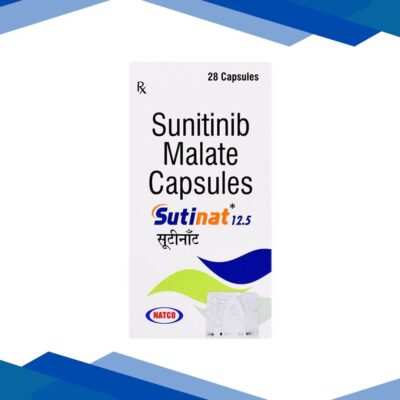
SUTINAT 12.5 Capsule 28’s

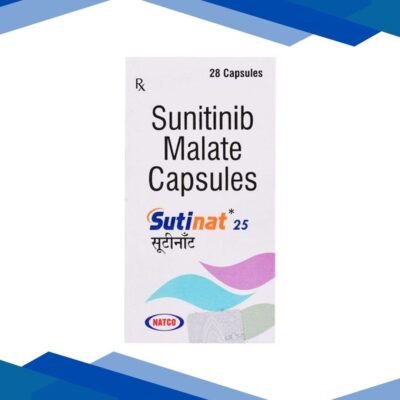
Sunitinib (50 mg) Capsules: A Complete Guide and Guide to Use
The main function of Sunitinib is as a potent multi-kinase inhibitor in the targeted treatment of several advanced cancers. Blocking signals that tell cancer cells to increase and stopping the formation of blood vessels is responsible for providing vital sustenance to the tumors. In this way, it helps slow down or arrest the progression of the disease.
Staple Indications
Sunitinib is particularly indicated in all of the following:
Gastrointestinal Stromal Tumor (GIST): Patients whose disease has advanced or cannot tolerate any other treatment.
Renal Cell Carcinoma (RCC): Used as the primary treatment for RCC which is in an advanced stage.
Pancreatic Neuroendocrine Tumors (pNET): For progressive, well-differentiated tumors that are unresectable or metastatic.
How to use Sunitinib
Dosing regimen: The capsules should be swallowed whole with a glass of water. The exact time of the day is not so critical. They can be taken with or without food.
Tab: Try to take the medicine at the same time each day so that there is a constant amount of it in your blood all the time.
Missed dose: If more than 12 hours have elapsed and you missed a dose, please don’t take your missed dose and just carry on the other dose as it has been scheduled. Don’t take 2 tablets to compensate for the missed dose.
WARNING Precautions for Sunitinib
Make sure you have relayed all the information and concerns to your oncologist or healthcare provider before starting therapy:
Losing elasticity from the hands and feet is another possible effect from talk therapy.
Consider the available side effects of strenuous activity on the skin and the better-recognized hand-and-foot syndrome, which causes redness and sometimes swelling of the palms and soles.
The drug also seems to cause some change in taste perception.
IMPORTANT LEARNINGS; Toxicity related to the heart and liver are two major threats associated with sunitinib. A timely monitoring of blood tests and blood pressures must be ensured for each treatment round.
Q. How Long is the Course of Typical Cyclical Therapy?
The general schedule for GIST and RCC is 4 weeks on, 2 weeks off; however, in pNET, it is usually given daily without a designated break. The schedule will be finalized by your physician upon considering your special scheme.
Q: Can I drink a grapefruit juice with Sunitinib?
A: No. Grapefruit and grapefruit juice could hinder the process of the drug and increase drug concentration inside the body, potentially to life-threatening levels.
Q: Does Sunitinib lead to hair loss?
A: Total hair loss on the medication is a rare side effect, but some patients may experience a decrease in hair thickness or depigmentation.
Q: What if I get pregnant while on this medication?
A: Sunitinib is severely detrimental to unborn babies. It is imperative that effective birth control be used during treatment for pregnancy and that protection remains used for several weeks following the final dose. Seek professional medical advice if pregnancy is suspected.
Q: How do I store capsules?
Storage of the product is safe at room temperature, (between 20°C and 25°C), far from moisture and sunlight. Keep the container tightly closed and out of children’s reach.
A reminder that this content serves for the user’s information only and is by no means medical advice. Never rely on this or any other content for medical purposes without first consulting a medical professional.