
Showing the single result
Filter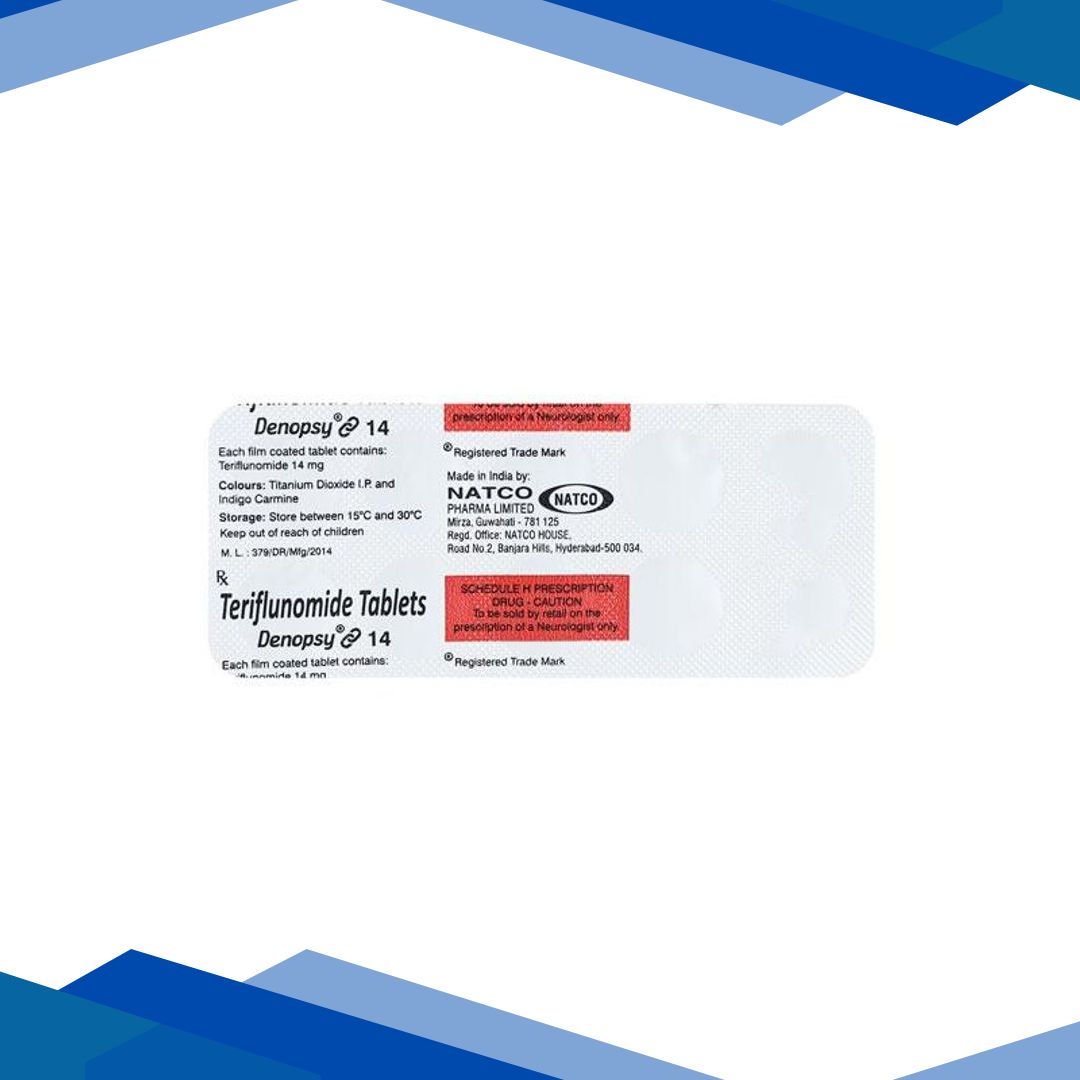
Relapsing Multiple Sclerosis Immunomodulation by Teriflunomide
Teriflunomide is an orally available pyrimidine synthesis inhibitor indicated primarily for relapsing forms of Multiple Sclerosis (MS). Specifically, it is a disease-modifying therapy (DMT) that seeks to lessen the clinical relapse rate and specifically to passively daunt the progression of actual physical disability. With its selective modulation of the immune system, Teriflunomide wants to protect the central nervous system from inflammatory damage.
Key Therapeutic Indications
Relapsing-Remitting MS (RRMS): Reduces the number of “flare-ups” or relapses in patients.
Active Secondary Progressive MS: Helps slow the accumulation of physical disability in patients who still experience relapses.
Clinically Isolated Syndrome (CIS): Prescribed after a first neurological episode to delay the onset of a formal MS diagnosis.
Mechanism of Action: How It Works
Teriflunomide works by reversibly inhibiting the mitochondrial enzyme dihydroorotate dehydrogenase (DHODH). This biochemical process leads to:
Cytostatic Effect: It limits the rapid proliferation of overactive T and B lymphocytes—the immune cells responsible for attacking the protective myelin sheath in MS.
Selective Response: Unlike broad immunosuppressants, it primarily affects “active” immune cells while leaving resting immune cells largely untouched, preserving the body’s ability to fight general infections.
Neuroprotection: By reducing the inflammatory load, it helps decrease the formation of new lesions in the brain and spinal cord.
Safety & Administration Profile
Requisite
Recommendation
Administration: Conveniently administered as one pill a day with or without food.
Liver Health: Baseline and monthly liver function tests (LFTs) are needed for the initial 6 months.
Blood Pressure: Blood pressure follow-up is necessary as it may cause mild elevations.
Storage: Keep in a cool, dry area; protected from sunlight and moisture.
Potential Side Effects
Most possible side effects are tolerable and slowly ease away when the body gets accustomed to it:
Hair Thinning: Temporary thinning or “shedding” (telogen effluvium) may occur in the first few months.
Gastrointestinal: Mild nausea or diarrhea.
Laboratory Shifts: Slight increases in liver enzymes or decreased white blood cell counts.
Paresthesia: Occasional tingling or numbness in the hands or feet.
Critical Precautions
Pregnancy Warning: Contraindicated in pregnancy; both males and females must use effective contraception. Teriflunomide remains in the system for a long time, and an “accelerated elimination procedure” may be needed if pregnancy is planned.
Liver Impairment: Not recommended for patients with severe pre-existing hepatic disease.
Infections: Inform your doctor if you have active tuberculosis or other serious chronic infections before starting treatment.
Vaccinations: Avoid live vaccines during therapy and for at least 6 months after discontinuation.
Frequently Asked Questions (FAQs)
Q: How long does Teriflunomide stay in the body?
Without an elimination procedure, Teriflunomide can take up to 2 years to fully clear from the blood. If a patient needs to clear the drug quickly for medical or family planning reasons, doctors can prescribe a specific washout treatment.
Q: Will Teriflunomide cure my Multiple Sclerosis?
Presently, no cure has been found for this condition. Teriflunomide is a maintenance therapy that suppresses the disease, reduces relapses, and keeps you functioning more or less normally for as long as possible.
Q: Does the hair thinning lead to permanent baldness?
No. Clinical data suggests that hair thinning associated with Teriflunomide is typically temporary and usually resolves or stabilizes while continuing the medication or after the first year of treatment.
Q: Can I take Teriflunomide with other MS medications?
Teriflunomide is generally used as a stand-alone DMT. It is advised not to coadminister it with other immunosuppressants (e.g., Leflunomide). There is a higher risk of serious liver damage and infection with this coadministration.
Q: What should I do if I miss a dose?
Take the missed dose as soon as you remember. If it is close to your next dose, skip the missed dose and continue with the regular schedule. Do not double up on therapy by taking two tablets of Teriflunomide.