
Showing the single result
Filter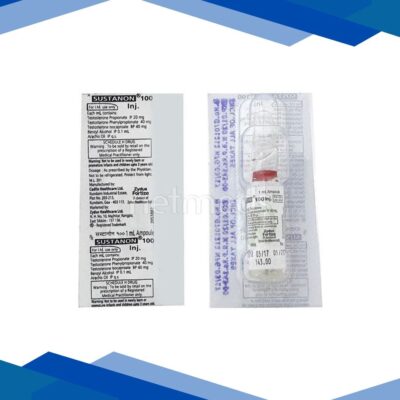
Sustanon 100mg Injection 1ml
Testosterone Propionate- a Fast-Acting Hormone Replacement Therapy
Testosterone Propionate is a synthetic, ultrashort-acting ester of the primary male androgen, testosterone. It is principally indicated in clinical practice for androgen replacement therapy in men diagnosed with conditions, caused by the lack or absence of endogenous testosterone. Given that it is rapidly absorbed and has a shorter half-life compared to the other esters, blood concentration can be held more constant, yet more frequent administering is required.
Key Therapeutic Indications
Primary Hypogonadism: Go for the treatment of testicular failure due to conditions like cryptorchidism, torsion, or orchidectomy.
Secondary Hypogonadism: Addressing testosterone deficiency resulting from pituitary or hypothalamic injury.
Delayed Puberty: Used with great circumspect in cases of adolescent males with clear clinical delays in the onset of sexual maturation.
Supportive Mammary Cancer Therapy: Sometimes used in certain postmenopausal women for an advanced breast cancer concurrent in hormonal sensitivity.
How It Works
Via intramuscular injection, Testosterone Propionate delivers free testosterone to the blood. When the ester is cleaved away, the testosterone molecule binds to androgen receptors in the target tissue that includes bone, muscle, and the central nervous system:
Raises:
Protein Anabolism: The production of nitrogen retention for growth and development (muscle growth and strength).
Skeletal Integrity: Growth and remineralization of bone mass and for calcium retention.
Metabolism: The redistribution of fatty tissues and erythropoiesis (red blood cell production).
Safety & Administration Guide
Feature
Recommendation
Administration via intramuscular (IM) injection into the gluteal muscle.
Dosing Schedule Injections may be scheduled for every 2 to 3 days for stability of hormonal levels.
Monitoring Regular follow-up blood testing as to the serum testosterone, PSA, and hemoglobin levels is, therefore, important.
Alcohol Its usage should be controlled for those who drink alcoholic beverages should be carefully managed; this is especially necessary since alcohol could affect liver function and metabolic clearance.
Early adverse effects
Since it is utilized primarily for replacement therapy, some of its patients may experience adverse reactions:
Androgens: Oily skin, acne, or increased hair growth in the body.
Fluid retention: Occasional occurrence of swelling (edema) in the lower extremities.
Changes in mood: Increased irritability or more pronounced swings in libido before and after use.
Sensitivity of injection sites: Occasional soreness from the high-intensity localized administration site.
Critical Caveats
Prostate Health: Contraindicated in men with suspected or confirmed prostate or male breast cancer.
Cardiovascular History: Be wary; consider use with previous history of myocardial infarction, hypertension, or clotting disorders.
Sleep Disorders: Rarely, it can make worse an existing condition of sleep apnea.
Liver Function: Monitor liver function even after long-term use; it is not as relevant in the use of injectable esters.
Frequently Asked Questions (FAQs)
Q: Why Propionate over Cypionate?
The use of Testosterone Propionate is generally preferred when a physician finds out that rapid alteration of the levels of testosterone is necessary. This is largely because it clears the system in a matter of days instead of weeks, permitting any instances of adverse reactions to be addressed in a more timely manner through discontinuation of the drug.
Q: Can women safely use this medication?
It can only be used in very serious conditions-like, for advanced breast cancer and under very strict supervision. However, in the majority of women, it will only cause “virilisation” (acquiring male characteristics). In such women, treatment with testosterone should be avoided.
Q: How soon could I expect to perceive beneficial effects from this medication?
Patients typically begin to feel a boost in energy and improvement in mood within about 2 to 3 weeks. However, changes in body composition-for muscle tone and bone density, for example–are usually more discernible after a good 3 to 6 months of consistent therapy.
Q: Can one self-administer this injection at home?
Yes, many patients are trained by their health care providers to self-inject the medication. Nevertheless, you must strictly follow all sterile techniques and disposal requirements for needles as instructed precisely at your clinic.
Q: What if I forget or miss a dose?
When you realize that it has been missed, administer the dose. If you are nearly on your next scheduled injection, let it slide. No double dose is permissible since it could lead to hormonal spikes, which could make you feel uncomfortable.