
Showing the single result
Filter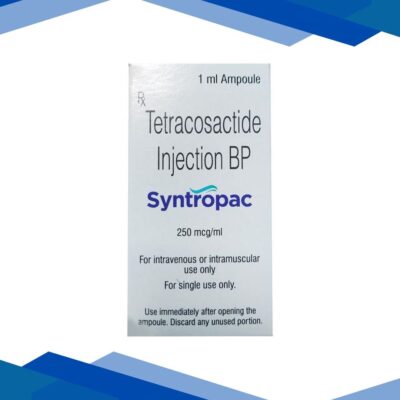
Tetracosactide: A Highly Targeted Diagnostic Agent for Adrenal Function
Tetracosactide, a completely human-made molecule developed for the endocrine system, is the synthetic ACTH peptide and is said to be the major tool in ACTH Stimulation Testing. By mimicking the signal that the brain sends to the adrenal glands, Healthcare providers can determine the effectiveness of the steroidogenesis in these glands, which may result in the production of essential hormones such as cortisol. It acts as a life-saving tool used during the diagnostic process for conditions such as Addison’s disease, and other forms of adrenal insufficiency.
Core Uses & Indications
Adrenal Function Testing: Primary method for diagnosis of primary or secondary adrenocortical insufficiency.
Addison’s Disease Disease: Helps confirm whether or not the adrenal glands have been damaged or can no longer secrete enough cortisol.
Therapeutic Support: In cases as such, it may be indicated in specific situations (under another name in literature, such as Synacthen Depot) for short-term treatment of inflammatory conditions or multiple sclerosis flares when oral steroids are contraindicated, notwithstanding.
Pediatric Care: It can be used in conjunction with other therapies for the limited population of patients with Child-Specific West Syndrome.
Pharmacology: How It Works
Tetracosactide comprises the first 24 amino acids of the natural ACTH peptide, responsible for its biological action. Once administered, it stimulates the adrenal cortical cells into producing glucocorticoids, mineralocorticoids, and, to a lesser extent, androgens.
In the test setting (30-minute test):
Blood is drawn for the baseline cortisol level right before the administration of an ACTH Analog.
Follow-up cortisol level is tested again half an hour after the administration.
A healthy adrenal response will show a drastic “spike” in cortisol level.
Safety & Clinical Guidelines
Feature
Recommendation
Administration Must be administered by a healthcare professional (IM or IV injection).
Storage Requires refrigeration (2°C – 8°C) and protection from light.
Monitoring Patients should be observed for 30 minutes post-injection for allergic reactions.
Pregnancy Generally not recommended unless the diagnostic benefits outweigh fetal risks.
Potential Side Effects
Given that Tetracosactide would lead to an increased release of steroids, patients may expect some risks, such as:
Allergic Reactions: Redness or itching at the injection site (common) or, rarely, dizziness.
Metabolic Changes: Short-term salt and water retention or mild facial flushing.
Gastrointestinal: Nausea or a general feeling of being unwell.
Mood Changes: Irritability or trouble sleeping (more common with therapeutic/repeated use).
Critical Precautions
Asthma & Allergies: Patients with a history of asthma or severe allergic reactions are at greater risk for hypersensitivity and must be closely watched.
Uncontrolled Infections: Should not be used therapeutically in active untreated conditions.
PUD: Be cautious when administering to patients with an ulcer history or severe mental problems.
Frequently Asked Questions (FAQs)
Q: Can you fast before a Tetracosactide (ACTH) test?
The patient can be asked to fast, and avoid medications that may affect cortisol readings (like oral steroids or estrogen-containing birth control). Always follow the specific instructions provided by your lab.
Q: Is Tetracosactide a steroid?
No, it is not a steroid itself; however, it stimulates your body, telling it to manufacture its own natural steroids. Nonetheless, because it simulates the formation of cortisol, some of the side effects associated therewith can be seen with it as well.
Q: Why do I need two blood samples?
The first test is to measure the hormones in your resting state; the second one, after stimulation, measures the levels of “stimulated” hormones. That is the only way to distinguish if your adrenal glands are responding well to the signals from your brain.
Q: Can I drive back home after receiving the shot?
Most people can drive after the 30-minute observation period. However, if you feel dizzy or experience visual disturbances, wait until these symptoms clear up before you drive. 44.
Q: Will receiving a single diagnostic dose have any long-term effects?
For diagnostic usage, the dose is very low and getting cleared by the body pretty quickly. Long-term complications, for example, thinning of the bones or an increase in weight, could be seen under therapeutic circumstances after several doses, not single shot diagnosis.
Medical Disclaimer:
This content is for informational purposes only and is not a substitute for professional medical advice. Tetracosactide is a prescription item for the diagnosis of disease, and strict medical supervision is essential.