
Showing the single result
Filter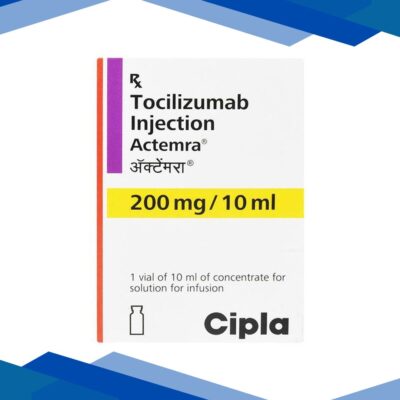
Tocilizumab: Advanced biologic therapy for really severe inflammatory conditions
Tocilizumab is a highly specialized, prescription-only recombinant humanized monoclonal antibody used to treat severe, chronic inflammatory diseases. It is basically an Interleukin-6 (IL-6) receptor antagonist and it is mostly prescribed when the usual disease modifying therapies are not enough. People also use it for autoimmune conditions like Rheumatoid Arthritis and systemic inflammatory syndromes, by aiming straight at the biological pathways that keep causing chronic tissue damage, not just the symptoms.
How the medication works
Tocilizumab steps in at a cellular level, it helps to interrupt the body’s exaggerated inflammatory cascade, in a very direct way:
IL-6 receptor targeting: Interleukin-6 (IL-6) is an important signaling protein, a cytokine made by the immune system that pushes inflammation forward. Tocilizumab attaches to both soluble IL-6 receptors and IL-6 receptors that are fixed on cell membranes.
Locking onto those receptors it stops IL-6 from broadcasting inflammatory signals, so the medication blocks that whole message relay, to nearby cells.
Tissue calming effect: By using this more focused blockade it tones down the body wide immune activation, that way joint swelling, pain, structural bone breakdown, and even vascular inflammation can ease up.
Main Clinical Uses
Rheumatoid Arthritis (RA): For moderate-to-severe active RA in adults who did not respond well enough to one or more Disease Modifying Anti Rheumatic Drugs (DMARDs).
Giant Cell Arteritis (GCA): Given for long term inflammation affecting the big arteries, helping prevent vascular complications.
Juvenile Idiopathic Arthritis (JIA): Used in systemic and polyarticular childhood arthritis, to curb recurrent systemic flares and preserve joint mobility.
Cytokine Release Syndrome (CRS): Applied in clinical care to stop dangerous immune surges that can be triggered by certain advanced immunotherapies, like CAR T cell therapy.
Administration & Dosage Guidelines
Clinical delivery: Tocilizumab comes as an intravenous (IV) infusion, given by a healthcare professional in a clinic or hospital, or as a subcutaneous (SC) injection using a pre-filled syringe or autoinjector, for home use.
Rotational technique: If you are using SC injections at home, you should rotate the injection sites across the front of the thighs, the abdomen (staying away from the navel area), or the outer upper arms. Do not inject into skin that is tender, bruised, red, or feels hard.
Screening requirements: Before starting treatment, a comprehensive screening is required, including a latent Tuberculosis (TB) test, plus a full hepatitis panel.
Continuous monitoring: Bloodwork on a regular basis is important to check your complete blood count, especially neutrophils and platelets. You will also need to follow liver enzyme checks, along with lipid panels.
Frequently Asked Questions (FAQs)
1. How long does it take for Tocilizumab to start showing visible results?
While the biological action starts pretty shortly after administration, you usually only notice visible changes in joint pain, stiffness, and swelling within 4 to 8 weeks of steady therapy. The most strong clinical improvement happens in a gradual way over several months.
2. Does Tocilizumab weaken the immune system?
Yes. Because it downregulates a crucial part, an arm of the immune response, to control inflammation, Tocilizumab decreases the body’s capacity to deal with infections. It is very important to avoid close contact with people who have active contagious illnesses and to wash your hands often.
3. What should I do if I get a fever or a minor infection while using this medicine?
If you develop any infection signals, like a fever, a persistent cough, burning when you urinate, or sudden skin redness, contact your physician immediately. Your normal dosing may need to be paused temporarily until the infection is fully resolved.
4. Can I get standard vaccines while I am taking Tocilizumab?
You should avoid live vaccines like yellow fever, MMR, or chickenpox while on Tocilizumab therapy, because a weakened immune response can raise the chance of complications from the vaccine itself. Non-live or inactivated vaccines are generally considered safe, yet they should be timed and planned with your doctor first.
5. How does Tocilizumab differ from usual painkillers or steroids?
Painkillers and steroids mainly give temporary comfort by hiding pain signals or broadly calming immune activity. Tocilizumab is a more targeted biologic that specifically blocks the IL-6 molecule. It acts deeper in the disease pathway, helping reduce progressive long term joint damage and tissue destruction.
Safety, Precautions, and Storage
Precautions: Let your specialist know if you have a history of ongoing infections, diverticulitis, intestinal ulcers, hepatic impairment, or reduced white blood cell counts. Get emergency medical care right away if severe abdominal pain happens along with fever, or if there are changes in bowel habits.
Storage: Keep the prefilled syringes or vials in the original outer carton in the refrigerator at 2°C to 8°C, so they stay shielded from direct light. Do not freeze, do not shake, and do not leave the medication out where it can be exposed to intense heat. Keep it completely out of the reach of children.