
Showing the single result
Filter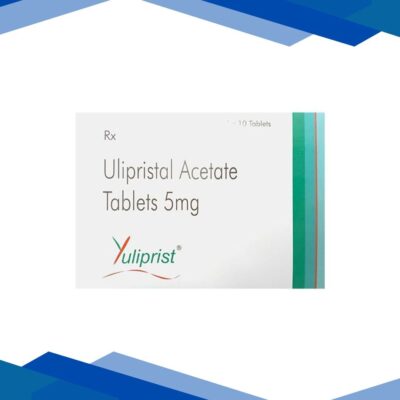
YULIPRIST Tablet 10’s
Ulipristal Acetate, it is a pretty effective synthetic selective progesterone receptor modulator (SPRM), and it is used mostly in women’s reproductive care (Kim, 2011).
Depending on which dose form you get, it ends up doing two really different jobs, like you know, preventing an unplanned pregnancy with an emergency pill, or helping manage non-cancer uterine growths that people commonly call fibroids (Bashir, 2012). In the body it kind of works dynamically, meaning it can act as either an agonist or antagonist, so progesterone’s influence gets blocked or reshaped, and progesterone is the hormone behind ovulation control and uterine lining support (Rosato et al., 2016).
Key Therapeutic Benefits and Uses
Your clinician might suggest Ulipristal Acetate if you are dealing with one of these main situations:
Emergency contraception (30 mg single dose): Take it after unprotected intercourse, or after a known birth control failure, like a condom tear or missed everyday pills. It stays effective if taken within 120 hours, meaning up to 5 days, after the event (Jadav, 2012).
Uterine fibroid management (5 mg daily dose): Used when severe menstrual bleeding is the problem, especially when anemia is showing up, and it can also help shrink fibroid tissue before surgical removal (Marci et al., 2014).
How Ulipristal Acetate Works
Delaying the ovulatory phase: For emergency contraception, it temporarily stops or delays egg release from the ovary (Jadav, 2012). And unlike older options, it can still delay ovulation even if the luteinizing hormone (LH) surge may have already started (Jadav, 2012).
Slowing fibroid growth: For fibroids, the daily tablets bind to progesterone receptors in the uterus, which helps curb cellular multiplication and promotes breakdown of fibroid tissue, while not taking estrogen down to post-menopause levels (Marci et al., 2014).
How to Use This Medication Properly
Emergency use: Take the 30 mg tablet by mouth, single dose, as soon as possible after unprotected intercourse (Kim, 2011). The earlier you take it, the best the results, though it does not really crash in performance across the full 5-day window (Whalen, 2012).
Fibroid treatment: Take the 5 mg tablet once each day, same time daily, exactly as your gynecologist instructs. Many regimens run in cycles up to about 3 months each time (Marci et al., 2014).
Administration notes: Swallow with a glass of water, with or without food (Jadav, 2012). If you have severe vomiting within 3 hours after taking it, contact your healthcare provider right away to discuss whether another dose is needed.
Safety Profile and Essential Precautions
Parameter, Guidance and safety metrics:
Existing pregnancy: Contraindicated. If you are already pregnant, do not take Ulipristal Acetate. It will not end an established pregnancy (Kim, 2011).
Breastfeeding: It is excreted in human breast milk. It is recommended to pause breastfeeding for at least 36 hours after taking this medication (Peitsidis, 2012).
Liver monitoring: For the longer use tied to the 5 mg dosing, periodic liver function tests (LFTs) are strongly recommended (Plazaola, 2012).
Drug interactions: Enzyme-inducing drugs, like rifampicin, phenytoin, or St. John’s Wort, may reduce the effectiveness a lot (Jadav, 2012).
Possible Side Effects
Most people tolerate it, but temporary symptoms may happen, like:
- Headache or mild dizziness (Whalen, 2012)
- Nausea, plus abdominal discomfort (Whalen, 2012)
- Muscle tiredness, or pelvic pain (Kim, 2011)
Menstrual changes: Your next period can show up a few days early or late, and flow might be lighter, or briefly heavier than usual (Whalen, 2012).
Important Warning
If your period is delayed by more than 7 days after emergency contraception, do a home pregnancy test or call your clinic to rule out pregnancy (Whalen, 2012).
Frequently Asked Questions
Q: How does Ulipristal Acetate differ from regular morning after pills like Levonorgestrel?
A: Typical morning-after pills are usually approved up to 72 hours (3 days) after intercourse, and they become less reliable with time, also sometimes when body weight is higher (Kim, 2011; Chao, 2018). Ulipristal Acetate keeps consistent effectiveness out to 120 hours (5 days), and clinical results show stronger performance in later fertile-cycle timing (Whalen, 2012).
Q: Can I use it as a regular monthly birth control method?
A: No. It is intended for emergency use, or for that specific targeted fibroid treatment plan (Whalen, 2012). Because it includes a high hormonal dose, it does not prevent pregnancy from later unprotected sex in the same cycle.
Q: Does it protect against Sexually Transmitted Diseases (STDs)?
A: No. It does not defend against HIV, Chlamydia, Gonorrhea, or other sexually transmitted infections (Peitsidis, 2012). Only barrier protection like condoms helps with STD risk.
Q: What if I miss a daily 5 mg dose during the fibroid course?
A: If the missed dose is less than 12 hours from when you normally take it, take the pill right away. If more than 12 hours has passed, skip that missed dose completely and continue your usual schedule. Do not take extra tablets to compensate.
References
Bashir, M. S. M. (2012). Ulipristal Acetate- A Selective Progesterone Receptor Modulator. Journal of Current Medical Analysis and Opinion, (622).
Chao, Y. S. (2018). Ulipristal versus Levonorgestrel for Emergency Contraception: A Review of Comparative Clinical Effectiveness and Guidelines. National Center for Biotechnology Information.
Jadav, S. P. (2012). Ulipristal acetate, a progesterone receptor modulator for emergency contraception. PubMed Central.
Kim, A. (2011). Ulipristal Acetate (ella): A Selective Progesterone Receptor Modulator For Emergency Contraception. Pharmacy and Therapeutics, 36(7), 415–418.
Marci, R., Maiorana, A., Carinelli, S., Biglia, N., Lo Monte, G., & D’Alonzo, M. (2014). Ulipristal acetate: a novel pharmacological approach for the treatment of uterine fibroids. Drug Design, Development and Therapy, 285.
Peitsidis, P. (2012). Ulipristal acetate and its role in emergency