
Showing all 7 resultsSorted by popularity
Filter
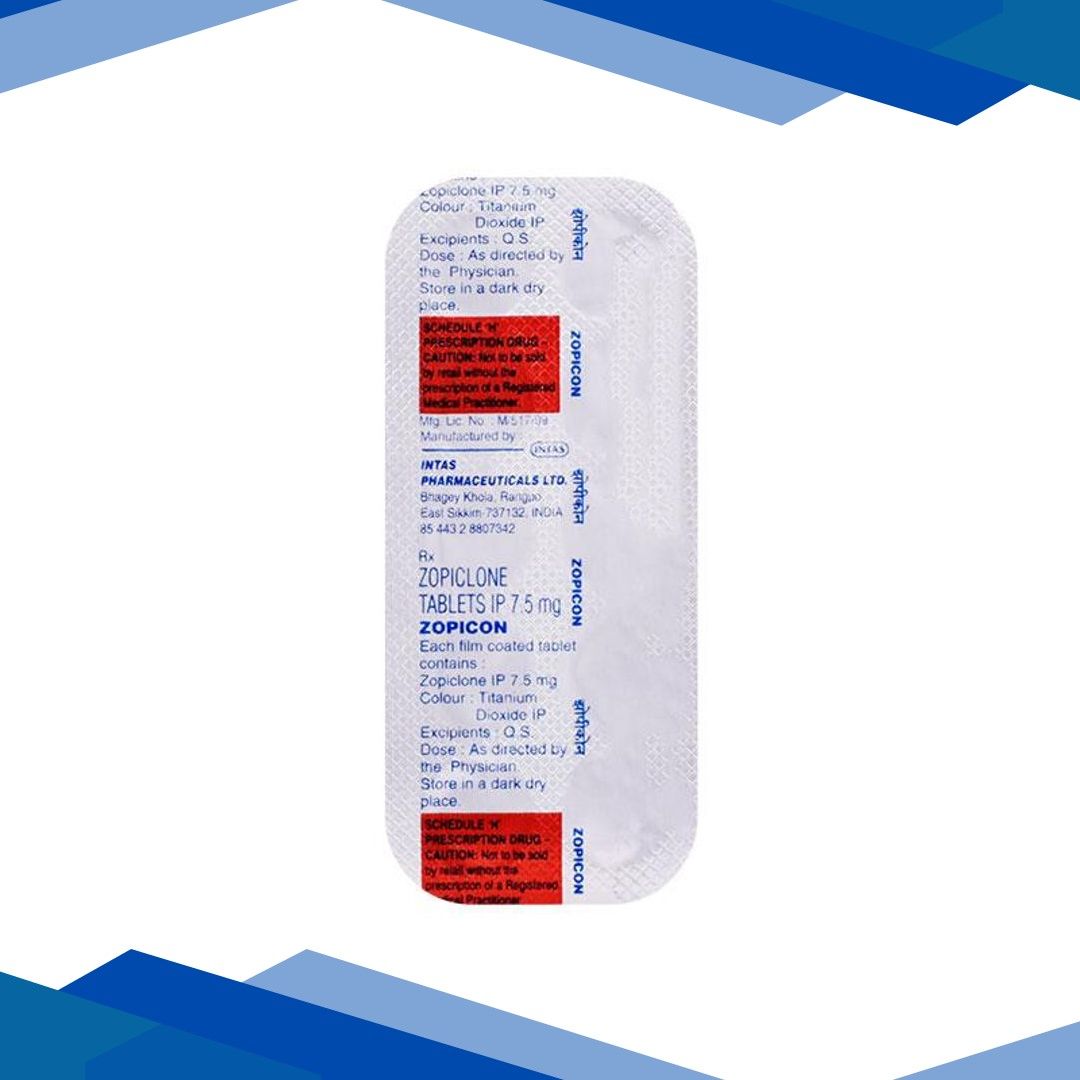

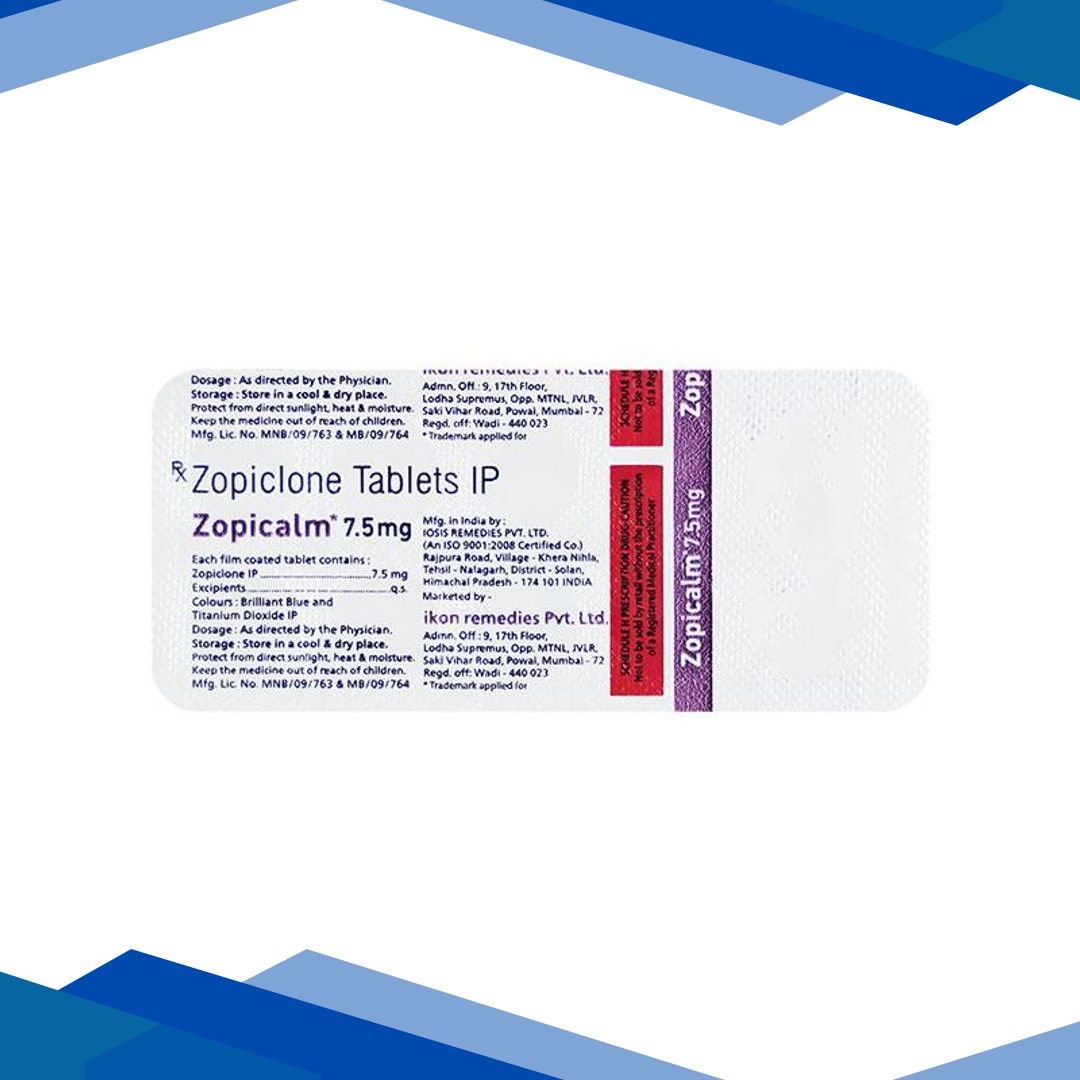



Zopiclone Tablets: Effective Short-term Management of Severe Insomnia
Zopiclone, prescribed nonbenzodiazepin hypnotic, is classified under the chemical cyclopyrrolone series. Commercially approved to be used for short-term management of severe, extremely crippling insomnia in adult patients, the specific series of neurotransmitter receptor activation controlled by zopiclone decalibrates sleep latency, diminishes the number of night-hour breaks one utilized, and perhaps the most significant long-term benefit, enhances total sleep time thereby restoring the sleep-wake cycle.
What Do Drugs Actually Do?
Zopiclone forwards the improvement in the natural calming mechanisms of the central nervous system.
Allosteric modulation of $GABAA$ receptors: Zopiclone binds to the $\alpha_1$ subunit-contained $GABA_A$ receptor complexes at the site physically distinct from where benzodiazepines bind, and it does so with much higher selectivity for the alpha1 subunit.
Causing activation of inhibition: Binding to this place changes the receptor structure in such a way that the receptor, when combined with GABA (Gamma-Aminobutyric Acid), which is the primary inhibitory neurotransmitter in the body, becomes more in conjunction with chloride ions flowing inside, leading to a hyperpolarized state of the post-synaptic neurons and decreasing the excitability of electrical signals across.
Induction of sedation: Zopiclone will resultantly dampen any overactive neuronal systems in the entire central nervous system to induce relaxation or diminished anxiety and allow the brain to embrace a good night’s sleep.
Primary Clinical Uses
Transient insomnia relief: This also applies to acute sleep fragmentation from sudden life alterations, brief periods of emotional stress, or significant changes in a person’s environment.
Short-term management of chronic insomnia: Zopiclone should be attempted when behavioral measures, including non-pharmacologic approaches, work only partially in severe cases of sleep onset failure, like morning awakenings.
Circadian rhythm resynchronization: It helps in reestablishing a healthy predictable sleep cycle after the major disruption in sleep hours or jet lag.
Methods and Administration
Each Dose Just Before Bed: Zopiclone acts with amazing rapidity-filled effects to give some sleep in 10-30 minutes, so there is no reason to give it too much time. Take the tablet in or on the bed and never limit time.
Sufficient Total Sleep Time: Only take when you are sure you can sleep for at least 7-8 hours of sleep because waking earlier than this can result in bad morning grogginess, coordination problems, and memory lapses.
Administration: Do not crush, divide, or chew the tablet while taking it, but swallow it whole with water, as crushing it would make you experience its bitterly metallic taste.
Foreseen Short-term Duration of Use: To investigate the possibility of tolerance, it is almost always prescribed for the shortest period of time possible, usually spanning from 2-14 days, after which you should stop utilizing the medication as prescribed.
Frequently Asked Questions (FAQs)
1. What makes Zopiclone different from the traditional benzodiazepine sleeping pills (eg, Valium) available? Although Zopiclone works on the GABA receptor systems as in the conventional benzodiazepines, it has an entirely different chemical structure (cyclopyrrolone). Designed to target specific subunits of the receptor more selectively, it actually induces rapid sedation with less disturbance in natural deep sleep stages (REM sleep) and a somewhat lower profile for daytime drowsiness when taken appropriately.
2. Why has Zopiclone been limited to short-term use alone? After 2 to 3 weeks of continuous use, the patient’s body begins to adapt to the drug’s action, resulting in a diminishing sleep-inducing effect-for example, a phenomenon known as “tolerance.” At that point, chemical dependence starts to rise and imposes clinical hazards in such context, such as severe rebound insomnia (ie, worse sleep conditions than before taking the medication) upon the attempt to cease use of the drug.
3. Was it masked with bitter taste in the mouth? Yes. The taste of the drug in the mouth, called dysgeusia, irritates many patients, implying that the bitter or metallic-tasting side effect is elicited with Zopiclone. This occurs when the drug leaves the bloodstream or its metabolites are expelled into the saliva and not swallowed. It is an insignificant issue, however, through brushing teeth and, perhaps, rinsing the mouth lightly most mornings, taste could be washed out.
4. Can the medicine be taken in the middle of the night? No. Zopiclone can never be meant for taking only when someone is awakened in the middle of the night to preserve sleep. If one pops up the pill at 2:00 AM or 3:00 AM, the drug would have stayed in the bloodstream well into the next morning alarm circadian timing, increasing chances of causing daylight sedation, visual errors, and accidents.
5. What are some of the examples of complex sleep behaviors, and whether Zopiclone provokes them? Non-benzo sedatives can elicit complex sleep behaviors in rare cases, which are defined as activities performed while technically asleep but a person looks entirely awake; for instance, sleepwalking, preparing meals, using a phone, or sometimes even driving a sleep-car. If you are yourself or your family members while on the medication, suddenly you catch on with having complex sleep activities that you do not remember the next morning, then, stop taking the pills, seeking medical attention and speaking to your physician.