


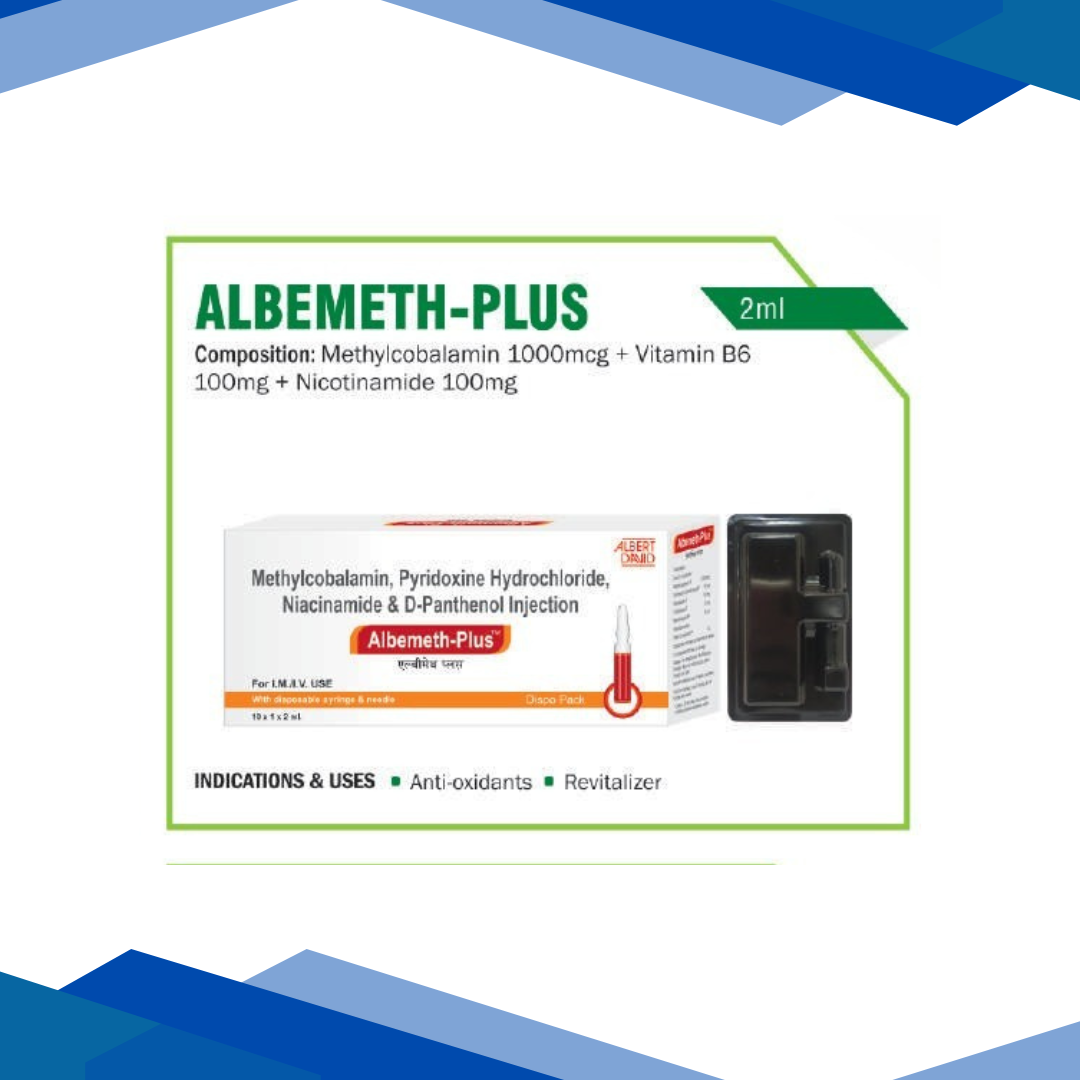
Albemeth-Plus
No Prescription yet? Don’t worry! Click Here to Get Online Consultation
Methylcobalamin is used to treat vitamin B12 deficiency, peripheral neuropathy, diabetic neuropathy. Vitamin B6 is used to treat or prevent pyridoxine deficiency, peripheral neuropathy, nausea and vomiting in pregnancy. Nicotinamide is used to prevent and treat pellagra (vitamin B3 deficiency), and it is commonly used in skin care for acne, rosacea, hyperpigmentation, and anti-aging. For more details Kindly click on Medicine Salts below:
Methylcobalamin
Vitamin B12 Methylcobalamin 1500 mcg Caps/Tab
Methylcobalamin is the most bioactive and powerful form of Vitamin B12, especially suitable for vegetarians. Compared to synthetic forms like cyanocobalamin, it is already in a body-ready state and acts more efficiently without requiring conversion in the liver. It is primarily essential for nerve health, brain function, and red blood cell formation.
Major Likely Health Benefits
Support the Nerves: Often recommended for neuropathy (especially in diabetes) and peripheral nerve pain. It helps regenerate nerve sheaths and improves nerve signal transmission.
Boost Energy: Supports DNA synthesis and red blood cell production, helping reduce fatigue and brain fog.
Support Cognitive Functions: Aids in memory, sleep regulation, and mental clarity.
Homocysteine Regulation: Helps lower homocysteine levels, supporting cardiovascular health.
For Usage Guide
Dosage: The usual dose is 25–75 mg per day. Higher doses may be gradually increased (in 25–50 mg increments) up to 300 mg per day over several months, depending on individual response and medical advice.
Adverse Effects and Interactions
Toxicity: Methylcobalamin has low toxicity. Excess amounts are usually excreted in urine due to its water-soluble nature.
Alcohol Interaction: Alcohol consumption may reduce absorption and effectiveness; avoid excessive intake.
Severe Adverse Effects
Although rare, monitor for:
Lightheadedness
Unusual neurological symptoms
Withdrawal Symptoms
Withdrawal symptoms may vary depending on associated medications and typically appear within hours to days, resolving over weeks.
Pregnancy and Lactation
Pregnancy: Use only under medical supervision.
Lactation: Small amounts may pass into breast milk, but generally considered safe under guidance.
Dosage Instructions for Special Populations
Newborns, Infants, and Lactating Mothers: Use only under strict medical advice.
Possible Side Effects
Methylcobalamin is generally well-tolerated, but some individuals may experience:
Mild nausea or stomach upset
Temporary dizziness
Headache
Occasional skin itching or rash
Frequently Asked Questions (FAQs)
Q: Why should I choose Methylcobalamin over Cyanocobalamin?
A: Methylcobalamin is the natural, active form of Vitamin B12. It stays longer in the body and works directly at the nervous system level without requiring conversion, making it more efficient and effective.
Q: Can I take it for general tiredness?
A: Yes, especially if fatigue is due to Vitamin B12 deficiency. Vegetarians and elderly individuals often benefit from supplementation.
Q: How long does it take to improve nerve pain?
A: Energy levels may improve within 1–2 weeks, while nerve repair (numbness/tingling) may take 4–8 weeks of consistent use.
Q: Will overdosing on Vitamin B12 pose a risk?
A: Generally no. Being water-soluble, excess Vitamin B12 is excreted. However, stick to recommended doses such as 1500 mcg daily unless advised otherwise.
Q: Are there any foods I should avoid while taking it?
A: No major restrictions. However, excess alcohol may interfere with absorption, so moderation is advised.
Nicotinamide
Nicotinamide (Vitamin B3)
Nicotinamide is a water-soluble form of Vitamin B3 essential for energy metabolism and cellular repair. It is considered safer than niacin, as it does not typically cause flushing (skin redness and warmth) at usual doses. This makes it a preferred option for both dietary supplementation and skincare applications. It plays a key role in converting food into usable energy while supporting the skin, nervous system, and digestive health.
Key Therapeutic Benefits
Skin Barrier Support: Enhances ceramide synthesis, helping retain moisture and protect against environmental damage.
Acne & Inflammation Resistance: Reduces redness, swelling, and excess sebum production, especially in acne-prone skin.
Anti-Aging Benefits: Supports collagen production, improving fine lines, wrinkles, and hyperpigmentation.
Treatment for B3 Deficiency: Effective in preventing and treating pellagra, a severe Vitamin B3 deficiency disorder.
Joint Health: May improve joint flexibility and reduce pain and inflammation in osteoarthritis.
Directions for Use
Oral Medication: Can be taken with or without food. Taking it with meals may reduce stomach discomfort.
Topical Application: Apply a thin layer on clean, dry skin. Avoid contact with mucous membranes or broken skin.
Consistency Care: Use regularly as advised by a healthcare provider for best results.
Important Safety Information
Consult Your Doctor: Generally safe, but individuals with liver disease, diabetes, or kidney issues should seek medical advice before use.
Diabetes: May influence blood glucose levels—monitor regularly if diabetic.
Pregnancy & Breastfeeding: Considered safe in recommended doses, but always consult a healthcare professional.
Possible Side Effects
Usually well-tolerated, but some individuals may experience:
- Mild stomach upset
- Headache or dizziness
- Skin irritation or rash (with topical use)
Discontinue use and consult a doctor if any allergic reaction occurs.
Frequently Asked Questions (FAQs)
Q: Is Nicotinamide the same as Niacin?
A: Both are forms of Vitamin B3, but Nicotinamide (Niacinamide) does not cause flushing, making it more suitable for long-term use.
Q: Can I use Nicotinamide with Vitamin C in skincare?
A: Yes. They can be combined to brighten skin and improve texture. For sensitive skin, consider using Vitamin C in the morning and Nicotinamide at night.
Q: How long does it take to see results?
A: Visible improvements in acne and pigmentation are usually seen within 4–8 weeks of consistent use.
Q: Are there any drug interactions?
A: It may interact with certain medications like antiepileptics (e.g., Carbamazepine) and blood thinners. Always inform your doctor about all medications and supplements.
Q: Should I take it on an empty stomach?
A: Yes, it can be taken on an empty stomach. However, if nausea occurs, taking it with food may help reduce discomfort.
Vitamin B6
Vitamin B6 (Pyridoxine) Tablets
Pyridoxine, an alternate term for Vitamin B6, is a water-soluble nutrient that belongs to the B-complex family. This vitamin acts as a significant co-enzyme for more than 100 important chemical reactions in the body. From the support of brain development to a strong immune system, Vitamin B6 serves as the basic role that weaves within how the body processes proteins, fats, and carbohydrates.
Therapeutic Uses & Benefits
Neurological Support: Vital to neurotransmitter synthesis (serotonin and dopamine) for mood and sleep regulatory behavior.
Hemoglobin Production: Facilitates the formation of red blood cells, thereby preventing certain anemia types.
Morning Sickness Relief: A common recommendation by obstetricians to ease nausea and vomiting during gestation.
Cardiovascular Health: Vitamin B6 is beneficial in regulating the homocysteine level in the bloodstream, an amino acid involved in heart concerns.
Boost Immunity: Makes antibodies produce stronger to help combat the body's inherent defense cells.
Product Description
Active Ingredient: Pyridoxine Hydrochloride (IP/USP).
Dosage: 10mg, 25mg, 50mg, and 100mg.
Category: Nutritional Supplement/ Vitamin B Complex.
Form: Tablets/ Capsules for oral administration.
How To Use?
Dose: As given by your physician. In general, the usual dose is once daily.
Method: Drink the tablet whole with water. The best time to take it is after a meal for maximum absorption and minishment of stomach upset.
Regular intake: Try to take the supplement at the same time of the day to maintain steady supply in your body'.
Possible Side Effects
While B6 is considered safe at the recommended doses, the use of high doses for a long time can lead to nausea or stomach pain, temporary appetite change, headache, or drowsiness.
Note: Extremely high doses (past 200mg daily for an extended amount of time) may result in peripheral neuropathy (tingling or numbness in the hands and feet).
You should stop taking Vitamin B6 and consult your healthcare provider if that happens.
Precautions/Concerns/Vitamin B6 Drug Interaction: Vitamin B6 can interfere with drugs such as Levodopa and Altretamine.
Pre-existing conditions: Mention kidney and chronic ulcer issues to your doctor.
Pregnancy: Typically used for morning sickness, vitamin B6 availability must be legislated by professionals.
FAQs
Q: Do I get enough Vitamin B6 from my diet?
Yes, getting most of their needs from chickpeas, tuna, salmon, and poultry, and bananas is fine for most people. Nonetheless, those with absorption problems, kidney disease, or certain genetic disorders might need to rely on a supplement.
Q: Will Vitamin B6 help my PMS/PMT symptoms?
There are some studies showing that Vitamin B6 is effective in alleviating some of the emotional symptoms of Premenstrual Syndrome, such as irritability and bloating, because emotional symptoms could well result from a serious hormonal imbalance.
Q: What is the difference between Pyridoxine and Pyridoxal 5-phosphate (P5P)?
Pyridoxine is the most frequently used form available in supplements that are then made in the liver into the active "co-enzyme" form of the body and are useful in deficiencies.
Q: Will vitamin B6 help to get sleep?
Have adequate levels of it so that it can help to keep the sleep-wake cycle healthy as B6 would be involved in producing melatonin (the sleep hormone) and serotonin.
Q: Should I take Vitamin B6 on an empty stomach?
You could also bring it down on an empty stomach; it is in the refrigerator and does not retain the sign of it. To avoid mild nausea that is very common with several B-vitamins when not eaten with a food meal, however, the general recommendation would still be to eat it with a full meal.
At Gem Pharmacy, we make every effort to provide accurate, expert-written, and thoroughly reviewed information related to medicines. However, this information should not be considered a substitute for professional medical advice, diagnosis, or treatment from a qualified doctor.
The purpose of this information is to educate users and improve communication between patients and healthcare professionals. It should not be used to diagnose or treat any condition.
Always consult a certified healthcare professional before taking any medication.


Related products