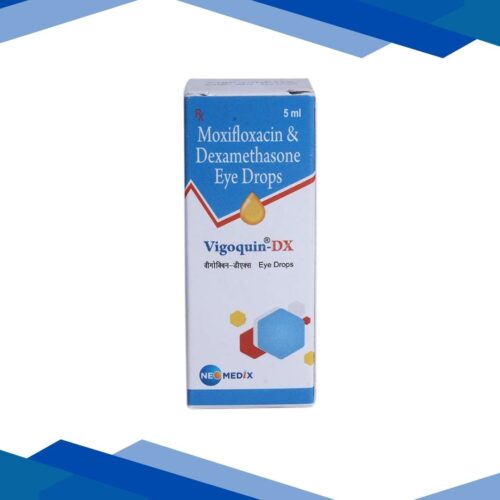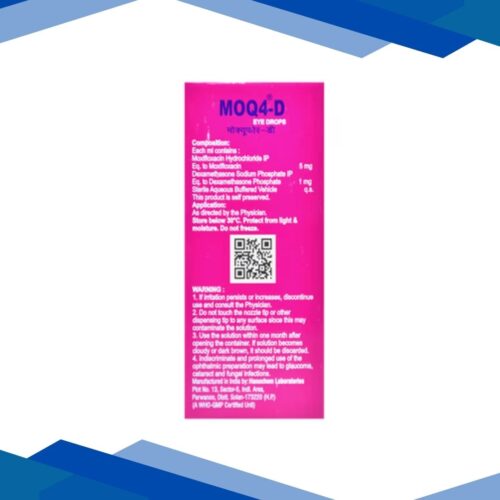


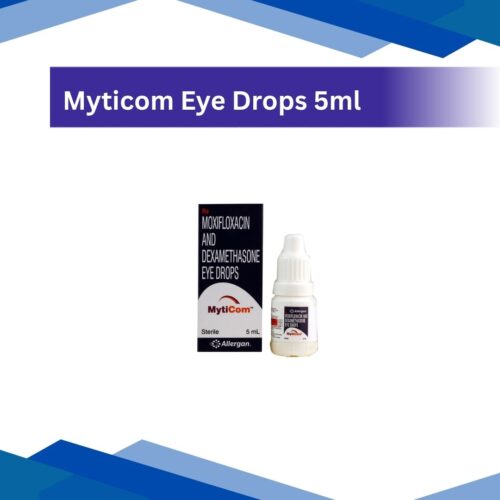

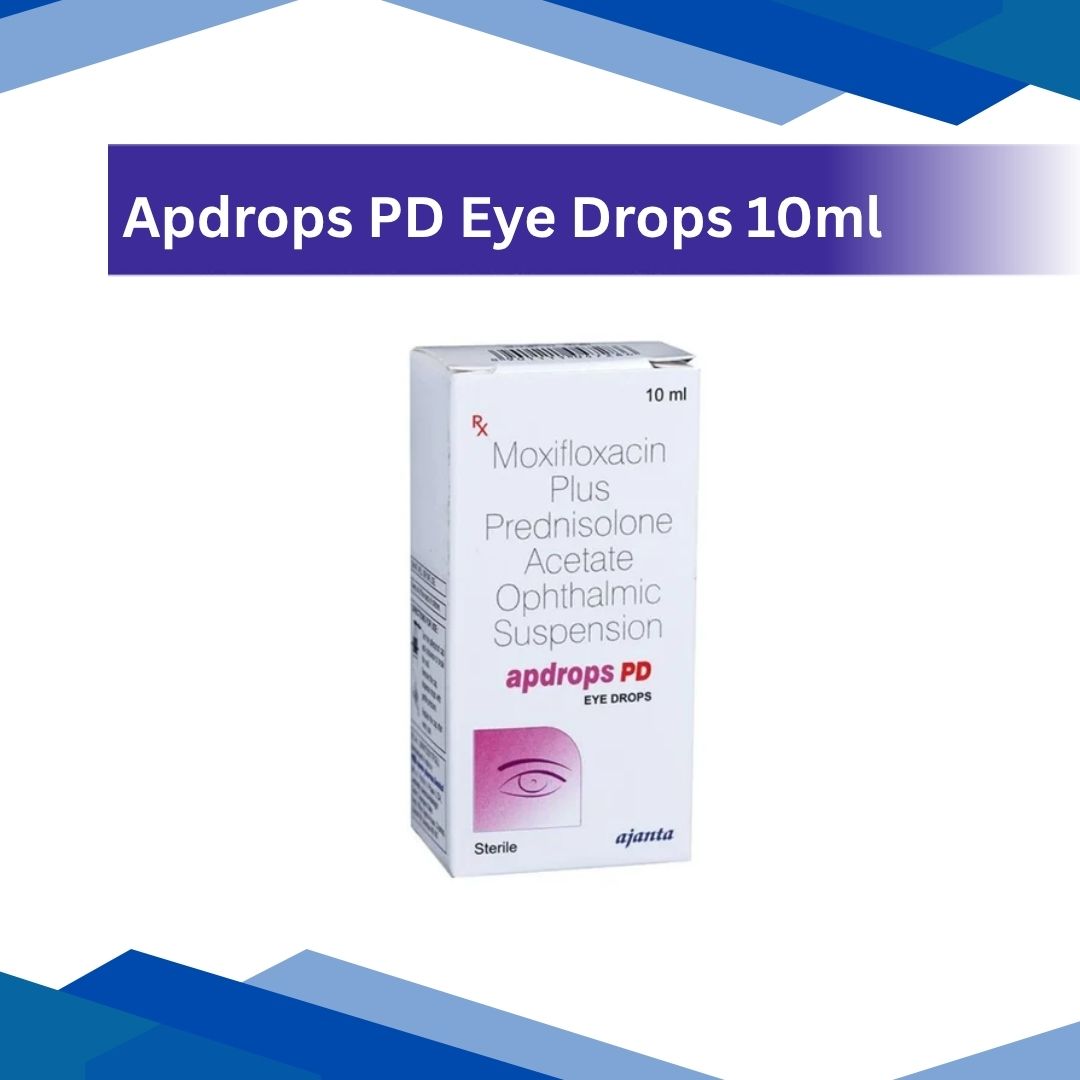
Apdrops PD Eye Drops 10 ml
No Prescription yet? Don’t worry! Click Here to Get Online Consultation
Apdrops PD Eye Drop is a combination medication used to treat bacterial eye infections such as conjunctivitis. It contains moxifloxacin, an antibiotic that inhibits bacterial growth, and prednisolone, a corticosteroid that reduces inflammation and alleviates symptoms like redness, swelling, and itching. For more details kindly click on Medicine Salts below:
Moxifloxacin
Indications Community-Acquired Pneumonia, including atypical pneumonias caused by Mycoplasma, Legionella, and Chlamydia (Kalymnos et al., 2007); acute exacerbation of chronic bronchitis; acute maxillary sinus infections of bacterial origin (e.g., Streptococcus pneumoniae, Haemophilus influenzae, or Moraxella catarrhalis); skin and skin structure infections, such as abscesses, cellulitis, and deep wound infections; or intra-abdominal infections due to Escherichia coli, Klebsiella pneumoniae, Bacteroides fragilis, Streptococcus spp., Enterococcus faecalis, Staphylococcus aureus, anaerobic cocci, and Clostridium perfringens.
Dosage and Administration The combination of moxifloxacin 400 mg tablets with conventional medicine such as Ampicillin or Metronidazole has been used for efficacy and safety in adult patients with CAP. The use of moxifloxacin 400 mg tablets should consider all indications and possible side effects. For CAP, a 400 mg dose may be administered via intravenous infusion over 1 hour. For better penetration in invasive infections, prostatitis, neutropenia, etc., moxifloxacin tablets are taken orally (Kitsun et al., 2005).
How Does Moxifloxacin Work? Moxifloxacin is bactericidal, meaning it kills bacteria rather than just inhibiting their growth. It works by blocking DNA gyrase and topoisomerase IV, enzymes essential for bacterial DNA replication and repair. Without these enzymes, bacteria cannot survive, leading to rapid infection control.
Usage Guidelines and Dosage Usual dose: Adults typically take 400 mg once daily. Consistency: Take it at the same time each day to maintain steady drug levels. Food: Can be taken with or without food; taking with food may reduce stomach upset. Complete the Course: Always finish the full course, even if symptoms improve early, to prevent antibiotic resistance.
Critical Safety Precautions Tendon Risk: Being a fluoroquinolone, Moxifloxacin carries a risk of tendonitis or tendon rupture. Avoid strenuous activity and report any joint or tendon pain immediately. Sun Sensitivity: May cause photosensitivity. Use sunscreen (SPF 30+) and protective clothing outdoors. Cardiovascular Health: Inform your doctor if you have QT prolongation or heart rhythm disorders. Pediatric Use: Not recommended for children under 18 years due to risks to developing joints.
Potential Side Effects Most patients tolerate it well, but some may experience: Nausea or mild stomach upset Dizziness Headache Diarrhea (seek medical help if severe or bloody)
FAQs
Q: Can I take antacids or vitamins with Moxifloxacin? A: Antacids containing magnesium or aluminum, iron supplements, and zinc-containing vitamins can reduce absorption. Take Moxifloxacin at least 4 hours before or 8 hours after these products.
Q: Does Moxifloxacin treat colds or flu? A: No. It is effective only against bacterial infections, not viral illnesses like cold or flu.
Q: Can I consume alcohol while taking this medicine? A: While no direct interaction exists, alcohol may worsen side effects like dizziness or stomach upset. It is best to avoid alcohol during treatment.
Q: What should I do if I miss a dose? A: Take it as soon as you remember. If it is within 8 hours of your next dose, skip the missed dose. Do not double the dose.
Q: Does Moxifloxacin cause sleepiness? A: It is more likely to cause dizziness or lightheadedness rather than sleepiness. Avoid driving or operating machinery until you know how it affects you.
Prednisolone
Potent Anti-Inflammatory & Immunosuppressant Support Prednisolone is a synthetic glucocorticoid corticosteroid derived from cortisol; it enjoys a place of honor in the playbook of synthetic drug usage in clinical medicine due to its preeminent capacity to mute highly disputative overactive immune responses almost instantly and reduce severe inflammation. Prednisolone bestows the effects of relieving practically all conditions exerting an effect on various other bodily organs like the lungs, skin, joints, and blood by blocking the production or release of many mediators, such as prostaglandins and leukotrienes. Such robust system impact makes Prednisolone a POM – Prescription-Only Medicine – to be ingested under the watchful eye of a doctor. Indications and Uses Allergic and Respiratory Conditions: It is indicated for the management of acute asthmatic exacerbations, severe allergic reactions, and Chronic Obstructive Pulmonary Disease (COPD). Autoimmunity: The drug brings about great relief when hefted for the control of flares in diseases like Rheumatoid Arthritis, Systemic Lupus Erythematosus (SLE), and Multiple Sclerosis. History: It finds a very important place in controlling some allergic skin, joint, or soft-tissue inflammatory processes, such as Psoriasis, Pemphigus, etc. IBD: Prednisolone helps induce remission in Crohn's disease and Ulcerative Colitis. Endocrine Support: The drug is used as replacement therapy in cases of adrenal insufficiency in which the adrenal glands do not produce enough endogenous corticosteroids. Safety Checklist: Pharmacists Drug: Prednisolone (oral) Topically Used Steroids Action: Through systemic circulation | Local and specific potency of action Potency: High | Ranging from mild to very potent, depending on formulation and concentration, activity, and duration Good Use: Inflammation within deep internal body tissues, "flares" in autoimmune disorders | Superficial inflammation like rashes, bites, and local eczema Prescription Status: Mandated | OTC (Over the Counter) for lower strength administration Directions for Usage Timing: Prednisolone is usually taken as a single dose in the morning (around 8 AM) to match the naturally occurring cortisol peak within the body. With Food: Consume the tablets with food or at least with a glass of milk to reduce the chances of gastric irritation or upset stomach. Tapering: This is of utmost importance: never halt Prednisolone abruptly if you have been taking it for more than a few days. Instead, the dosage should be gradually reduced in order for the adrenal glands to reactivate. Pharmacist's Safety Checklist Feature Prednisolone (Oral Tablet) Topical Corticosteroids Action: Systemic (Affects the whole system) | Localized (Affects a specific area) Potency: High (and tapers down) | Variable (depends) Best For: Internal inflammation and flares | Rashes, bites and local eczema Prescription: Absent | OTC (Low-strength products) Usage & Administration Guidelines Timing: Prednisolone is usually taken as a single dose in the morning (around 8:00 AM) to mimic the body's natural rhythm of cortisol production. With Food: Always take the tablet with a meal or a glass of milk to minimize the risk of gastric irritation or stomach upset. The Tapering Rule: Crucial: Never stop taking Prednisolone abruptly if you have been on it for more than a few days. The dosage must be gradually reduced ("tapered") to allow your adrenal glands to resume natural function. Frequently Asked Questions 1. How long for Prednisolone to work? In viral or allergic cases like asthma attack or acute exacerbation, results may be seen within 1–4 hours. In chronic inflammations, consistent and continuous dosage may be needed over the ensuing days for better response. 2. Why did my doctor tell me not to stop this medicine suddenly? Prednisolone confers its effect by dampening the normal balance of the system. Immediate cessation can lead to withdrawal, characterized by profound fatigue, nausea, and low blood pressure. 3. Does Prednisolone make you gain weight? Yes, weight gain may occur, commonly due to increased appetite and metabolic changes. Monitoring salt and sugar intake can help control this. 4. Can I get vaccinated while on Prednisolone? Prednisolone is an immunosuppressor—avoid live vaccines (like MMR, yellow fever) in high doses. Always inform your healthcare provider about current medications. 5. Can I take painkillers like Ibuprofen with Prednisolone? Generally not advisable. Combining with NSAIDs (like Ibuprofen or Naproxen) increases the risk of stomach ulcers or gastrointestinal bleeding. A safer option may be Paracetamol. Shouldering Infection Risk High doses can mask signs of infection. Even mild fever or a persistent sore throat should prompt consultation with a healthcare provider. In cases of fungal infection, treatments like ketoconazole or fluconazole may be required. Avoid unnecessary strong antiseptic mouthwashes unless advised. Safety & Storage Information Storage: Store at room temperature (20°C to 25°C) away from light and moisture. Missed Dose: If a dose is missed, take it as soon as remembered. If close to the next dose, skip the missed one—do not double dose. Disclaimer: This information is for educational purposes only. Prednisolone is a prescription medication and should be used under proper supervision of a healthcare professional.
In ≤50 words (for sales rep): Use Prednisolone in hospitals and clinics for acute asthma, COPD exacerbations, severe allergies, and autoimmune flares. Prescribe during moderate-to-severe inflammation when rapid suppression is needed. It works by reducing immune overactivity and inflammation, providing quick symptomatic relief and preventing disease progression.
At Gem Pharmacy, we make every effort to provide accurate, expert-written, and thoroughly reviewed information related to medicines. However, this information should not be considered a substitute for professional medical advice, diagnosis, or treatment from a qualified doctor.
The purpose of this information is to educate users and improve communication between patients and healthcare professionals. It should not be used to diagnose or treat any condition.
Always consult a certified healthcare professional before taking any medication.


Related products