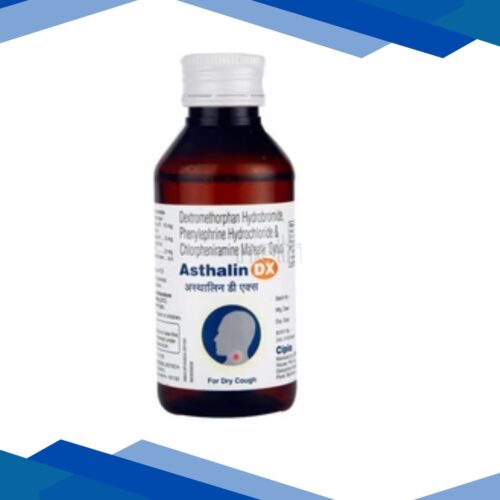






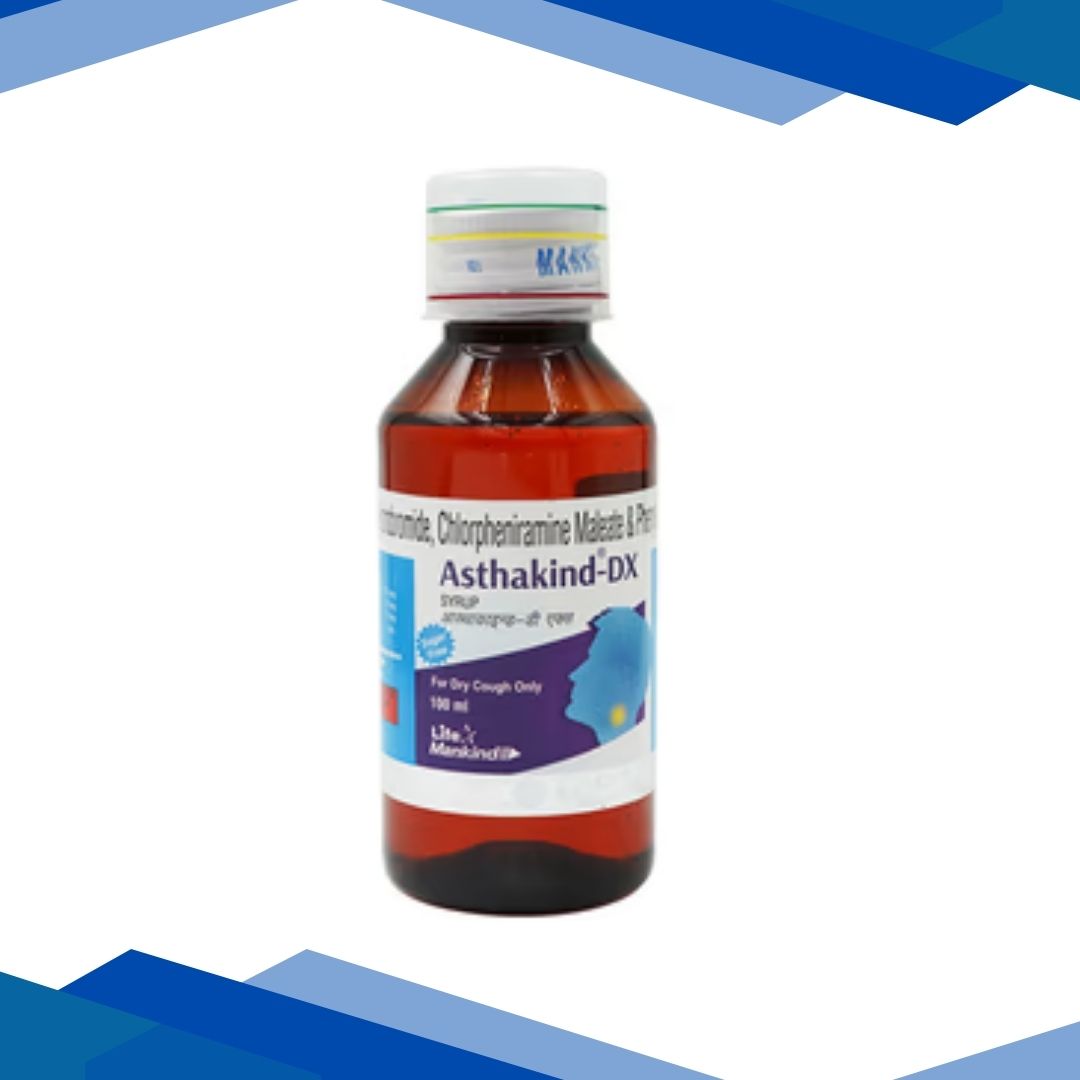
Asthakind DX Sugar Free Syrup 100ml

103.00 Original price was: ₹103.00.74.00Current price is: ₹74.00.
In Stock

ASTHAKIND DX SYRUP should be generally avoided or used with caution in children (aged less than 2 years). Your doctor will decide the correct dose and duration for your child according to age, body weight, and disease condition.

In Stock
Add to wishlist

Chlorpheniramine

CHLORPHENIRAMINE

Overview

Chlorpheniramine is commonly used to treat runny nose, sneezing, itchy eyes, watery eyes, and skin reactions caused by allergies, colds, or hay fever. It’s one of the older antihistamines and may cause drowsiness.

Classification
Antihistamine
Uses
Seasonal allergies (like pollen)

Dust or pet allergies

Cold-related symptoms such as sneezing or runny nose

Skin allergies, including hives or itchy rashes
How It Works
When your body comes in contact with allergens (like dust or pollen), it releases histamine, which causes symptoms like sneezing or itching. Chlorpheniramine blocks histamine, helping to relieve those symptoms and make you feel more comfortable.
Dosage
As prescribed by your doctor.

Side effects
Some common side effects may include:
Drowsiness or feeling sleepy

Dry mouth, nose, or throat

Dizziness or lightheadedness

Upset stomach

Blurred vision (in some cases)
Precautions
Use caution if you need to drive or operate machines, as it may cause drowsiness.

Avoid alcohol, which can increase sleepiness.

Let your doctor know if you have conditions like glaucoma, asthma, enlarged prostate, or urinary problems.

If you’re pregnant, breastfeeding, or giving it to a child or elderly person, consult a healthcare provider first.

Don’t take more than the recommended dose, as too much can increase side effects.

Disclaimer
This content is for informational purposes only. Always consult a healthcare provider for medical advice and proper dosage

Phenylephrine Hydrochloride

PHENYLEPHRINE HYDROCHLORIDE

Overview

Phenylephrine is a nasal decongestant used to temporarily relieve nasal discomfort caused by colds, allergies, and hay fever. It works by reducing swelling in the nasal passages, making it easier to breathe. However, it does not address the underlying cause of the symptoms or speed up recovery

Classification
Nasal decongestants

Uses

Oral and nasal phenylephrine are used as nasal decongestants to temporarily unblock a nose or relieve sinus pressure in people with nasal and sinus congestion caused by colds, allergies, or hay fever. While phenylephrine can provide some symptom relief, it doesn’t treat the underlying cause or speed recovery

How it works

Phenylephrine Hydrochloride is a sympathomimetic amine used as a topical decongestant, systolic vasopressor, and mydriatic agent. Its mechanism of action works through various pathways with the mechanism of action primarily based on its ability to stimulate alpha-adrenergic receptors, particularly alpha-1 receptors, which are involved in vascular smooth muscle contraction.

Dosage

As directed by the physician

Precautions

Before using Vazculep, please note:

Allergies: If you’re allergic to phenylephrine or any of its ingredients, avoid using this medication.

Children: Keep this medication out of reach of children. In case of overdose, seek medical help or contact a Poison Control Center immediately.

Contraindications (Do not use if you have):

Severe high blood pressure (hypertension)

Ventricular tachycardia (a type of rapid heart rate)

Closed-angle glaucoma (a condition affecting the eyes)

Hypersensitivity to phenylephrine or sulfites (a type of preservative)

Use with caution if you have:

Heart or blood vessel problems

Thyroid issues

Diabetes

Enlarged prostate

Liver or kidney problems

Asthma or sulfite sensitivity

Pregnancy & Breastfeeding:

Use during pregnancy only if the potential benefit justifies the potential risk to the fetus.

Considered safe during breastfeeding, but consult your doctor.

Side effects

Injection Site Reactions: Leakage of intravenous medication

Cardiovascular: High blood pressure (hypertension)

Heart Rate: Slow heart rate (bradycardia)

Mental Health: Anxiety, nervousness, restlessness

Neurological: Headache, dizziness, lightheadedness

Respiratory: Shortness of breath, chest tightness, wheezing

Gastrointestinal: Nausea, stomach pain or upset

Renal: Reduced urine output, decreased blood flow to the kidneys

Pulmonary: Fluid accumulation in the lungs (pulmonary edema)

Rebound Symptoms: Nasal congestion worsening after initial relief (rebound congestion)

Skin: Burning or stinging sensation

Other: Sneezing

If you experience any of these side effects, it’s important to consult with a healthcare professional for guidance.

Disclaimer

This content is for informational purposes only. Always consult a healthcare provider for medical advice and proper dosage.

No products in the cart.