


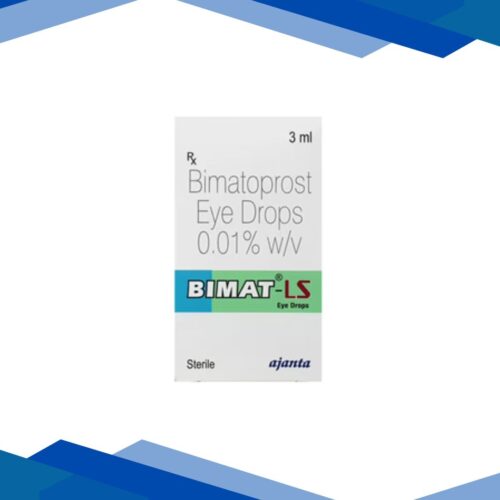
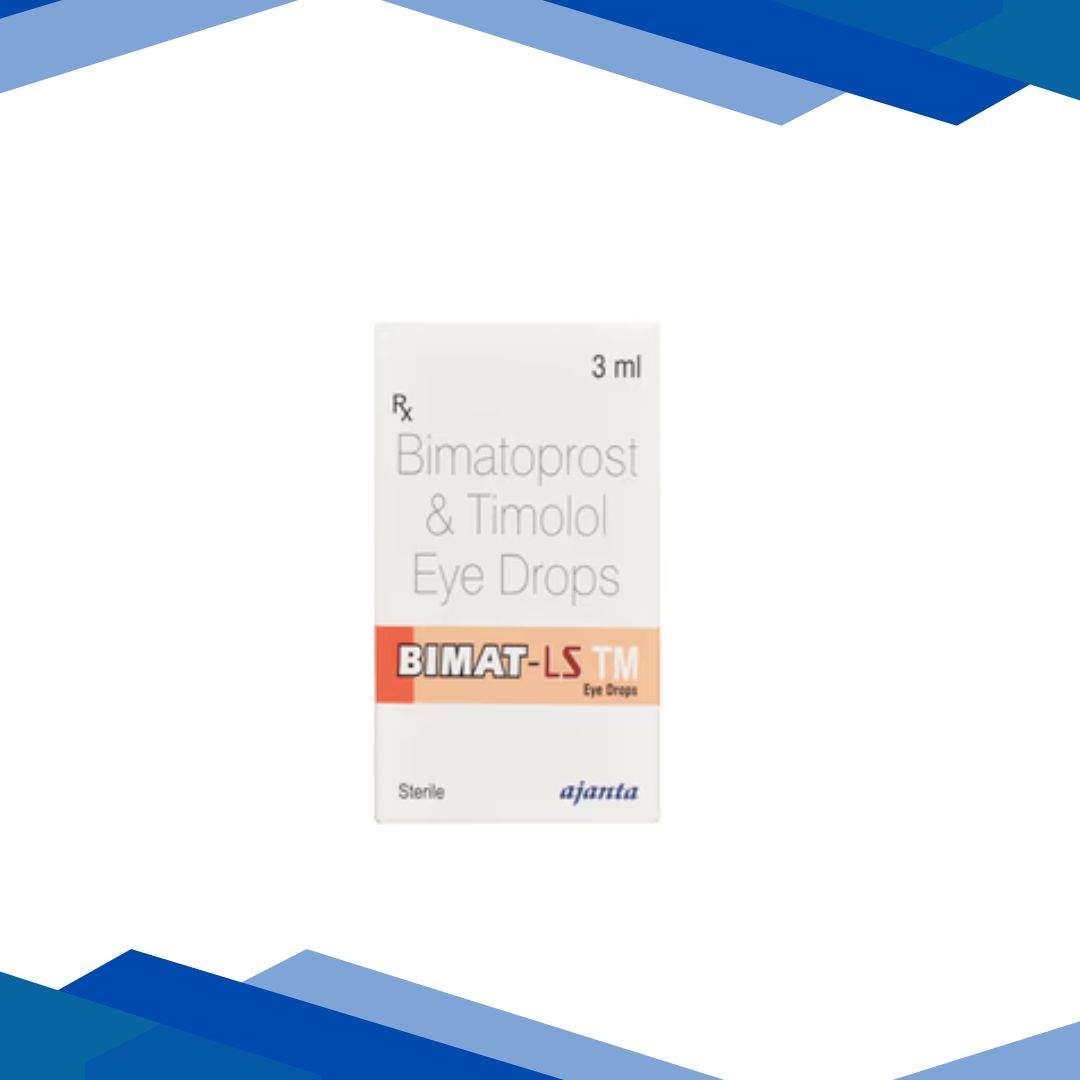
Bimat LS TM Eye Drops 3ml
No Prescription yet? Don’t worry! Click Here to Get Online Consultation
BIMAT LS TM EYE DROPS is a combination of Bimatoprost and Timolol which belongs to the group of medicines called Prostaglandin analogs and Beta-blockers respectively. It is used to manage glaucoma and ocular hypertension.
Bimaoprost
Bimatoprost: Use, Benefits, and Expertise
Bimatoprost belongs to the class of prostamides (prostaglandin analogs) and is a potent pharmaceutical drug used for two reasons namely reducing the elevated pressure within the eye (Glaucoma/Ocular Hypertension) and promoting eyelash growth (Hypotrichosis). By enhancing the natural outward flow of aqueous humor (humor fluid), Bimatoprost prevents damage to the optic nerve and saves long-term vision.
The Leading Benefits
Excellent Pressure Control: Addresses Open-Angle Glaucoma and Ocular Hypertension with good control against both conditions.
Vision Preservation: It keeps loss of sight at bay; it keeps intraocular pressure (IOP) at fairly stable levels.
Cosmetic Enhancement: Proven to elongate, darken, and volumize the lashes.
Convenient Dosing: Once-daily application, usually before bedtime.
Overview
Feature
Drug Class: Prostaglandin Analog / Prostamide
Primary Use: Glaucoma, High Eye Pressure, Eyelash Growth
Common Forms: Ophthalmic Solution (Eye Drops)
Onset of Action: Begins within 4 hours; peak effect at 8 to 12 hours
Frequency: Once daily (Evening)
How to Apply Bimatoprost Correctly
For Increased Eye Pressure (Glaucoma)
Preparation: Wash your hands thoroughly before instilling the drops. Tilt your head backward and gently pull down your lower eyelid to create a small pocket.
Apply: Drip and squeeze one drop into the eye through the dropper. Prevent contamination by ensuring the dropper does not touch the eye or face. Press the inner corner of your eye (near the nose) for at least 1 minute so the medicine doesn't spill out.
Eyelash Growth
Use the sterile applicators provided with Bimatoprost; one drop will suffice. Touch the applicator gently to the skin of the upper eyelid slightly inside the lid margin along the roots of the eyelashes.
Do not apply to the lower eyelid; in case of any unwanted hair growth on the cheeks, blot the excess solution to keep it under control.
Contraindications & Precautions
Contact Lenses: Bimatoprost contains benzalkonium chloride, which is usually absorbed by soft contact lenses. Take out your lenses before using the product and wait at least 15 minutes before putting them back in.
Changes in Pigmentation: Prolonged use of the medicine might induce a permanent increase in brown pigmentation of the iris (the colored part of the eye). It may also darken the skin of the eyelids, though skin changes are often reversible.
Pregnancy: Discuss with your doctor, especially if you are pregnant or breastfeeding, as the risks have to be compared with the benefits.
Question & Answer Session
1. How long does it take to see results for eyelash growth?
While some patients report noticing changes in just four weeks, the complete effects on longer, darker lashes generally manifest after being used consistently for 16 weeks.
2. What happens if I stop using Bimatoprost?
When used for increased intraocular pressure, the pressure may rise again, causing progression toward vision damage. If used for eyelash growth, lashes will most likely gradually return to their original state over several weeks to months.
3. Can Bimatoprost change my eye color permanently?
Yes. There is a risk of the iris becoming more brownish and remaining that way permanently if the drops are instilled into the eye. The risk is lower when the medication is merely applied to the eyelid for eyelash growth, albeit it still exists.
4. Can I use Bimatoprost with other eye drops?
Yes. The eye drops should be used 5–10 minutes apart. This ensures that the first set of drops is thoroughly absorbed and not washed away by the second one.
5. Does it cause any common side effects?
The most likely side effect is conjunctival hyperemia (slight redness of the white part of the eye). Other side effects include itchy eyes, dryness, or a slight burning sensation immediately after instillation of Bimatoprost drops.
Timolol
Timolol maleate ophthalmic solution
Lowering of eye pressure, thus preserving vision
Timolol is one of the most trusted drugs among prescription medications used primarily for high intraocular pressure, as indicated in open-angle glaucoma. The drug has been pretty successful in treating ocular hypertension (raised intraocular pressure) where response is not adequately toged by the use of beta-blockers. Timolol, thereby, has, in preventing eventual damage to the optic nerve (which may cause vision loss if left uncontrolled long enough), ended up saving many clients.
Mechanism of Action
Timolol is a beta-adrenergic receptor-blocking drug. The drug works by decreasing the production of fluid (aqueous humor) inside the eye when administered as eye drops. It decreases intraocular pressure (eye pressure) by reducing the amount of fluid that is being made.
Benefits
1. Control of Pressure: Helps to maintain healthful eye pressures throughout the day.
2. Onset of Vision: Helps decrease the risk of permanent damage to the optic nerve and subsequent blindness.
Timolol reaches full effect in 1–2 hours, but the majority of patients experience symptoms in 30 minutes.
Timolol can be dosed once or twice daily and is based on the healthcare provider's prescription.
Timolol: A Quick Guide for Use
Ready: Wash your hands.
Tip: Gently tilt your head back and slightly pull down on your lower eyelid, forming a pocket.
Drop: Hold the dropper above the eye and squeeze one drop into the pocket. Do not touch the eye or allow the tip to touch any other surface.
Press: Close the eye and gently press the inside edge (toward the nose) for 1–2 minutes. This helps Pomalyst eye drops stay in the eye, preventing any of it from being absorbed into other tissues of your body.
Wait: If you are using other eye drops, wait at least 5–10 minutes before using another one.
Possible Side Effects
Timolol is generally pretty well tolerated by most people but you might experience:
Temporary burning or stinging after instillation.
Blurred vision (which usually goes away quickly).
Dry eyes or sensation of "something in the eye."
Pain in the head or mild dizziness.
When to call the doctor? If they are short of breath, have a very slow heart rate, swelling in their ankles, or have any severe allergic reaction (itching/rash), they need to see a doctor immediately.
Frequently Asked Questions (FAQs)
Q. Can I wear contact lenses while using Timolol?
A. It is the best idea to remove soft contact lenses before using these drops given their tendency to discolor lenses, as Phosphate Buffered Timolol Solution often contains a preservative. Take your contact lenses off for at least 15 minutes afterward.
Q. What do I do if I forget to take the dose?
A. Use it when you remember if the time is closer to the next scheduled dose; if it is more than halfway through, take the next scheduled dose, for the previous dose is then postponed and not rescheduled.
Q. Is Timolol a steroid?
A. No, Timolol is classified as a beta-blocker, not a steroid.
Q: If my eye pressure is back to normal, should I stop using the drops?
A: No. Glaucoma is, among others, a silent disorder. If the administration of the treatment, Timolol eye drops be stopped, the pressure in the eyes may raise rapidly, resulting in permanent loss of vision. So one should not discontinue Timolol eye drops unless authorized by an ophthalmologist. Consultation with the doctor is necessary.
Q: Does Timolol interact with other medicines?
A: Timolol can interact with oral beta-blockers, certain heart medications, and diabetes medications. Your doctor needs to be informed about all your current medicines.
Safety notes: Not for use in those with a history of asthma, severe COPD, or certain serious heart conditions, such as a markedly decreased heart rate or heart failure. Timolol should be used with the help of an ophthalmologist.
At Gem Pharmacy, we make every effort to provide accurate, expert-written, and thoroughly reviewed information related to medicines. However, this information should not be considered a substitute for professional medical advice, diagnosis, or treatment from a qualified doctor.
The purpose of this information is to educate users and improve communication between patients and healthcare professionals. It should not be used to diagnose or treat any condition.
Always consult a certified healthcare professional before taking any medication.


Related products