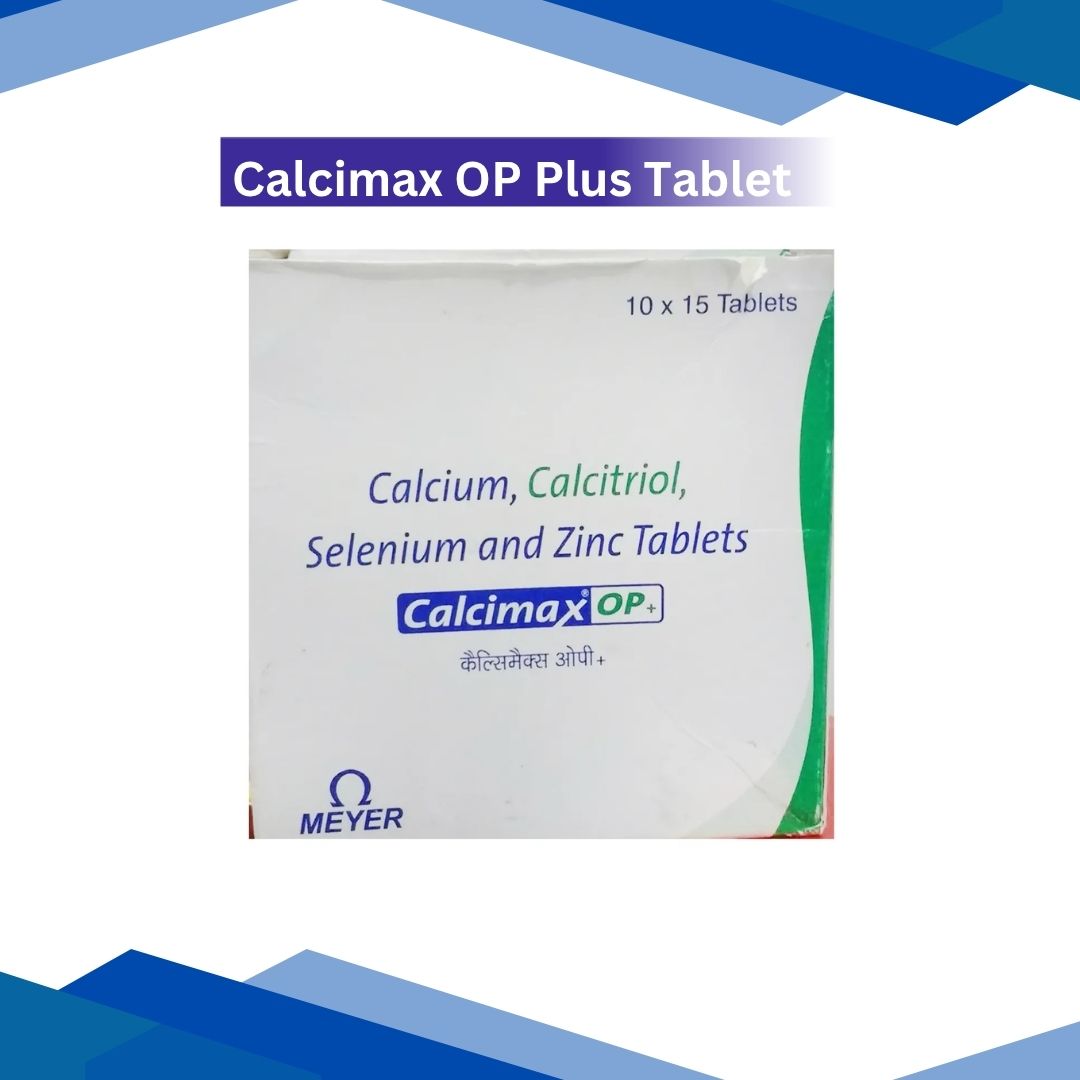
Calcimax OP Plus Tablet
Take this medicine in the dose and duration as advised by your doctor. Swallow it as a whole. Do not chew, crush or break it. For more details kindly click on Medicine Salts Below:
Calcitriol
Calcium
Calcium carbonate/calcium citrate tablets are used for the treatment of Calcium Loss. Calcium is a vital mineral that maintains the integrity of the skeleton while regulating the functioning of heart, muscles, and nerves. Because calcium cannot be synthesized by the body, ensuring adequate intake is important to prevent the body's "borrowing" of calcium from bones. Calcium supplements help the body absorb calcium and are crucial to the control of bone density and metabolic health. The Calcium supplement is often combined with Vitamin D3 to improve calcium absorption.
Therapeutic uses of calcium are:
- Bone mineralization: To a greater extent Osteoporosis, Osteomalacia.
- Corrects hypocalcemia and calcium deficiency, and returns blood calcium concentration to normal.
- Antacids: Provide immediate relief from heartburn and acid indigestion; made with calcium carbonate.
- Pregnancy & lactation: These are highly welcomed on top of good food during fetal skeletal formation and breastfeeding.
- Support: This would normally be supplemental to any hypertensive therapy or long-term corticosteroid therapy.
Key Features
High Element Yield: These will offer high amounts (i.e., in comparison to coal) of elemental calcium that are close to the directed allowances ERE (HAI).
Excellent Absorption: Available in forms predisposed to maximum bioavailable conditions, hence considerably enhanced mineral uptake.
Skeletal Strengthening: Diminishes the hiatus risk, fractures, and age-linked bone loss for menopausal women and elderly subjects.
Direction for Use
Dosage: Normally 500–1000 mg daily, or as directed by your personal doctor.
Best Time to Take:
- Calcium Carbonate: Usually taken with food due to stomach acid; adequate stomach acid is essential for efficient calcium absorption.
- Calcium Citrate: Can be taken with or without food, largely favored by people with low stomach acid or intolerance of certain foods.
Multiple Doses: In order to maximize absorption, it is recommended to take a higher dose more than 500 mg divided into intervals (e.g., in the morning and evening).
Who Should Not Take This Product?
Health issues that may hinder patient usage of such supplements include a history of kidney stones, nephropathy, or renal disease; therefore, consultation with a specialist prior to commencement of the supplementation is due.
There are certain possible interactions with substances that may lessen calcium development or reduce absorption by the bowels, such as antibiotics (tetracyclines and fluoroquinolones) and thyroid medications (levothyroxine); these are discussed in more detail below. Allow 2 to 4 hours apart between calcium and the above-listed drugs.
For safety's sake, ensure you drink enough extra water to facilitate smooth mineral uptake in an effort to avoid kidney stones. Over-the-top intake could actually produce biochemical hypercalcemia.
Q&A
Q: Should I take Iron and Calcium supplements together? No. The absorption of Iron and Calcium takes place through the same absorption pathways in the body during supplementation, thereby competing with each other. Q: The best time of day to take Iron is in the morning and later in the evening for Calcium.
Q: Why is Vitamin D with Calcium recommended so often? For calcium to leave the gut and enter the bloodstream, Vitamin D acts as a guardian. Without this important vitamin, the calcium consumed by mouth does not get utilized in the body, regardless of dose.
Q: Does the use of Calcium cause constipation? Some may experience minor constipation or gas from taking these supplements. Increase a good source of fiber in your diet or drink lots of water if you experience this. If that does not help, consult your doctor about moving to Calcium Citrate's milder formulation.
Q: Would milk alone provide me with enough Calcium I need? Milk is an excellent source; however, many adults will still find it tough to meet the daily requirements of Calcium through their diet, particularly if they suffer from lactose intolerance or have some other underlying health condition. Supplements are the most recommended way to tide over the nutritional gap.
Q: How long do I need to take Calcium supplements? Duration of use can depend on other conditions present (like pregnancy, menopause, or a diagnosis of deficiency). Generally, your levels would be checked every 3–6 months, and the therapy would be recommenced.
STORAGE
Please store in a cool, dry place that is far away from moisture and direct sunlight.
Store the container sealed with the least humidity in the tablets.
Disclaimer: The above content should serve for only informational purposes and should be considered replacement or substitute for professional medical advice. Before starting any regimen involving intake of supplements, consult your provider.
Selenium
Selenium: Vital Dietary Mineral for Antioxidant Defense Selenium is a very important trace mineral that is needed for several biological functions, from DNA synthesis to reproductive health. Humans need only a small amount, yet Selenium offers a massive defense against the "Selenoproteins," which are specialized enzymes that protect cells from free radicals and oxidative-related damage.
Why the Body Needs Selenium
Ultimate Antioxidant Shield: Selenium is the predominant element of glutathione peroxidase, which prevents cellular deterioration and helps slow the aging process.
Thyroid Support: The highest concentration of selenium in the body is found in the thyroid gland, which helps convert thyroid hormones into active forms.
Immune System Booster: By abating oxidative stress and inflammation, selenium enables the body to launch a stronger defense system against illnesses.
Cardiovascular Health: Research implies that maintaining optimal selenium levels may help with the reduction of inflammatory markers, which are imperative for cardiological health.
Components Keeping Cognitive Health: Antioxidative features being studied in this area should be regarded with a view to nurturing the memory of old age.
Common Sources & Supplements
Although Selenium naturally occurs in Brazilian nuts, seafood, and poultry, some people prefer to use supplements (including a form of cancer called L-selenomethionine or Sodium Selenite), so they can take the same amount every day, especially in regions where the soil lacks selenium.
Uses & Dosages
Recommended Daily Allowance (RDA)—For most adults, 55 mcg per day;
Maximum Limit—at about 400 mcg per day, the tolerable upper intake levels were set for adult intake in order to prevent toxicity.
Routes Administration: Best absorption of Selenium supplements occurs when they are conducted together with a meal.
Selenium: Frequently Asked Questions (FAQs)
Q: Can Selenium prevent hair loss?
A: It quite can: Selenium is linked with the beautification and resistance power of hair. Deficiency can incidentally result in the thinning of hair. Always in life, do not underuse—that is, avoid taking an unusual, unvaried, underuse-by sound. Selenosis—an excess of Selenium in the body—could lead to hair fall and nail brittleness.
Q: Is it safe to take Selenium daily?
A: It is secure to take Selenium daily, as required. Most multivitamin formulas contain a safe daily dose. Very high doses should be administered for the long term only in the presence and under supervision of a physician.
Q: Can Selenium control thyroid conditions like Hashimoto's?
A: A number of endocrinologists have proposed use of Selenium for lowering antibody levels in patients with autoimmune thyroiditis. It can therefore be considered as a complementary strategy to the main treatment plan.
Q: What are the different signs for excess Selenium?
A: The side effects associated with Selenosis following overdose include bad garlic breath, metallic taste, nausea, fatigue. Should any of these occur, discontinue use and report to a doctor immediately.
Q: Can Selenium cause any interactions with other drugs?
A: Selenium has been reported to interact with some chemotherapy drugs, anticoagulants, and statins for lowering cholesterol. Anyone planning on taking other medications for a long period should run the list by a pharmacist.
Nutritional & Safety Profile
Detail
Information
Classification
Dietary Supplement/Trace Mineral
Common Dosage Forms
Tablets, Capsules, Softgels
Best Taken With
Food (to enhance absorption)
Key Interactions
Blood thinners, Statins, and Niacin
For Clinical Use
Brazilian Nut Quotient: And don't consume those little Brazil nuts too much; just two of them contain Selenium's daily requirement. If you eat them regularly, you probably don't need another supplement.
Check the Label: The name should be "Selenomethionine." This organic form can certainly be absorbed more easily by the body than inorganic selenite.
ZINC
Zinc (Elemental Zinc/Zinc Salts)
Zinc is an essential trace mineral vital for the activity of more than 300 enzymes in the human body. It plays a fundamental role in immune function, protein synthesis, wound healing, and DNA synthesis. With no specialized zinc storage system, a daily intake is necessary to maintain homeostasis. Zinc is mostly applied clinically to treat nutritional deficiencies, assist in pediatrics' growth and manage acute diarrhea.
Therapeutic Uses
Immune System Support: Acts as a gatekeeper of immune function, helping the body resist infections and reducing the duration of the common cold.
Diarrhea Management: WHO recommends zinc to reduce the severity and duration of diarrhea, particularly in children.
Skin Health & Repair: Essential for maintaining skin integrity; often used to treat acne, eczema-like rashes, and slow-healing wounds.
Sensory Function: Crucial for the maintenance of the senses of taste and smell.
Growth & Development: Synergists during growth & development, from pregnancy to childhood, & adolescence.
Key Features
Several Salt Forms: This nutritional mineral comes in Zinc Sulfate, Zinc Gluconate, and Zinc Acetate; the latter two should be preferred probably for easy GI tolerance as and when needed.
High Bioavailability: High bioavailability makes it rapidly absorbed from the small intestine.
Essential Micronutrient: Iron serves as an 'essential' mineral because it can't be made in the body.
Instructions for Use
Dosage: Per prescription from health care providers or on causal bases, one to two tablets is the recommended dose to make up the RDA of, say, 8mg for women and 11mg for men.
Timetime: One hour before or two hours after meal for maximal absorption.
Questionable Stomach? Nausea from zinc is through- add some food and this might reduce absorption a tad.
Avoid Interference: Do not take zinc with iron or calcium supplements, as these minerals compete for absorption.
Possible Side Effects
At recommended doses, side effects with Zinc are uncommon. Nonetheless, a few users may encounter the following difficulties:
GI Disturbances: Zinc Sulfate causes common nausea, vomiting, and stomach pains.
Metallic Taste: A lingering taste in the mouth will occur.
Copper Deficiency: Excessive zinc intake, longer than 40 mg/day, can be an obstruction to copper absorption, leading to anemia.
Cautions and Restriction
Drug Interactions: Zinc may interfere with the absorption of certain antibiotics (eg. Quinolones and Tetracyclines). So if you are on these medications, take them at least 2 hours before or 4–6 hours after taking Zinc.
Renal Health: Be cautious if you have kidney deficiencies, as minerals can build up.
Pregnancy & Lactation: Zinc needs are higher during these periods and supplementation should be by prescription only.
Avoid taking antacids two hours before/after your zinc dose since they may actually reduce its effectiveness.
Frequently Asked Questions (FAQs)
Q: Which is the best form of Zinc, sulfate, gluconate, or acetate?
All forms are equally good carriers of elemental zinc. Zinc sulfate tablets offer more zinc for the money and is commonly found, but zinc gluconate or acetate forms are most often desired in syrups and lozenges as they are less bitter and milder on the stomach.
Q: Can Zinc delete a common cold faster?
Yes, clinical studies show that taking Zinc lozenges or syrup less than 24 hours after the initial phase of a common cold can significantly reduce the duration and severity of a cold.
Q: How can I tell if I have Zinc deficiency?
Common signs include frequent infections, thinning of the hair, decreased appetite, changes in taste or smell, and wounds that are slow to heal among other few. If you are experiencing these symptoms, it is suggested to check with your clinician for a blood test.
Q: Can I take Zinc and Iron together?
That's correct. A large intake of iron (25mg or more) will seriously inhibit zinc absorption. It is best we supplement each with enough hours separation (e.g. morning and evening).
Q: Will it be safe to consume 50mg of zinc every day?
The "Tolerable Upper Intake Level" figure for adult consumption stands at 40 mg/mg per day. In any case, taking 50 mg/day or more on one's own overtime without any doctor's supervision will result in a copper deficiency and weakened immunity.
Storage
Store in the same fashion others are stored: dry places away from direct sunlight with the container tightly closed to prevent moisture from getting in.
Disclaimer: INFO THIS ARTICLE OFFERS IS PRESENTED IN AN INFORMATIVE WAY. IT IS NOT SUBSTITUTING FOR PROFESSIONAL MEDICAL ADVICE OR DIAGNOSIS. ALWAYS CONSULT YOUR DOCTOR BEFORE TAKING ANY NEW MINERAL SUPPLEMENT.
At Gem Pharmacy, we make every effort to provide accurate, expert-written, and thoroughly reviewed information related to medicines. However, this information should not be considered a substitute for professional medical advice, diagnosis, or treatment from a qualified doctor.
The purpose of this information is to educate users and improve communication between patients and healthcare professionals. It should not be used to diagnose or treat any condition.
Always consult a certified healthcare professional before taking any medication.


Related products