
34%
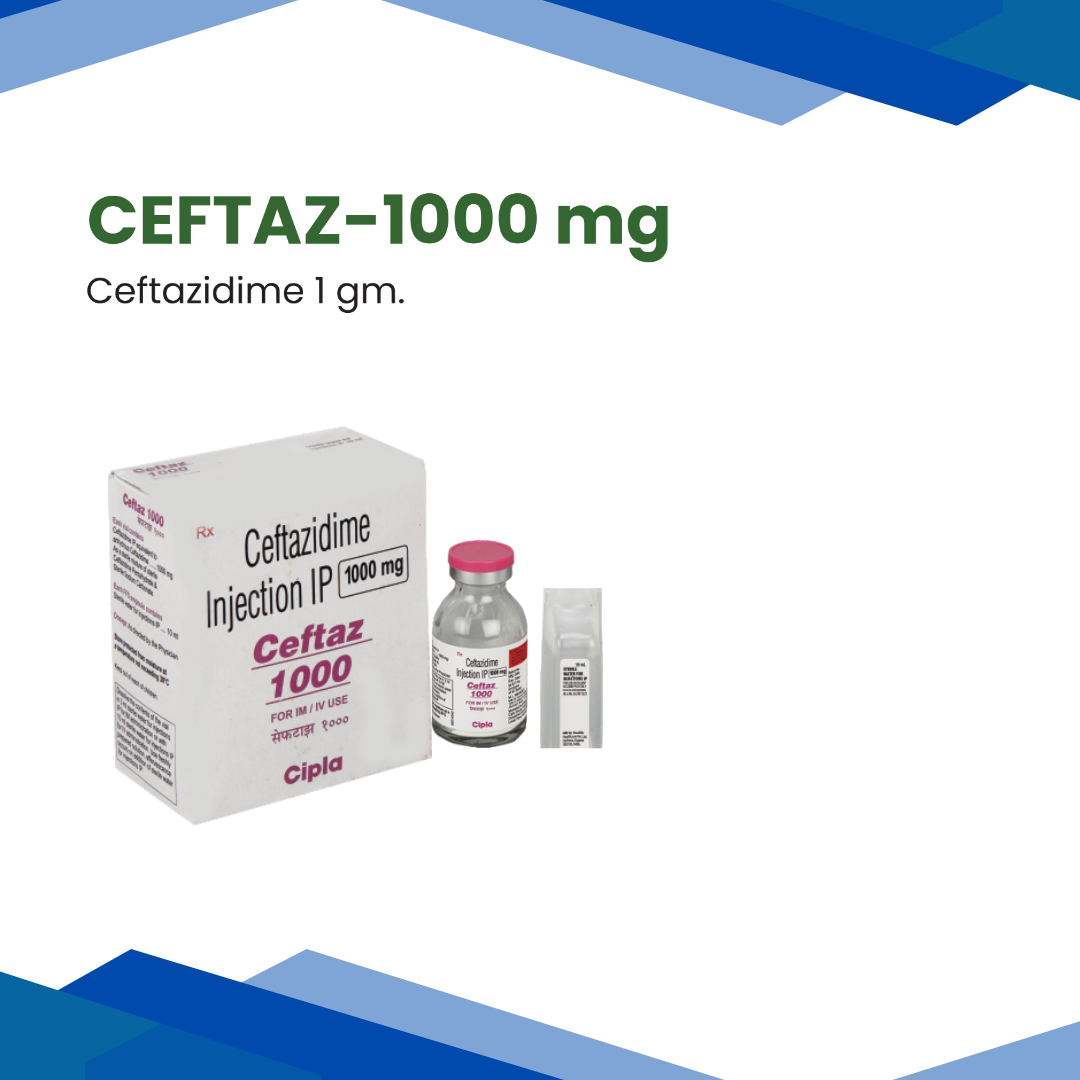
Ceftaz 1000mg
* This Product Requires Prescription
See Why
No Prescription yet? Don’t worry! Click Here to Get Online Consultation
In Stock
Ceftaz 1000mg Injection belongs to a class of drugs called antibiotics used in the treatment of several bacterial infections of the urinary tract, respiratory tract, brain, bones and joints, ears, throat, skin, and soft tissue
In Stock
Certified Content
Medical Disclaimer:
At Gem Pharmacy, we make every effort to provide accurate, expert-written, and thoroughly reviewed information related to medicines. However, this information should not be considered a substitute for professional medical advice, diagnosis, or treatment from a qualified doctor.
The purpose of this information is to educate users and improve communication between patients and healthcare professionals. It should not be used to diagnose or treat any condition.
Always consult a certified healthcare professional before taking any medication.
At Gem Pharmacy, we make every effort to provide accurate, expert-written, and thoroughly reviewed information related to medicines. However, this information should not be considered a substitute for professional medical advice, diagnosis, or treatment from a qualified doctor.
The purpose of this information is to educate users and improve communication between patients and healthcare professionals. It should not be used to diagnose or treat any condition.
Always consult a certified healthcare professional before taking any medication.
Written by

Palak
D Pharma
Reviewed by

Palak
D Pharma