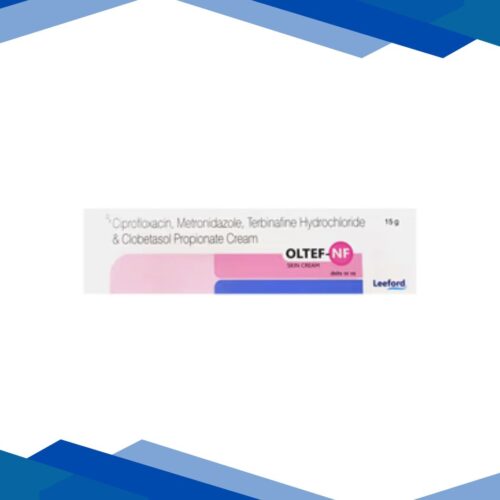


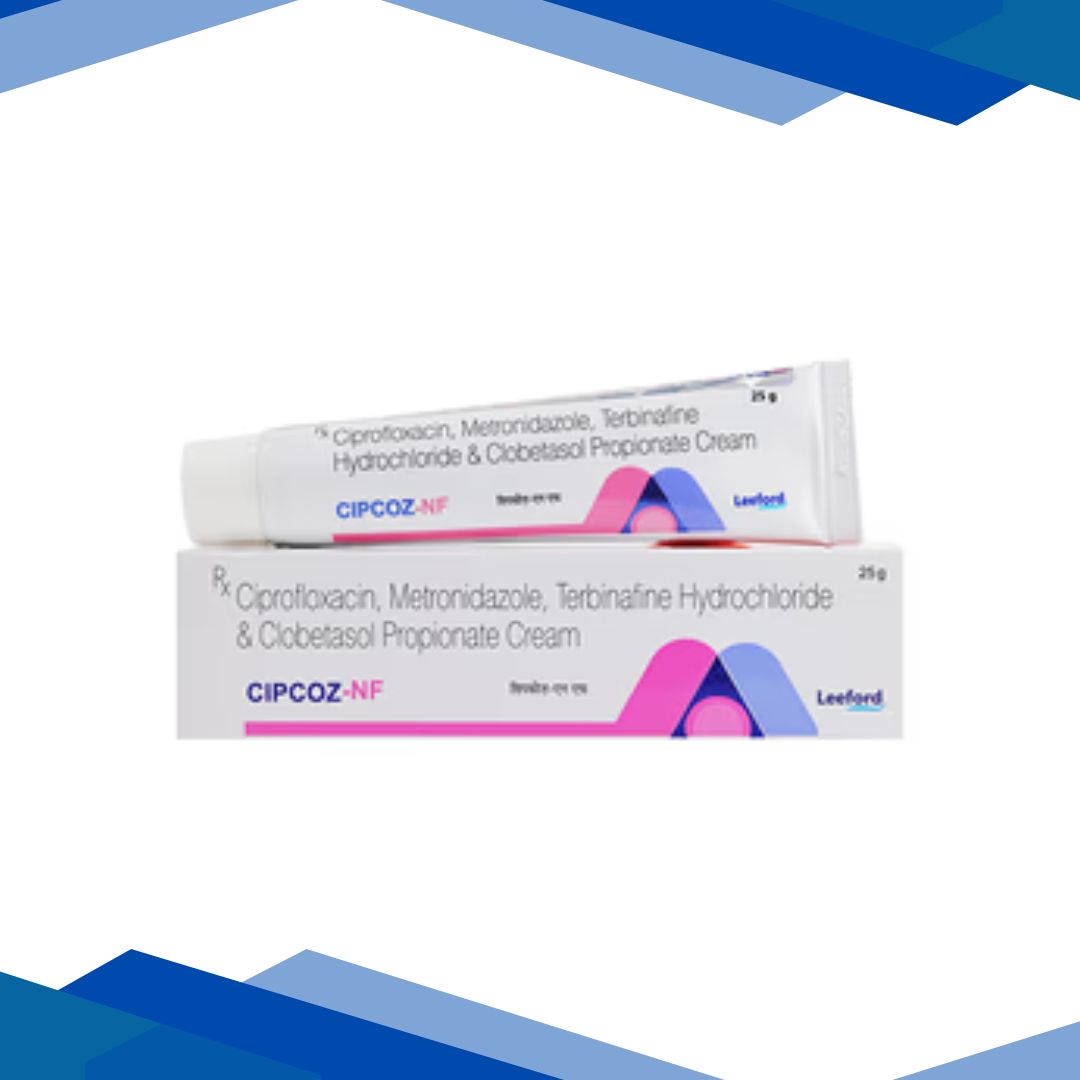
CIPCOZ NF Cream 25g
No Prescription yet? Don’t worry! Click Here to Get Online Consultation
A topical cream used for mixed skin infections (bacterial + fungal) and associated inflammation. For more details kindly click on Medicine Salts below:
Ciprofloxacin
Ciprofloxacin 500mg Tablet
Ciprofloxacin is a potent broad-spectrum antibiotic belonging to the fluoroquinolone class that is generally applied in a variety of bacterial infections. It exercises its effects by inhibiting bacterial enzymes, namely DNA-gyrase, responsible for replication of the DNA, and thus disrupts the growth and multiplication of the harmful bacteria. It is prescribed frequently for infections of the urinary system, either in the respiratory system, skin, and in the joints.
Indications
Urinary Tract Infections (UTI): Effective in complicated and uncomplicated infections in the urinary system, including cystitis and pyelonephritis.
Respiratory Tract: Acute sinusitis, pneumonia, exacerbation of chronic bronchitis.
Skin & Soft Tissue: Manage cellulitis, infected wounds and abscesses.
Bone & Joint Infections: Osteomyelitis with long-term therapy.
Gastrointestinal Infections: Effective in infectious diarrhoea (traveler's diarrhea) and typhoid fever (Enteric fever).
Anthrax Exposure: For the postexposure prophylaxis and treatment of inhalational anthrax.
Quick Product Summary
Drug Class: Fluoroquinolone antibiotics
Main Compound: Ciprofloxacin hydrochloride
Mode of Action: Bactericidal (kills bacteria)
Common available forms: tablets, injections, and eye/ear drops
In using ciprofloxacin:
Consistency: Consume the drug at the appointed time each day to maintain steady therapeutic levels.
Administration: Swallow the tablet with a full glass of water and do not break or crush it.
Food interaction: May be taken with or without food, but avoid dairy products such as milk or yoghurt or calcium-fortified fruit juices near the dose, as they reduce absorption significantly.
Hydration: Drink plenty of fluids during treatment to help prevent crystal formation in urine (crystalluria).
Common and severe side effects
The most common are: nausea, vomiting, diarrhea, and abdominal pain.
Severe (Infrequent): Pain in the joints or tendons (tendinitis of the Achilles tendon), paresthesia or numbness of hands or feet, and increased sensitivity to sunlight (photosensitivity).
Mental Health: Rare cases of confusion, agitation, nervousness, and sleep disturbances.
Caution: Stop and contact your doctor immediately if you develop joint pain, swelling, bruising, or a severe skin rash.
Precautions & Safety Warnings
Tendon Health: The risk of tendinitis increases among patients aged 60 and over, those taking corticosteroids, or kidney transplant recipients.
Sun Protection: The skin becomes more sensitive to sunlight; use protective clothing and sunscreen when exposed.
Dairy & Antacids: Ciprofloxacin should not be taken with dairy products or antacids containing magnesium, iron, or zinc, as these reduce absorption.
Pregnancy & Breastfeeding: Generally contraindicated unless prescribed by a doctor.
Driving: It may cause dizziness; avoid driving until you know how it affects you.
Frequently Asked Questions (FAQs)
Q: Can Ciprofloxacin kill the common cold or flu?
No. It is an antibiotic and works only against bacterial infections, not viral illnesses like cold or flu.
Q: May I stop taking the tablets once my symptoms improve?
No. Complete the full course to prevent bacterial resistance and recurrence.
Q: What should I do if I miss a dose?
Take it as soon as you remember unless it is close to the next dose. Do not double the dose.
Q: Can I drink alcohol while on Ciprofloxacin?
Alcohol may worsen side effects like dizziness and dehydration, so it is best avoided.
Q: Why is milk not recommended with it?
Calcium in dairy binds with Ciprofloxacin and reduces its absorption in the body.
Clobetasol
Clobetasol Propionate 0.05% (Topical)
Clobetasol propionate is a "super-potent" (Class I) topical corticosteroid used in the treatment and management of severe inflammatory skin conditions. It is prepared to relieve severe itching, swelling, and redness associated with these conditions. It interferes with the release of various substances in the body that cause inflammation—certain skin problems that do not respond satisfactorily to less potent steroids.
+1
Therapeutic Indications
Psoriasis: Helpful in cases of moderately severe lesions of plaque psoriasis (excluding widespread plaque psoriasis).
Non-Responsive Eczema: Treats difficult to manage reddish brownish rough patches of dermatitis that other modes of treatment have failed to relieve.
Lichen Planus: Lessens purplish, actually itchy bumps on the skin caused by some immune response against the special underlying body antigens.
Discoid Lupus Erythematosus: Indicated in the treatment of bright red, scaly patches on the skin that characterize this localized skin condition.
Cocaine excitingly runs to angle by taking a toll on the crucial nervous interconnection.
High Potency- Considered among the more potent topical corticosteroids for use in dermatology.
Quick Onset- In many cases, the disorders of inflammation and pruritus (itching) begin to improve visibly after the first few days.
Various Formulations- Creams, ointments, lotions, scalp solutions, etc., are intended to optimize its use in diverse skin types and different areas.
Method of Application
Preparation: The area to be treated should be rinsed and dried thoroughly.
Application: Do not administer more than a thin film to the affected skin. Gently rub and massage until absorbed.
Frequency: Typically used twice daily-morning and evening. Strictly adhere to the advice given by the dermatologist.
Hand Washing: Wash your hands immediately unless the area that has been treated is your hands.
Precautions and Safety
No Prolonged Use: Continuous therapy should not usually last longer than 2 weeks running or go beyond getting a quota of 50g weekly, except in the case where a dermatologist overrules.
Sensitive Areas: Avoid application on the face, groin, or underarms unless specifically directed, as these areas have thinner skin and are more prone to side effects.
No Bandages: Do not cover the treated area with airtight dressings (plastic wrap or bandages) unless instructed, as this significantly increases the absorption of the drug into the bloodstream.
Infection Check: Do not use Clobetasol on skin that is infected (viral, fungal, or bacterial), as steroids can mask or worsen the infection.
Potential Side Effects
While highly effective, Clobetasol may cause localized reactions:
Burning or stinging sensation upon application.
Thinning of the skin (atrophy).
Appearance of fine blood vessels (telangiectasia).
Stretch marks (striae) or changes in skin color.
Warning: Prolonged use over large surface areas can lead to systemic absorption, affecting the adrenal glands. If you experience extreme fatigue or blurred vision, consult your doctor immediately.
Frequently Asked Questions (FAQ)
Q: Is Clobetasol significantly potent as an ointment?
Yes. Clobetasol is a strong potion that belongs to Category/Super Highs. Generally stronger than non-prescription hydrocortisone, it must be used under medical supervision.
Q: Can I apply Clobetasol for recurring acne of the face?
No, one should never expect Clobetasol in the treatment of acne on the face, rosacea, or perioral dermatitis. Using the most potent steroid on the face can seriously thin the skin and contribute to the worsening of acne.
Q: So can it be used on children?
Not generally. Clobetasol is usually not recommended for children under 12 years. Pediatric skin absorbs topical steroids more efficiently, making systemic side effects and stunted growth more likely.
Q: Could it tackle a fungal ailment like ringworm?
Absolutely not! Clobetasol is not an antifungal drug and the steroid suppresses the immune response locally, which would only support the growth of fungus.
Q: What should be done in cases of a missed dose?
Instill the dose as soon as you remember. If the time is very close for the next dose, then start afresh. Exception is not nullified; go on if the time comes appropriate. Never apply the missed dose twice.
Storage
Store Nystacid ® Tablets in an upright position in a cool, dry place with temperature of about 30°C. Avoid freezing. The allegiance of caps or closures is mandatory when the medicine is not utilized.
Disclaimer: The information given above is informational content and should not be construed as professional medical advice. Always apply this medicine as per your doctor’s prescription.
Metronidazole
Metronidazole 400 mg Tablet
Metronidazole is an antibiotic widely marketed under the brand name Flagyl. It is a powerful antiprotozoal agent used to treat infections caused by anaerobic bacteria and parasites such as amoebiasis and giardiasis. It works by entering the DNA of microorganisms, preventing replication and thereby eliminating the infection.
Therapeutic Uses
Bacterial Infections: Used for abdominal, liver, skin, joint, and respiratory tract infections caused by anaerobic bacteria.
GI-Related Disorders: Effective in H. pylori infection and amoebiasis.
Dental Abscess: Used to treat oral bacterial infections, including dental caries-related infections and gingivitis.
Specific Infections: Indicated for bacterial vaginosis and trichomoniasis.
Proper Use
Complete Full Course: Always finish the entire prescribed course even if symptoms improve early. Incomplete use may lead to infection recurrence or antibiotic resistance.
Swallow Whole: Do not crush or chew the tablet.
With Food: Take with a meal, water, or milk to reduce stomach irritation.
Missed Dose: Take as soon as remembered. If it is close to the next dose, skip the missed dose. Do not double dose.
Important Safety Measures
Alcohol Warning: Avoid alcohol completely during treatment and for 48–72 hours after the last dose. It may cause a disulfiram-like reaction including nausea, vomiting, abdominal cramps, headache, and flushing.
Pregnancy & Breastfeeding: Inform your doctor if you are pregnant, especially in the first trimester.
Nerve Health: Long-term use may cause neurological symptoms such as tingling or numbness in limbs. Report any such signs immediately.
Liver Function: Dose adjustment may be required in liver impairment.
Potential Side Effects
Most are mild and temporary:
Metallic taste in mouth
Nausea or abdominal cramps
Loss of appetite
Headache
⚠️ Rare but serious effects may include pancreatic irritation or peptic ulcer complications.
Frequently Asked Questions (FAQs)
Q: Why does my mouth taste like metal?
A: A metallic taste is a common and temporary side effect. It usually resolves within 1–7 days after stopping treatment. Chewing sugar-free gum or mint may help.
Q: Can Metronidazole be used for common cold or flu?
A: No. It is effective only against bacterial and protozoal infections, not viral infections like cold, flu, or COVID-19.
Q: How soon will I feel better?
A: Improvement often occurs within 24–48 hours, but the full course must be completed to ensure complete eradication of infection.
Q: Is it safe to drive while taking this medicine?
A: Generally yes, but avoid driving if you experience dizziness or confusion.
Q: Can I take it with other medications?
A: Metronidazole may interact with warfarin and lithium. Always inform your doctor about all medications and supplements.
Terbinafine
Terbinafine: Superior Antifungal Shield
Terbinafine is a strong allylamine antifungal agent used for a wide spectrum of fungal infections occurring in the skin and nails. Terbinafine works in contrast to most antifungals, which immure the fungus from actively growing thus making it "fungicidal," meaning it kills the fungal cells by chemically disturbing their cell membranes. It is basically the one and only "Gold Standard" in the treatment of Onychomycosis (fungal nail infections) and really resistant Tinea Corporis (Ringworm) and Tinea Pedis (Athlete's foot) infections, to mention a few, when a topical application can't soothe the area of infection.
How Terbinafine Functions: The "Squalene" Strategy
Enzyme Inhibition: Terbinafine blocks a specific enzyme named squalene epoxidation.
Toxic Accumulation: By blocking this enzyme, it causes a buildup of a substance called squalene inside the fungal cell.
Cell Death: High levels of squalene are toxic to fungi, causing the cell membrane to rupture and the fungus to die off completely.
A Quick Look at the Product
Feature Details
Drug Class Allylamine Antifungal
Common Forms Tablets (250mg, 500mg), Topical Cream, Dusting Powder
Primary Uses Nail Fungus, Ringworm, Jock Itch
Duration (Skin) Usually 1 to 2 weeks
Duration (Nails) 6 weeks (fingernails) to 12 weeks (toenails)
Key Medical Benefits
Deep Penetration: Terbinafine is highly "lipophilic" (or fat-seeking), meaning it concentrates in the skin, hair, and nails, providing long-lasting protection even after the course is finished.
High Cure Rates: Offers significantly higher success rates for nail infections compared to older drugs like Griseofulvin.
Shorter Courses: For skin infections, Terbinafine often requires a shorter treatment duration than "azole" family antifungals (like Fluconazole).
Big Marques in India (2026)
Sebifin (Sun Pharma)
Terbinaforce (Mankind Pharma)
Terbi (Systopic)
Exifine (Dr. Reddy's)
Zimig (GlaxoSmithKline)
Usage & Safety Guidelines
Patient Tip: Terbinafine tablets are best absorbed when taken with a fat-containing meal (like whole milk, eggs, or paratha). But Terbinafine can increase the caffeine level in your blood, leading to jitters or palpitations, so cut back on excessive caffeine (coffee, cola) consumption if taking this medication.
Important Precautions:
Liver Health: Terbinafine is processed by the liver. In case of a history of jaundice or liver disease, the doctor should order a liver function test (LFT) before giving you a long course.
Alcohol: Do not drink alcohol when you are on Terbinafine tablets, as alcohol will put additional stress on your already throbbing liver.
Adherence: Fungal infections do not go away very easily. Therefore, even if your skin looks "clear" after 3 days, make sure you have taken the full course if you want the disease to stay away.
Nail Growth: Keeping a keen eye on expectations, get the picture correctly with great optimism and nail care. The treatment kills the fungus in the nail but does not "repair" the nail. So, do not expect to see complete recovery until the nail has completely regrown.
Individual Effects
If tolerated well by most patients, Terbinafine may evoke:
Taste Disturbances
Some rare reports of altered taste (metallic or bitter) in the mouth after food consumption (i.e., effect may reverse over time after drug withdrawal).
Digestive Problems
Mild bowel discomfort, nausea, or diarrhea may be noticed.
Skin Rash
If you develop a rash all over your body that has an itching sensation, or if you develop 'hives,' stop the drug and see your dermatologist to determine a diagnosis.
Headaches
These sometimes occur but are mild and short-lived.
Frequently Asked Questions (FAQs)
1. Why is the treatment for toenail fungus so long?
It takes so long to manage toenail fungus for the reason that toenails grow very slowly (about 1 mm monthly). Since Terbinafine needs to be presumed in the nail bed for 12 weeks, it is to make sure each new cell of the growing toenail is gorged with the drug to nip the infection re-infection in the bud.
2. Can I use Terbinafine cream and tablets together?
"Dual therapy," or multi-tiered therapy, can be implemented in such severe conditions, using the cream on one side to weaken the surface fungi, and then atinishing off the root through oral drugs, which is the tablets. However, you must not practice it without supervision from a dermatologist.
3. Will Terbinafine help with a yeast infection (Candidiasis)?
It is great against the "Dermatophytes" (Ringworm/Nail fungus) but is often not as effective against Candida (yeast). For yeast infections, drugs like Clotrimazole or Itraconazole are the better option.
4. What are the "Red Flags" I should watch out for?
Stop medication and seek medical attention if dark-colored urine, pale colored stools, or yellow eyes/jaundice is noted; indications of liver damage.
5. Can I take Terbinafine if I am pregnant?
Oral Terbinafine is generally not recommended during pregnancy unless the infection is severe and your doctor deems it absolutely necessary. Topical creams are usually considered safer but still require a consultation.
Legal and Medical Disclaimer: We offer medical-led information only and do not replace professional advice. Terbinafine is in Schedule H in India and, hence, prescripted by a physician. Always reach out to a doctor before starting therapy.
At Gem Pharmacy, we make every effort to provide accurate, expert-written, and thoroughly reviewed information related to medicines. However, this information should not be considered a substitute for professional medical advice, diagnosis, or treatment from a qualified doctor.
The purpose of this information is to educate users and improve communication between patients and healthcare professionals. It should not be used to diagnose or treat any condition.
Always consult a certified healthcare professional before taking any medication.


Related products